1 - 6 of 6 Posts

d_kakavouli

Active member
I’ve come across baklava cheesecake on buzzfeed and didn’t realize it had become so popular! Does anyone have any advice on how to make an authentic version (if that’s even possible lol) Thanks! It looks soooo good.
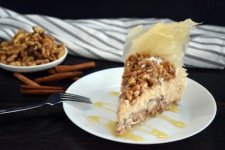

baklava-cheesecake-768x512.jpg
 
There is nothing authentic about baklava cheesecake. I say skip the cheesecake it's just a distraction, stick to a good old fashioned AUTHENTIC baklava. If your missing the cheese part, have it with a feta chaser haha
 
That doesn't sound too great, I don't see how the texture of cream cheese and syrupy sweets would mix
 
  • Like
Reactions: TatianaS
That doesn't sound too great, I don't see how the texture of cream cheese and syrupy sweets would mix


I agree... the best way to eat baklava is with a scoop of vanilla ice cream. I don't think that baklava and cheesecake would mix very well. Maybe a classic cheesecake with some walnuts on top would taste good, but I think adding phyllo and syrup would make it way too sweet.
 

Do you put potatoes in your moussaka?

My family has never made moussaka with potatoes, so I always grew up thinking of it as layers of eggplant, meat sauce, and béchamel. Recently, though, I had moussaka at a restaurant that included a layer of potatoes, and I absolutely loved it.

The potatoes gave it a little more substance and seemed to soak up some of the flavors from the meat sauce. It made the whole dish feel even more comforting without taking away from the eggplant.

Now I’m curious about how common this is in Greece and in Greek families. Is adding potatoes considered traditional in certain regions, or is it simply one of those variations that depends on the household?

If you make moussaka at home, do you include potatoes? And if you do, do you use them along with eggplant or in place of some of it?

My Family’s Keftedes Recipe

Keftedes are one of those foods that always remind me of family gatherings. Everyone seems to make them a little differently, but this is the basic version my family has always used.

For about a pound of ground beef, we add one small grated onion, a handful of chopped fresh parsley, a little fresh mint, one egg, breadcrumbs, salt, pepper, oregano, and a small splash of red wine vinegar. Sometimes we add a little grated garlic as well.

The important part is mixing everything well and then letting the mixture sit in the refrigerator for a little while before shaping the keftedes. We make them fairly small, roll them lightly in flour, and fry them in olive oil until browned on the outside and cooked through.

We usually serve them with lemon, potatoes, salad, or tzatziki.

How does your family make keftedes? I’m especially curious about which herbs and seasonings everyone uses. Thought I'd share!

Do you make Greek lentil soup with vinegar

I’ve always made fakes with a splash of vinegar, either stirred into the pot near the end or added individually at the table. To me, that little bit of acidity is part of what makes the soup taste right, especially with the earthy lentils, olive oil, onion, garlic, and bay leaf.

But I have a Greek friend who makes hers very differently. She doesn’t use vinegar at all and instead adds quite a lot of tomato product, so her version is much redder and more tomato-forward than mine.

Now I’m curious about what is considered more traditional in Greek cooking. Is vinegar usually a standard part of fakes, or is it more of a regional or family preference? Are tomato-heavy versions just as traditional?

How do you make yours, and what did your family serve growing up?

How Do You Keep Lamb from Drying Out in the Oven?

I’ve been cooking more traditional Greek food at home lately, and one thing I’m still trying to get right is oven-roasted lamb. I love the flavor, especially with garlic, lemon, oregano, and potatoes, but sometimes the meat comes out a little drier than I’d like.

For those of you who make lamb regularly, how do you keep it tender and juicy in the oven? Do you cover it for part of the cooking time, add water or broth to the pan, or cook it slowly at a lower temperature?

I’m also wondering if the cut makes a big difference. I usually see leg of lamb used, but would shoulder be more forgiving for a long roast?

I’d like to get that really tender Greek-style lamb that practically falls apart. Any tips on temperature, cooking time, marinades, or resting the meat would be appreciated.

Do You Put Cinnamon in Your Keftedes?

I’m curious how everyone here makes keftedes, especially when it comes to cinnamon. I know some Greek families add a little cinnamon to the meat mixture, while others would never think of putting it in.

In my experience, even a small amount can change the flavor quite a bit. It gives the keftedes a warmer, slightly sweeter spice in the background, but I can also see how it might not be for everyone. I’ve had versions that lean more heavily on oregano, mint, parsley, garlic, and onion instead.

Do you put cinnamon in your keftedes? If you do, how much do you usually use, and was that something your family always did? I’d also be curious to know if it varies depending on what part of Greece your family comes from.

Would love to hear how everyone seasons theirs and what you consider essential for really good keftedes.
Sign up for a free account and share your thoughts, photos, questions about Greek food, travel and culture!

WorldwideGreeks.com is a free online forum community where people can discuss Greek food, travel, traditions, history and mythology.
Join Worldwide Greeks here!

JOIN COMMUNITY FOR FREE

LOGIN TO YOUR ACCOUNT
Back
Top
