One of my favourite tricks that I use when cooking lamb to get all of the flavour inside of the meat, is poking holes in the lamb and stuffing about 1/4 of a clove of garlic inside. Before putting the garlic in the lamb, I coat it in salt, pepper, and oregano. This makes sure that the garlic flavor goes throughout the whole lamb, and this is especially useful when cooking bigger chunks of meat such as the leg.

Menu
Install the app
How to install the app on iOS
Follow along with the video below to see how to install our site as a web app on your home screen.
Note: This feature may not be available in some browsers.
You are using an out of date browser. It may not display this or other websites correctly.
You should upgrade or use an alternative browser.
You should upgrade or use an alternative browser.
Greek Food, Cooking and Recipe Community
Here is a little trick for marinating your lamb this easter
- Thread starter blopez34
- Start date
1 - 5 of 5 Posts

GreekGirlCooks
Active member
This is such a great idea. My mother said that her family used to do that, but we somehow lost the tradition. We all love garlic, too.One of my favourite tricks that I use when cooking lamb to get all of the flavour inside of the meat, is poking holes in the lamb and stuffing about 1/4 of a clove of garlic inside. Before putting the garlic in the lamb, I coat it in salt, pepper, and oregano. This makes sure that the garlic flavor goes throughout the whole lamb, and this is especially useful when cooking bigger chunks of meat such as the leg.

k_tsoukalas
Administrator
We are going to be marinating our lamb leg this year so this tip comes at a great time! I didn't think to do this with the garlic - it's an excellent tip.

Another tip that we are going to use is to prep the lamb (coating like you mention) the day before. We then pack it in ice and have it ready for the spit the next morning.
Here is the what the finished product looks like from a few years ago:
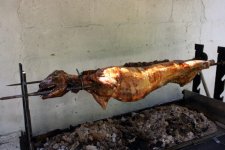
Here is the what the finished product looks like from a few years ago:
efhernandez_
Active member
Looks so tasty!Another tip that we are going to use is to prep the lamb (coating like you mention) the day before. We then pack it in ice and have it ready for the spit the next morning.
Here is the what the finished product looks like from a few years ago:
View attachment 1007
1 - 5 of 5 Posts
JOIN THE DISCUSSION AND READ OTHER GREEK INFO:
What is your favorite Greek potato dish?
- mastichas09
- Greek Food Forum
- Replies: 0
Potatoes show up in so many Greek meals, and I think they are often at their best when they soak up plenty of olive oil, lemon, herbs, and cooking juices.
Greek lemon potatoes are probably the first thing that comes to mind for me. I love when they are roasted until they are soft inside, a little crisp around the edges, and full of lemon and oregano. Potatoes cooked alongside chicken or lamb are also hard to beat because they absorb so much flavor from the pan.
I also enjoy simple boiled potatoes dressed with olive oil, lemon, parsley, and salt, especially with fish or grilled meat.
What Greek potato dish do you make most often? Do you prefer lemon potatoes, potatoes roasted with meat, fried potatoes, or something else? And is there a particular seasoning or family method that makes your version especially good?
Is lamb or beef more traditional for giouvetsi?
- blopez34
- Greek Food Forum
- Replies: 0
I've been looking into traditional Greek giouvetsi recipes lately, and I'm curious about which meat is considered the most traditional. I've seen recipes that use lamb, others that call for beef, and even some that use chicken.
I love the idea of slowly cooking the meat in a rich tomato sauce with orzo until everything becomes tender and flavorful. However, I'm wondering whether lamb or beef would be the more authentic choice.
Is one traditionally preferred in certain regions of Greece? I've read that lamb is often associated with older Greek recipes, but beef seems to be very common in modern versions of giouvetsi.
I'm also curious whether the choice of meat changes the way the dish is prepared. Does lamb require different seasonings or cooking times than beef?
For those familiar with traditional Greek cooking, which version do you prefer, and which would you recommend trying first?
Do You Make Avgolemono Thick or Brothy?
- mj_toronto8
- Greek Food Forum
- Replies: 0
I usually prefer avgolemono somewhere in the middle. I don’t like it so thick that it feels almost like a cream soup, but I also don’t want it completely thin and brothy. For me, the best version has enough egg and lemon to give the broth some body while still keeping it light.
A lot probably depends on what kind of avgolemono you’re making, too. In chicken soup, I like it a little more brothy because I want the rice or orzo and chicken to still stand out. With something like lahanodolmades, I don’t mind the avgolemono sauce being thicker because it is coating the food rather than serving as the soup itself.
The lemon level matters just as much as the thickness. I like enough lemon to make it bright and noticeable, but not so much that it overwhelms everything else. I think balance is really the key.
What herbs do you use when making Greek stuffed zucchini?
- cubrinj
- Greek Food Forum
- Replies: 0
I've been thinking about making Greek stuffed zucchini (kolokithakia gemista), and I'm curious about which herbs everyone uses in the filling. I've seen quite a few variations, and it seems like the combination of herbs can really influence the overall flavor of the dish.
Some recipes use plenty of fresh dill and parsley, while others include mint or even a little oregano. I've also noticed that some people add green onions for extra flavor. I'm wondering whether certain herbs are considered more traditional, especially when making stuffed zucchini with rice and ground meat.
Do you use a combination of herbs, or do you prefer to keep the seasoning fairly simple? Does your family have a particular recipe that has been passed down through generations?
I'm especially interested in how the herbs complement the avgolemono sauce. What combination do you think gives Greek stuffed zucchini the best flavor?
Do you put potatoes in your briam?
- auroracoor1
- Greek Food Forum
- Replies: 0
I've noticed that there are quite a few variations of briam, especially when it comes to which vegetables people include. One ingredient I'm particularly curious about is potatoes. Do you always put potatoes in your briam, or do you prefer making it without them?
I usually think of briam as a combination of zucchini, eggplant, potatoes, tomatoes, onions, and plenty of olive oil. I love how the potatoes absorb all those wonderful flavors as everything slowly roasts together in the oven.
However, I've seen recipes that leave the potatoes out entirely and focus more on the summer vegetables. I imagine that makes the dish a little lighter.
I'm also curious whether there are regional differences in how briam is prepared throughout Greece. Does your family have a particular way of making it? And what vegetables do you consider absolutely essential?
Sign up for a free account and share your thoughts, photos, questions about Greek food, travel and culture!
WorldwideGreeks.com is a free online forum community where people can discuss Greek food, travel, traditions, history and mythology.
Join Worldwide Greeks here!
Join Worldwide Greeks here!
JOIN COMMUNITY FOR FREE
LOGIN TO YOUR ACCOUNT

