1 - 3 of 3 Posts

Eagle1

New member
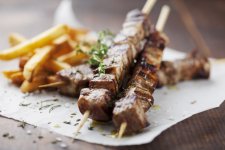
Looking for the best souvlakia recpie
 
Perfect ? Thanks for the reply Nick. Enjoyed reading some of the history too ?
 
  • Like
Reactions: dimi_pat

How Do You Keep Briam from Getting Soggy?

I've been making briam lately, and while I love the flavors, I can't seem to get the texture quite right. My vegetables often end up a little too soggy, especially the zucchini and eggplant. I remember eating briam in Greece where the vegetables were tender but still held their shape, and some even had slightly caramelized edges.

I'm wondering if I'm adding too much olive oil or if the vegetables are releasing too much moisture as they cook. Would salting the eggplant and zucchini beforehand make a difference? I also wonder whether I should be using a larger baking dish so the vegetables aren't crowded together.

Do you bake your briam covered or uncovered? What oven temperature do you typically use? I'd love to hear any traditional cooking techniques or family secrets that help achieve the right texture without sacrificing flavor.

What Greens Do You Use in Traditional Hortopita?

I've always loved traditional Greek hortopita, especially the way different greens come together to create such a wonderful combination of flavors. One thing I've noticed is that everyone seems to have their own preferred mixture, often depending on what grows locally or what their family traditionally used.

I've seen recipes that include spinach, Swiss chard, dandelion greens, leeks, and various wild greens. Some people also add fresh herbs like dill, parsley, and mint to give the filling even more flavor. I'm curious about which combinations are considered the most traditional, particularly in different regions of Greece.

Do you use mostly spinach, or do you prefer a mixture of wild greens? Does your family add feta cheese, or do you keep the filling entirely focused on the greens? I'd love to hear about your favorite combinations and any family secrets!

Does Cooking in a Clay Pot Really Improve Greek Food?

I've been thinking about trying some traditional Greek recipes using a clay pot, and I'm curious whether it really makes a difference in the finished dish. I've heard that clay pots distribute heat evenly and help keep food moist, especially when cooking slowly in the oven.

I'm imagining dishes like giouvetsi, lamb with potatoes, or even a simple vegetable dish. I love the idea of cooking Greek food using more traditional methods, but I'm wondering whether the results are noticeably different from using a regular baking dish or Dutch oven.

For those of you who have cooked Greek food in clay pots, what has your experience been? Does the food actually taste better, or is it more about the cooking experience? I'd also love recommendations for which dishes to try first and whether there's anything special I should know before getting started!

Info About Greek Pork Dish with Celery and Leeks?

I'm trying to remember the name of a traditional Greek dish that my family used to make when I was younger. It had pork, celery, and leeks, and I remember it being absolutely delicious! Unfortunately, I never learned how to make it, and now I'm hoping to recreate it.

I remember the pork being very tender, and the vegetables were cooked until they were soft and flavorful. I can't remember all the ingredients, but I believe there might have been a lemon sauce involved. I'm not sure if it was avgolemono or something simpler.

Does anyone know what this dish might be called? I'd also love to hear how your family prepares it, especially which cuts of pork work best and whether you use any additional herbs or seasonings. I'd really like to bring this dish back into my kitchen and enjoy it again!

Do You Make Soutzoukakia With Cinnamon, Cumin, or Both?

I've been thinking about making soutzoukakia soon, and I'm curious how everyone seasons theirs. I've noticed that some recipes rely heavily on cumin, while others include cinnamon, and some use a combination of both.

I've always thought the spices are what make soutzoukakia so distinctive compared to regular Greek meatballs. Cumin gives them that warm, earthy flavor, while cinnamon adds something a little different. I'm wondering whether using both creates a better balance or if one spice should really be the star.

I'm also curious whether these differences come from family traditions or regional cooking styles. I know everyone seems to have their own way of making this dish, especially when it comes to seasoning the meat and tomato sauce.

How does your family prepare soutzoukakia? Do you use cinnamon, cumin, or both, and how much do you typically add?
Sign up for a free account and share your thoughts, photos, questions about Greek food, travel and culture!

WorldwideGreeks.com is a free online forum community where people can discuss Greek food, travel, traditions, history and mythology.
Join Worldwide Greeks here!

JOIN COMMUNITY FOR FREE

LOGIN TO YOUR ACCOUNT
Back
Top