1 - 9 of 9 Posts

d_kakavouli

Active member
  • Like
Reactions: dubai_suzie
Here are a few useful calendars I've found

Thanks for sharing! I add the "Greek Holidays" calendar to my google calendar to get reminded of important dates but it doesn't include Saints Days
 
  • Like
Reactions: nm1999
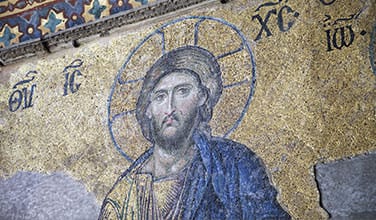
About 5 years ago a friend (non Greek) asked me if her granddaughter had a nameday. Her name was Patrice. I explained Patricia is my Anglo name but my Greek name is Paraskevi. Wanting to impress her συμπεθέρη, she asked me if I could let her know when their namedays were. I now have around 40 people on my list. I use namedays.gr ,iconograms, abbamoses.com to source namedays. Wikipedia is a good source for icons. When I cannot find a Greek Orthodox name, I also search Eastern Orthodox church and the Coptic Church. Sometimes I search Catholic saints for names like Xavier and Corona.
Each month I go through my existing namedays and add new names to my list. Abbamoses does not have icons. Some of the names in namedays.gr are a little dodgy. I write about the saint,why they became a Saint and their feast day. Saints can have more than one nameday depending on the Greek Island or province that celebrates the saint. In 2019 i was lucky enough to go to Cappadocia where most of our saints were born, resided, persecuted and became saints. Patricia
THank you so much for sharing. I love the name Paraskevi, it is my aunts name. I will use these saints day calendars to track everyones name days. It is so hard to keep track these days because there aer so many people to keep track of and these days everyone has more unique names in Greece. Cheers :)
 
  • Like
Reactions: Patisqua
Having a name day is really special. I was baptized under a different name (Kaliope) than my birth certification (Katherine) and I actually celebrate both! I don't think there are really any strict rules, it's all about what we are comfortable with and if our parents had a saint in mind when they named us.
 
Greeks have quite a few beautiful and unusual female names. Now I have started to think about naming my daughter a Greek name. Perhaps it would be unusual enough for my state, and her name would be unique. I was also surprised to hear about the existence of the name calendar for the first time from you. Previously I had only heard of regular calendars. The thing is, I also use one so I don't miss important meetings or events. For example, before Christmas, I need to turn in a large number of reports. So already now I put in my december calendar all the dates when I have to do it. You have children, so maybe you can use a calendar like this so you don't forget about your schedule.
 
Last edited:
Having a name day is really special. I was baptized under a different name (Kaliope) than my birth certification (Katherine) and I actually celebrate both! I don't think there are really any strict rules, it's all about what we are comfortable with and if our parents had a saint in mind when they named us.
My sister is Kalliope. Our Mum, although born in Australia (my Grandparents migrated in 1922) like most of her classmates could not spread English when she started school. He name Asimina was translated to Mena. So our Mum gave us Anglicised names. Paraskevi (me) became Patricia. Kalliope became Colleen. Very Irish names.
 
Greeks have quite a few beautiful and unusual female names. Now I have started to think about naming my daughter a Greek name. Perhaps it would be unusual enough for my state, and her name would be unique. I was also surprised to hear about the existence of the name calendar for the first time from you. Previously I had only heard of regular calendars. The thing is, I also use one so I don't miss important meetings or events. For example, before Christmas, I need to turn in a large number of reports. So already now I put in my december calendar all the dates when I have to do it. You have children, so maybe you can use a calendar like this so you don't forget about your schedule.
All Greek Orthodox parishes (in Australia) produce a calendar with Saints nameday. Cost is usually whatever you can afford. I know the Greek Orthodox church in Hawaii has one. I bought one this year.
Female Greek names are beautiful. Kalliope, Paraskevi, Panayiota, Elefteria, Vasiliki, Ourania...... list goes on and on. Most Greek names have namedays. That's at least 3 presents a year.
 

Greek Easter Celebrations in Greece?

I’ve been thinking a lot about Greek Easter lately and realized I don’t actually know what it’s like to experience it in Greece itself.

I grew up with the traditions here, like church services, red eggs, the midnight “Christos Anesti,” and of course the big Sunday feast, but I’m curious how it all feels in Greece. Is the atmosphere different? More intense? More communal?

What are the days leading up to Easter like there, especially Holy Week? Are there specific customs, processions, or local traditions that stand out depending on the region?

I’ve also heard things about candles at midnight, fireworks, and entire towns participating, how true is that?

Would love to hear from anyone who has experienced it in Greece or grew up there. What are the moments that really define Greek Easter for you?

Does your family make fanouropita for Saint Phanourios Day?

I recently saw a news article about Saint Fanourios Day, and it showed people bringing fanouropita cakes to a church to be blessed. I knew about fanouropita and the tradition of making it when you’re hoping to find something that has been lost, but I didn’t realize how much of a church tradition it could be on the saint’s feast day itself.

Does your family make fanouropita for Saint Fanourios Day? If so, do you bring the cake to church to be blessed, or do you usually make it at home and share it with family and friends?

I’m also curious whether this is something that is still widely done in Greece or if it depends on the region, parish, or family. Are there any other traditions your family follows for Saint Fanourios Day?

I’d love to hear how people observe the day and whether fanouropita is part of your family’s tradition.

Information About Apokries?

I’ve been curious about how people experience Apokries and what it looks like in different parts of Greece. For some, it seems centered on big public celebrations and costumes, while for others it’s more about smaller gatherings, food, and local customs.

I’m especially interested in the traditions people grew up with. Was Apokries something your family actively celebrated, or did it feel more like a community event? Did you attend costume parties, parades, or specific local festivities? And how did days like Tsiknopempti fit into it for you?

I’d also love to hear whether your experience changed over time, for example, celebrating differently as a child versus as an adult, or noticing differences between village and city celebrations.

For those who no longer live in Greece, do you still mark Apokries in some way, or has it faded with distance?

I’m looking forward to hearing how this tradition shows up for others.

Greek Traditions from Childhood?

I’d love to hear everyone’s memories of Greek traditions from childhood, especially the small everyday things that may not even seem unusual until you look back on them later.

For me, some of the strongest memories are tied to food, church, family gatherings, name days, holiday preparations, and the feeling of constantly having people around. Even certain sounds and smells immediately bring everything back.

I’m also curious how traditions differed depending on region or family background. Did your family keep strong village customs? Were there things your grandparents insisted on doing a certain way? Any traditions connected to Easter, Christmas, weddings, coffee, hospitality, music, or food?

For me, we ate a family-oriented Sunday meal where everyone go together after church. That was a big part of things for me.

Are most Greeks left or right?

Are most Greeks liberal leftist progressives? Most that I encounter are. Not only that but self hating. WHY?
Share and discuss Greek traditions related to Greek weddings, christenings, dance & holidays!

WorldwideGreeks.com is a free online forum community where people can discuss Greek food, travel, traditions, history and mythology.
Join Worldwide Greeks here!

JOIN COMMUNITY FOR FREE

LOGIN TO YOUR ACCOUNT
Back
Top