
1 - 2 of 2 Posts

mastichas09

Active member
I didn't know that the tomato isn't native to Greece until my last trip to the country. One of the farmers I met mentioned it. So, I was curious as to how the tomato started getting used in Greek cooking. Here's a summary of some of the information I found:

Tomatoes are thought to have come from South America. They were introduced to Europe by Spanish explorers in the 16th century and eventually made its way to Greece. However, it wasn’t an immediate hit with the locals. Many Greeks were skeptical of the tomato, believing it to be poisonous due to its bright red color. It wasn’t until the mid-19th century that the tomato started gaining popularity in Greece, thanks in part to Italian immigrants who brought with them a love for tomatoes.

How are tomatoes used in Greek cuisine? My favorite is the horiatiki (village) salad. It features tomatoes, cucumbers, onions, feta cheese, and olive oil, with optional additions like olives and peppers. It’s the perfect salad for a hot summer day. Another popular tomato-based dish is moussaka, a baked dish made with layers of eggplant, potatoes, ground meat, and, of course, tomato sauce. This hearty meal is a staple in Greek households, often served on special occasions or weekends.

What makes the tomato such an important ingredient in Greek cuisine is its versatility. Tomatoes can be used in a wide range of dishes, from soups and stews to casseroles and sauces. They can be baked, grilled, roasted, or eaten raw. And they pair beautifully with a variety of other ingredients, from classic Mediterranean flavors like feta cheese and olives to more unexpected combinations like cinnamon and even cumin, which has been used more and more in Greek cuisine over the past few years.
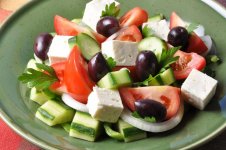
greek-salad-900x598.jpg
 
Last edited:
  • Like
Reactions: k_tsoukalas
I adore tomatoes and I use them in my cooking all the time. Fresh, canned, tomato sauce, tomato paste - it really is a versatile ingredient. I love village salad, too - it's my favorite! They're especially great off the vine!

I didn't realize it wasn't native to Greece, either! Very interesting.
 

What is your favorite Greek potato dish?

Potatoes show up in so many Greek meals, and I think they are often at their best when they soak up plenty of olive oil, lemon, herbs, and cooking juices.

Greek lemon potatoes are probably the first thing that comes to mind for me. I love when they are roasted until they are soft inside, a little crisp around the edges, and full of lemon and oregano. Potatoes cooked alongside chicken or lamb are also hard to beat because they absorb so much flavor from the pan.

I also enjoy simple boiled potatoes dressed with olive oil, lemon, parsley, and salt, especially with fish or grilled meat.

What Greek potato dish do you make most often? Do you prefer lemon potatoes, potatoes roasted with meat, fried potatoes, or something else? And is there a particular seasoning or family method that makes your version especially good?

Do you make Greek lentil soup with vinegar

I’ve always made fakes with a splash of vinegar, either stirred into the pot near the end or added individually at the table. To me, that little bit of acidity is part of what makes the soup taste right, especially with the earthy lentils, olive oil, onion, garlic, and bay leaf.

But I have a Greek friend who makes hers very differently. She doesn’t use vinegar at all and instead adds quite a lot of tomato product, so her version is much redder and more tomato-forward than mine.

Now I’m curious about what is considered more traditional in Greek cooking. Is vinegar usually a standard part of fakes, or is it more of a regional or family preference? Are tomato-heavy versions just as traditional?

How do you make yours, and what did your family serve growing up?

Favorite Greek Cheeses Beyond Feta

Feta gets most of the attention when people talk about Greek cheese, but there are so many other varieties worth trying. I’m curious which Greek cheeses everyone enjoys most beyond feta.

Graviera is one of my favorites because it works so well on a cheese plate, grated over dishes, or just eaten with bread. Kasseri is another one I really like, especially melted. I’ve also been interested in trying more regional cheeses like metsovone, manouri, kefalotyri, and formaela.

Some Greek cheeses seem to be much easier to find outside Greece than others, so I’d also love to know which ones people regularly buy and where they usually find them.

What Greek cheeses do you keep coming back to? Are there certain ones you associate with a particular region, dish, or family tradition? And if someone has mostly eaten feta, which Greek cheese would you recommend they try next?

Do you put potatoes in your briam?

I've noticed that there are quite a few variations of briam, especially when it comes to which vegetables people include. One ingredient I'm particularly curious about is potatoes. Do you always put potatoes in your briam, or do you prefer making it without them?

I usually think of briam as a combination of zucchini, eggplant, potatoes, tomatoes, onions, and plenty of olive oil. I love how the potatoes absorb all those wonderful flavors as everything slowly roasts together in the oven.

However, I've seen recipes that leave the potatoes out entirely and focus more on the summer vegetables. I imagine that makes the dish a little lighter.

I'm also curious whether there are regional differences in how briam is prepared throughout Greece. Does your family have a particular way of making it? And what vegetables do you consider absolutely essential?

Do You Make Avgolemono Thick or Brothy?

I usually prefer avgolemono somewhere in the middle. I don’t like it so thick that it feels almost like a cream soup, but I also don’t want it completely thin and brothy. For me, the best version has enough egg and lemon to give the broth some body while still keeping it light.

A lot probably depends on what kind of avgolemono you’re making, too. In chicken soup, I like it a little more brothy because I want the rice or orzo and chicken to still stand out. With something like lahanodolmades, I don’t mind the avgolemono sauce being thicker because it is coating the food rather than serving as the soup itself.

The lemon level matters just as much as the thickness. I like enough lemon to make it bright and noticeable, but not so much that it overwhelms everything else. I think balance is really the key.
Sign up for a free account and share your thoughts, photos, questions about Greek food, travel and culture!

WorldwideGreeks.com is a free online forum community where people can discuss Greek food, travel, traditions, history and mythology.
Join Worldwide Greeks here!

JOIN COMMUNITY FOR FREE

LOGIN TO YOUR ACCOUNT
Back
Top

