1 - 3 of 3 Posts

nadellii

Active member
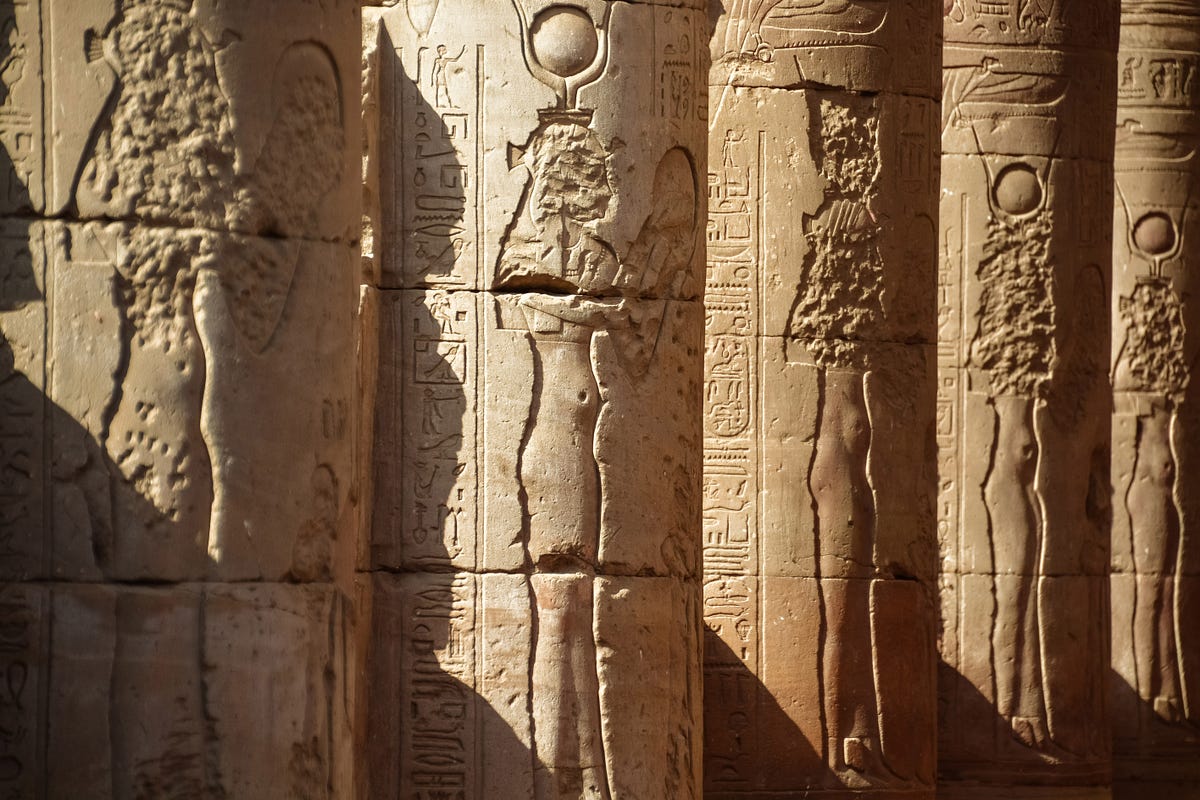
Ancient Egypt and Greece hav had so much influence over each other, perhaps more than any other ancient civilizations. This article specifically focuses on the impact of Egypt on Ancient Greece.
 
  • Like
Reactions: Vangelis
Ancient Egypt and Greece hav had so much influence over each other, perhaps more than any other ancient civilizations. This article specifically focuses on the impact of Egypt on Ancient Greece.

This article and others I have read show that, chronologically, ancient Egyptian architecture and sculpture inspired the creation of Greek temples and statues, and partially influenced their style. Other authors have claimed that the Greek alphabet was derived from the Phoenician [a Semitic] alphabet, which I have disproved in a chapter. And, as far as I know, no author of antiquities has claimed influence of paleolithic Occitan (cave) painting and (clay) sculpture on Egypt or on the Greek world. Anyway, the author of the cited article wrote it in order to fight racism against Egyptians, who, as Africans, are presumed to be negroid people. Well, if we look at the ancient Egyptian paintings, statuettes, and the face of the Sphynx, we see that most Egyptian men (with sun tanned faces) and women (with whitish faces) are Caucasian. I claim that the most ancient populations by the Nile, the Hindus River, and many other rivers were ethnically the same -- "Proto-Greek" -- and so were their languages.
 

Analyzing Greece in World War I

I recently got into a discussion with some family members about Greece’s role in World War I, and it made me realize I don’t fully understand what happened.

From what I gather, Greece was pretty divided at the time, especially between King Constantine I and Eleftherios Venizelos, but I’m a little unclear on how that actually played out in terms of alliances and decisions.

Was Greece officially neutral at first? And how did it eventually end up joining the war on the Allied side?

I’ve also heard the term “National Schism” come up in this context—how significant was that in shaping Greece’s involvement?

If anyone has a clear way of explaining this period, or can point out the key events to focus on, I’d really appreciate it. It feels like an important piece of history I should understand better.

Daily Life in Ancient Athens?

When I visited Athens recently, I spent a lot of time walking around the ancient sites like the Acropolis of Athens and the Ancient Agora of Athens. Seeing the ruins up close was incredible, but it also made my imagination wander.

As I walked through the Agora and looked up at the Acropolis, I kept wondering what daily life was actually like in Ancient Athens. What did an ordinary day look like for people who lived there? Were the streets busy with merchants and philosophers debating ideas? What kinds of foods were people cooking, and how did families spend their evenings?

It’s easy to think about the big historical moments or famous figures, but I’m really curious about everyday life. What were homes like, how did people spend their time, and what might a normal day have looked like for the average Athenian? I’d love to hear any insights or resources people recommend!

Period of Greek History You Find the Most Fascinating?

One of the things I love most about visiting Greece is how layered the history feels. You can be standing in one place and realize people have been living there for thousands of years across completely different eras.

So far, I’ve been especially drawn to Minoan history, places like Knossos really stayed with me, and also sites connected to the New Testament. Visiting locations tied to early Christianity adds a whole different dimension to travel for me.

Lately I’ve been thinking about planning future trips around specific historical periods, but Greece has so many that it’s hard to know where to focus next. Ancient classical sites, Byzantine monasteries, Ottoman-era towns, Venetian fortresses, it’s almost overwhelming in a good way.

I’d love to hear what periods of Greek history you personally find most fascinating, and why. Are there particular places that really brought that era to life for you? I’m looking for inspiration for future exploring.

Learning About Ancient Corinth

I’m hoping to visit the ruins of Ancient Corinth on a future trip to Greece, and I’d like to learn more about the history before I go. I always find that I appreciate archaeological sites more when I understand what I’m looking at and know some of the stories behind the ruins.

For those who have visited Ancient Corinth, what would you recommend learning about beforehand? Are there particular periods of the city’s history, important events, or historical figures that help put the site into context? I know Corinth had an important location and a long history, but I’d like to understand more about how the city developed and changed over time.

I’d also love recommendations for books, documentaries, podcasts, or other resources that give a good introduction to Ancient Corinth. What helped you understand the site and its history before or after your visit?

Greek life under Roman rule?

I’ve been reading more about Greek history lately, especially periods that don’t get as much everyday attention, and I keep coming back to Greek life under Roman Empire rule.

I know the broad timeline, Greece absorbed into the Roman world, cities continuing to function, Greek culture influencing Rome as much as the other way around — but I’m really curious about the lived experience. What did daily life actually feel like for ordinary Greeks during this period? How much continuity was there with earlier Hellenistic life, and where did Roman administration, law, or customs really change things?

I love history most when I can picture it: streets, homes, education, food, language, religion. Were people aware they were living in a “Roman” era, or did it feel like Greek life with a new layer on top?

If anyone has thoughts, favorite books, articles, documentaries, or even museum resources, I’d love recommendations.
Share and discuss Greek history!

WorldwideGreeks.com is a free online forum community where people can discuss Greek food, travel, traditions, history and mythology.
Join Worldwide Greeks here!

JOIN COMMUNITY FOR FREE

LOGIN TO YOUR ACCOUNT
Back
Top

