
1 - 1 of 1 Posts

tomipark

Active member
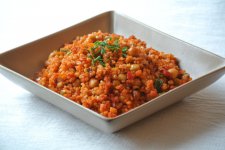
This recipe is so tasty!! The bulgur that is native to the island of Chios is a bit different than what we expect. Usually, bulgur is steamed whole. The version found in Chios is coarsely ground. When preparing this dish, use bulgur from Chios if you can find it. If not, just use whatever bulgur you can find.

Ingredients
  • 3 tablespoons Greek olive oil, plus more to garnish
  • 1/2 cup chopped onion
  • 1 cup coarse bulgur
  • 1/2 teaspoon red pepper flakes
  • 2 cups water, chicken stock, or vegetable stock
  • 1 14.5 ounce can diced tomatoes (use the juices, as well)
  • 1 teaspoon sugar
  • Salt and pepper, to taste
  • 2/3 cup crumbled feta, optional
  • 3 tablespoons fresh, chopped parsley

Add oil to a large saucepan and heat over medium heat for one minute. Add the onion and saute until it starts to soften, which should take three or four minutes. Add the bulgur and red pepper flakes to the pan and stir with a wooden spoon until the bulgur is coated in the oil. Pour the water or stick into the pan along with the tomatoes and sugar. Stir with the spoon until well combined. Bring the mixture to a boil while covered and then reduce the heat to a simmer after it boils. Simmer the mixture for ten minutes or until the bulgur looks moist and the mixture thickens. The bulgur should also be soft. Remove the pan from the heat and let it stand, covered, for about three minutes. Season with salt and pepper, to taste, and stir in the feta cheese. Top with fresh, chopped parsley just before serving.

Hondros-720x482.jpg
 

Do you put potatoes in your briam?

I've noticed that there are quite a few variations of briam, especially when it comes to which vegetables people include. One ingredient I'm particularly curious about is potatoes. Do you always put potatoes in your briam, or do you prefer making it without them?

I usually think of briam as a combination of zucchini, eggplant, potatoes, tomatoes, onions, and plenty of olive oil. I love how the potatoes absorb all those wonderful flavors as everything slowly roasts together in the oven.

However, I've seen recipes that leave the potatoes out entirely and focus more on the summer vegetables. I imagine that makes the dish a little lighter.

I'm also curious whether there are regional differences in how briam is prepared throughout Greece. Does your family have a particular way of making it? And what vegetables do you consider absolutely essential?

Favorite Greek Cheeses Beyond Feta

Feta gets most of the attention when people talk about Greek cheese, but there are so many other varieties worth trying. I’m curious which Greek cheeses everyone enjoys most beyond feta.

Graviera is one of my favorites because it works so well on a cheese plate, grated over dishes, or just eaten with bread. Kasseri is another one I really like, especially melted. I’ve also been interested in trying more regional cheeses like metsovone, manouri, kefalotyri, and formaela.

Some Greek cheeses seem to be much easier to find outside Greece than others, so I’d also love to know which ones people regularly buy and where they usually find them.

What Greek cheeses do you keep coming back to? Are there certain ones you associate with a particular region, dish, or family tradition? And if someone has mostly eaten feta, which Greek cheese would you recommend they try next?

Do you make Greek lentil soup with vinegar

I’ve always made fakes with a splash of vinegar, either stirred into the pot near the end or added individually at the table. To me, that little bit of acidity is part of what makes the soup taste right, especially with the earthy lentils, olive oil, onion, garlic, and bay leaf.

But I have a Greek friend who makes hers very differently. She doesn’t use vinegar at all and instead adds quite a lot of tomato product, so her version is much redder and more tomato-forward than mine.

Now I’m curious about what is considered more traditional in Greek cooking. Is vinegar usually a standard part of fakes, or is it more of a regional or family preference? Are tomato-heavy versions just as traditional?

How do you make yours, and what did your family serve growing up?

Do You Put Cinnamon in Your Keftedes?

I’m curious how everyone here makes keftedes, especially when it comes to cinnamon. I know some Greek families add a little cinnamon to the meat mixture, while others would never think of putting it in.

In my experience, even a small amount can change the flavor quite a bit. It gives the keftedes a warmer, slightly sweeter spice in the background, but I can also see how it might not be for everyone. I’ve had versions that lean more heavily on oregano, mint, parsley, garlic, and onion instead.

Do you put cinnamon in your keftedes? If you do, how much do you usually use, and was that something your family always did? I’d also be curious to know if it varies depending on what part of Greece your family comes from.

Would love to hear how everyone seasons theirs and what you consider essential for really good keftedes.

How does your family season dolmades?

I’ve been thinking about how much dolmades can vary from one family to another, especially when it comes to seasoning. Even when the basic ingredients are similar, the flavor can be completely different depending on which herbs and spices are used.

How does your family season dolmades? Do you use mostly dill and parsley, or do you add mint as well? I’ve also seen recipes that include green onions, oregano, or even a little cinnamon, especially when meat is part of the filling.

I’m curious whether you season the rice mixture pretty heavily before rolling the grape leaves or keep it simple and let the lemon and olive oil provide most of the flavor. Does your family add lemon juice directly to the filling, or only during cooking and serving?

I’d especially love to hear about any regional or family traditions. What gives your dolmades their distinctive flavor?
Sign up for a free account and share your thoughts, photos, questions about Greek food, travel and culture!

WorldwideGreeks.com is a free online forum community where people can discuss Greek food, travel, traditions, history and mythology.
Join Worldwide Greeks here!

JOIN COMMUNITY FOR FREE

LOGIN TO YOUR ACCOUNT
Back
Top
