1 - 4 of 4 Posts

xmelissaa

Active member
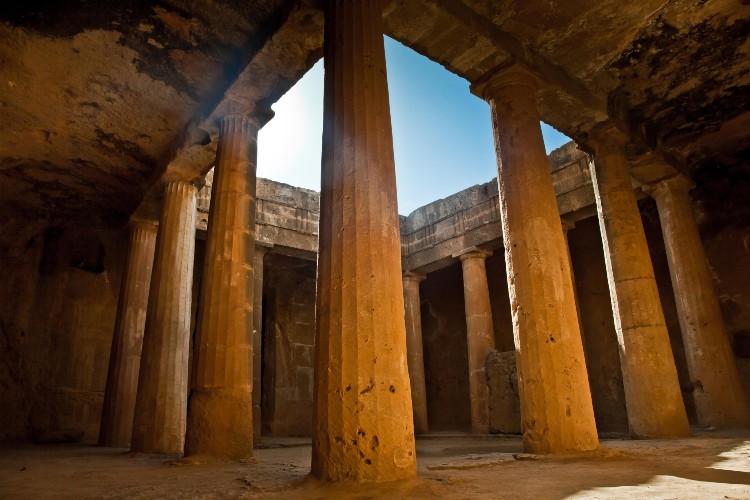
As with all Greek territories, Cyprus has undergone many changes of power throughout history, starting from the ancient times. The first change of power came with the Phoenicians followed by the Persian empire. After approximately 200 years of Persian occupation, Alexander the Great took control of Cyprus. Cyprus was then a part of the Byzantine empire, as was all of Greece, until it was occupied by the British Empire, and then the Ottoman Empire (as with all of Greece as well). After Greece and Cyprus became independent from Ottoman rule, Cyprus was then again conquered by the British until it became independent in 1960. As you can see, the history is a long list of changes in power, leaving Cyprus with thousands of years of occupation and control. This is an unfortunate truth, but something that is important that we should be aware of.
 
  • Like
Reactions: Vera Muller
The history of Cyprus is really fascinating. Thank you for sharing!
 
  • Like
Reactions: Vera Muller
As with all Greek territories, Cyprus has undergone many changes of power throughout history, starting from the ancient times. The first change of power came with the Phoenicians followed by the Persian empire. After approximately 200 years of Persian occupation, Alexander the Great took control of Cyprus. Cyprus was then a part of the Byzantine empire, as was all of Greece, until it was occupied by the British Empire, and then the Ottoman Empire (as with all of Greece as well). After Greece and Cyprus became independent from Ottoman rule, Cyprus was then again conquered by the British until it became independent in 1960. As you can see, the history is a long list of changes in power, leaving Cyprus with thousands of years of occupation and control. This is an unfortunate truth, but something that is important that we should be aware of.
Hi! What towns would you recommend to visit to learn more about Cyprus history? I'm thinking of travelling there:unsure:
 
Hi! What towns would you recommend to visit to learn more about Cyprus history? I'm thinking of travelling there:unsure:
I love history, too, and I was wondering the same thing about Cyprus! I found this link, I am thinking of hitting some of these places - planning a trip to that side of the world for the near future (maybe next year).

 
  • Like
Reactions: Vera Muller

Analyzing Greece in World War I

I recently got into a discussion with some family members about Greece’s role in World War I, and it made me realize I don’t fully understand what happened.

From what I gather, Greece was pretty divided at the time, especially between King Constantine I and Eleftherios Venizelos, but I’m a little unclear on how that actually played out in terms of alliances and decisions.

Was Greece officially neutral at first? And how did it eventually end up joining the war on the Allied side?

I’ve also heard the term “National Schism” come up in this context—how significant was that in shaping Greece’s involvement?

If anyone has a clear way of explaining this period, or can point out the key events to focus on, I’d really appreciate it. It feels like an important piece of history I should understand better.

ancient Greek circumflex: tilde vs. inverted breve

Apparently (https://en.wikipedia.org/wiki/Greek_diacritics) tilde and inverted breve are equivalent circumflex diacritics, but I have never come across the tilde in online ancient Greek texts. I would like to be able to type the inverted breve. The excellent program https://typegreek.com/ apparently does not allow this. Is there another program or procedure form doing this? Thanks in advance.

Greek life under Roman rule?

I’ve been reading more about Greek history lately, especially periods that don’t get as much everyday attention, and I keep coming back to Greek life under Roman Empire rule.

I know the broad timeline, Greece absorbed into the Roman world, cities continuing to function, Greek culture influencing Rome as much as the other way around — but I’m really curious about the lived experience. What did daily life actually feel like for ordinary Greeks during this period? How much continuity was there with earlier Hellenistic life, and where did Roman administration, law, or customs really change things?

I love history most when I can picture it: streets, homes, education, food, language, religion. Were people aware they were living in a “Roman” era, or did it feel like Greek life with a new layer on top?

If anyone has thoughts, favorite books, articles, documentaries, or even museum resources, I’d love recommendations.

Themistocles: Hero, Politician, or Master Strategist?

This weekend I met someone named Themistocles, which immediately caught my attention. We ended up having a conversation about the famous Athenian statesman and general, and it got me thinking more about his place in Greek history.

Themistocles is often credited with recognizing the importance of naval power and helping secure the Greek victory at the Battle of Salamis. Without his foresight and strategy, the Persian Wars may have had a very different outcome. At the same time, he was also a politician who made powerful enemies and was eventually ostracized from Athens.

It made me wonder how people today view him. Was he primarily a hero who helped save Greece, a brilliant politician navigating a difficult era, or one of history's greatest military strategists? I'd love to hear your thoughts on his legacy and whether you think he gets the recognition he deserves.

Most forgotten period of Greek history?

I was in Crete once eating at a restaurant and there was a pile of artifacts heaped - broken pottery shards, etc. The restaurant told us that they were going to throw them out. I said, but they are artifacts, why?! They said that no one cares about that time period the artifacts came from - something about an Arabic occupation.

I thought it was interesting and it stayed with me nearly two decades later. This is clearly a forgotten period of Greek history. Does this happen a lot in Greece? Got me thinking about Greek history and what else may be forgotten... Would love your thoughts.
Share and discuss Greek history!

WorldwideGreeks.com is a free online forum community where people can discuss Greek food, travel, traditions, history and mythology.
Join Worldwide Greeks here!

JOIN COMMUNITY FOR FREE

LOGIN TO YOUR ACCOUNT
Back
Top