
1 - 3 of 3 Posts

xmelissaa

Active member
This recipe is pretty similar to Spanish paella...add some fresh Greek fish and you've got a great meal :) Sautee the onions and garlice first, then add the fish and white wine. Add the tomato and zuchinni after the fish is almost cooked. Boil the orzo or rice pilaf separately and add in when al dente. Sprinkle cheese on top and enjoy!
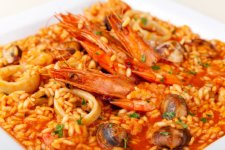
  • 1/2 cup Greek olive oil
  • 1 large onion, chopped
  • 1 garlic clove, minced
  • 2 pounds skinless fresh fish, cooked and cut into 1/2-inch cubes
  • 1 pound mussels in the shell, cooked and meat separated from the skin
  • 1 pound cooked medium-sized shrimp, peeled
  • 1/2 cup dry white wine
  • 1 teaspoon tomato paste
  • 3/4 cup uncooked orzo or rice pilaf
  • 3 1/2 cups water or broth
  • 1 large zucchini, diced
  • 4 tablespoons grated kefalotiri or Romano cheese

Seafood-Pilafi-With-Orzo-720x480.jpeg
 
Thanks for posting!

Here are a few other recipes for Greek seafood rice pilaf:


This dish looks soooo amazing! I would love to make this sometime. I have had similar dishes in Greece and they're always magical.
 

Greek cooking without a recipe?

I've been thinking about how much traditional Greek cooking relies on instinct rather than following exact recipes. Some of the Greek dishes I learned to make were taught to me by feel, with someone showing me what to do rather than measuring everything out.

I actually enjoy cooking this way, but I've noticed that it can make certain dishes difficult to recreate consistently! Sometimes everything comes together perfectly, and other times I wonder what I did differently.

I'm curious how others approach this. Did you learn Greek cooking by watching your yiayia, mother, or other relatives? Do you measure ingredients, or do you just know when something looks, smells, or tastes right?

Do you make your pastitsio with a thick or thin layer of krema?

I've always preferred my pastitsio with a nice, thick layer of béchamel on top. To me, that's one of the best parts of the dish! I love when the krema is rich, creamy, and thick enough to hold its shape when you cut into the pastitsio.

The problem is that I've been having trouble getting my krema just right. Sometimes it comes out too thin, and other times the texture isn't quite as smooth as I'd like. I've tried adjusting the amount of flour and milk, but I still haven't found the perfect balance.

I'm curious how everyone else makes theirs. Do you prefer a thick layer of béchamel or just enough to cover the pasta? Does your family add eggs or cheese to the mixture?

I'd especially love to hear any tips for making a thick, smooth krema that sets beautifully when baked!

Is lamb or beef more traditional for giouvetsi?

I've been looking into traditional Greek giouvetsi recipes lately, and I'm curious about which meat is considered the most traditional. I've seen recipes that use lamb, others that call for beef, and even some that use chicken.

I love the idea of slowly cooking the meat in a rich tomato sauce with orzo until everything becomes tender and flavorful. However, I'm wondering whether lamb or beef would be the more authentic choice.

Is one traditionally preferred in certain regions of Greece? I've read that lamb is often associated with older Greek recipes, but beef seems to be very common in modern versions of giouvetsi.

I'm also curious whether the choice of meat changes the way the dish is prepared. Does lamb require different seasonings or cooking times than beef?

For those familiar with traditional Greek cooking, which version do you prefer, and which would you recommend trying first?

Do You Put Cinnamon in Your Keftedes?

I’m curious how everyone here makes keftedes, especially when it comes to cinnamon. I know some Greek families add a little cinnamon to the meat mixture, while others would never think of putting it in.

In my experience, even a small amount can change the flavor quite a bit. It gives the keftedes a warmer, slightly sweeter spice in the background, but I can also see how it might not be for everyone. I’ve had versions that lean more heavily on oregano, mint, parsley, garlic, and onion instead.

Do you put cinnamon in your keftedes? If you do, how much do you usually use, and was that something your family always did? I’d also be curious to know if it varies depending on what part of Greece your family comes from.

Would love to hear how everyone seasons theirs and what you consider essential for really good keftedes.

How does your family season dolmades?

I’ve been thinking about how much dolmades can vary from one family to another, especially when it comes to seasoning. Even when the basic ingredients are similar, the flavor can be completely different depending on which herbs and spices are used.

How does your family season dolmades? Do you use mostly dill and parsley, or do you add mint as well? I’ve also seen recipes that include green onions, oregano, or even a little cinnamon, especially when meat is part of the filling.

I’m curious whether you season the rice mixture pretty heavily before rolling the grape leaves or keep it simple and let the lemon and olive oil provide most of the flavor. Does your family add lemon juice directly to the filling, or only during cooking and serving?

I’d especially love to hear about any regional or family traditions. What gives your dolmades their distinctive flavor?
Sign up for a free account and share your thoughts, photos, questions about Greek food, travel and culture!

WorldwideGreeks.com is a free online forum community where people can discuss Greek food, travel, traditions, history and mythology.
Join Worldwide Greeks here!

JOIN COMMUNITY FOR FREE

LOGIN TO YOUR ACCOUNT
Back
Top

