
1 - 3 of 3 Posts

greek_ggirl

Active member
Narcissist was a young boy of unrivaled beauty, in Greece or anywhere else. One day, Narcissus went hunting in the woods with friends, but he became separated from them. When she attempted to speak to him, a confusing conversation ensued because Hera’s punishment to Echo caused her to have difficulty speaking. Because of this curse, Narcissus pushed her away, believing himself to be too good to go around having affairs with wood nymphs. His rejection broke Echo’s heart.
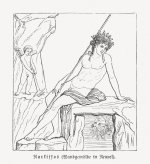
narcissus-720x784.jpg
 
  • Like
Reactions: dpappas87
I love how this story plays on the name narcissist! So cool
 
I love how this story plays on the name narcissist! So cool
Yes! It is where the term narcissism is derived from, and it has also become the name of the flower that grew where he wasted away... Another name for daffodils is narcissus...
 

What is the symbolism behind Medusa?

I’m Greek, but I feel like I only ever heard the surface version of Medusa growing up, the “monster with snakes for hair who turns people to stone.” Lately I’ve been seeing people talk about her in a completely different way, more symbolic than literal, and now I’m curious what the deeper meaning actually is.

Was she always meant to be a monster, or is there more to her story? I’ve also heard that in some versions, she wasn’t originally a monster at all, which changes how you look at everything.

Is Medusa meant to represent danger, protection, transformation… something else entirely? And how did ancient Greeks view her compared to how we interpret her now?

I’d really love to understand this from a more cultural and mythological perspective, not just the simplified version most of us grew up with.

Was Corfu Really Homer's Scheria?

I'm hoping to visit Corfu in late summer or early fall, so I've been reading more about the island's mythology before I go. One thing that keeps coming up is the idea that Corfu was Homer's Scheria, home of the Phaeacians in the Odyssey. The more I read, the more fascinated I become.

I know there are different theories, and not everyone agrees that Scheria was actually Corfu. Still, it's fun to imagine Odysseus washing ashore there and meeting Nausicaa before finally returning to Ithaca. It certainly adds another layer to visiting the island.

What do you all think? Do you believe Corfu really inspired Homer's Scheria, or do you think Scheria was meant to be an entirely mythical place? I'd also love recommendations for any sites on Corfu with strong connections to these myths that are worth visiting.

Athena and the Story of Athens

I’m planning a trip to Athens later this year, and I realized I’d love to refresh my memory on the story behind the city, especially how it’s connected to Athena.

I remember that there was some kind of contest between Athena and Poseidon for control of the city, but I’m a little fuzzy on the details. I think it had something to do with gifts they offered, but I’d love a clearer version of the story.

For those who know Greek mythology well, how does the myth actually go, and what’s the significance behind it? Does it still show up in the city today in any meaningful way?

Would love to hear a simple breakdown or any insights before I go!

Learning About Cronus of Greek Mythology

I’ve been learning more about Cronus lately and realized that I only knew the most basic parts of his story. I knew he was one of the Titans and the father of Zeus, but there is much more to his role in Greek mythology.

Cronus overthrew his own father, Uranus, and later became ruler during what was sometimes described as a Golden Age. He was also warned that one of his children would eventually overthrow him, which led to the famous story of him swallowing each of them after they were born. Zeus, of course, escaped that fate and eventually defeated him.

I’m curious how others view Cronus. Do you think of him mainly as a villain, or as a more complicated figure shaped by fear and prophecy? Are there any lesser-known stories about Cronus that you think are especially interesting or important to understanding him?

Creation Stories of Greek Mythology

I’ve been spending a lot of time researching the creation stories of Greek mythology, and I find them endlessly fascinating. What draws me in is how there isn’t a single, fixed origin story—everything shifts depending on the source. Between Hesiod’s Theogony, the Orphic traditions, and later philosophical interpretations, the beginning of the cosmos feels fluid rather than settled.

I’d love to hear how others approach these myths. Which version of creation resonates most with you, the emergence from Chaos, the role of Gaia and Uranus, or the more mystical Orphic egg? Are there lesser-known fragments, regional traditions, or scholarly sources you’ve found especially compelling?

I’m always excited to discover new angles, translations, or interpretations, especially ones that explore why the Greeks may have been comfortable holding multiple origin stories at once. Any recommendations, insights, or favorite passages would be greatly appreciated.
Share and discuss Greek mythology!

WorldwideGreeks.com is a free online forum community where people can discuss Greek food, travel, traditions, history and mythology.
Join Worldwide Greeks here!

JOIN COMMUNITY FOR FREE

LOGIN TO YOUR ACCOUNT
Back
Top

