1 - 17 of 17 Posts

mastichas09

Active member
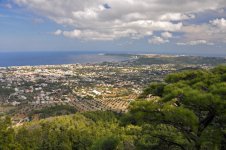
I love the history of this place! In 480 BC, along with the other two city-states, ancient Ialyssos formed a confederation to protect themselves. Together, these three would form the capital of Rhodes. The capital stretched from this area to present day Rhodes Town. You will see the Temple of Athena, the Doric fountain-house, and the Byzantine fortifications.

ialyssos.jpg
 
I loved this place! My cousin insisted that we take a guided tour and it was actually great even though I usually don't like tour guides. There is so much to learn I highly recommend it
 
  • Like
Reactions: cf_fraiser
In 2011 as a part of the local government reform it became a part of the municipality Rhodes
 
Best place to visit is Ancient Kamaros not far from Kamaros Scala port
 
  • Like
Reactions: seleanor
Best place to visit is Ancient Kamaros not far from Kamaros Scala port
I love the archeological site there, so cool
 
This is a great place to visit because there is so much history! That's a great photo of it, too.
 
I love the history of this place! In 480 BC, along with the other two city-states, ancient Ialyssos formed a confederation to protect themselves. Together, these three would form the capital of Rhodes. The capital stretched from this area to present day Rhodes Town. You will see the Temple of Athena, the Doric fountain-house, and the Byzantine fortifications.

View attachment 332
A great picture. However, unfortunately it cannot contain its fascinating history, from its foundation by Peloponnesian people. (They were distant cousins of mine, for they founed my ancestral city, Thoyrioi in South Italy, named after the Peloponnesian Thouria.) Recently the name "Ialyssos" has intrigued me because it has seemed to be a theophoric name (a name that contains the word "god" or the name of a god), like the well known Japetos, the titan who was cast down by the Olympian gods. So, I see Japetos as Ja/Ia/Ya + petos, that is, the "Ya cast down One." So, I see Ialyssos as Ya-lyssos. Let us remember that Mount Parnassus is in the Peloponnese and that one of its peaks [where a god resides] was called YampeiE. From various linguistic evidence I have inferred that Ya was the rain-god, whereas Zeus was the storm-god.
 
  • Like
Reactions: greggd12
A great picture. However, unfortunately it cannot contain its fascinating history, from its foundation by Peloponnesian people. (They were distant cousins of mine, for they founed my ancestral city, Thoyrioi in South Italy, named after the Peloponnesian Thouria.) Recently the name "Ialyssos" has intrigued me because it has seemed to be a theophoric name (a name that contains the word "god" or the name of a god), like the well known Japetos, the titan who was cast down by the Olympian gods. So, I see Japetos as Ja/Ia/Ya + petos, that is, the "Ya cast down One." So, I see Ialyssos as Ya-lyssos. Let us remember that Mount Parnassus is in the Peloponnese and that one of its peaks [where a god resides] was called YampeiE. From various linguistic evidence I have inferred that Ya was the rain-god, whereas Zeus was the storm-god.
No picture of Greece can capture the beautiful history, you have to learn about it in order to see through the picture and the landscape. That is what is most beautiful about Greece, there is history everywhere. You are right
 
No picture of Greece can capture the beautiful history, you have to learn about it in order to see through the picture and the landscape. That is what is most beautiful about Greece, there is history everywhere. You are right
I am sure some inhabitant of the city knows or has found the meaning of the city's name. Please divulge it.
 
  • Like
Reactions: dubai_suzie
I am sure some inhabitant of the city knows or has found the meaning of the city's name. Please divulge it.
Hmmm while I was trying to find the origins of the name I found that there was a name change of the city. Wikipedia says that is used to be called Τριάντα or Trianta before 1976
 
A great picture. However, unfortunately it cannot contain its fascinating history, from its foundation by Peloponnesian people. (They were distant cousins of mine, for they founed my ancestral city, Thoyrioi in South Italy, named after the Peloponnesian Thouria.) Recently the name "Ialyssos" has intrigued me because it has seemed to be a theophoric name (a name that contains the word "god" or the name of a god), like the well known Japetos, the titan who was cast down by the Olympian gods. So, I see Japetos as Ja/Ia/Ya + petos, that is, the "Ya cast down One." So, I see Ialyssos as Ya-lyssos. Let us remember that Mount Parnassus is in the Peloponnese and that one of its peaks [where a god resides] was called YampeiE. From various linguistic evidence I have inferred that Ya was the rain-god, whereas Zeus was the storm-god.
Furthermore, there are two ancient Greek words for "rain", namely Ombros (= rain-storm or thunderstorm, such as Zeus would send) and Yetos (the common rain). They said that Zeus uei as well as ombrei ; *Ya-os (and his daughters or sisters, the Yades) simply uei. (The idea that a God "causes" rain or storms is of a later date, when a God was conceived as a non-physical entity.)
 
Trianta & Ialyssos are 2 different places on Rhodes.
 
  • Like
Reactions: amygdalE
Trianta & Ialyssos are 2 different places on Rhodes.
Im googling and its coming up as the same thing...what is the difference? :)
 
as I said they are 2 different places.these days its difficult to know where one ends and the other begins.Trianta means 30 & named after the number of people who founded the village. some people say its named trianta because only 30 properties were originally allowed to be built there.
 
  • Like
Reactions: redsoxdw_
Furthermore, there are two ancient Greek words for "rain", namely Ombros (= rain-storm or thunderstorm, such as Zeus would send) and Yetos (the common rain). They said that Zeus uei as well as ombrei ; *Ya-os (and his daughters or sisters, the Yades) simply uei. (The idea that a God "causes" rain or storms is of a later date, when a God was conceived as a non-physical entity.)
The aforementioned hypothetical Yaos [*Yaos] was the name of a god whose daughters or sisters are called Yades. Actually I have never seen any mention of this god; the name -- or, more exactly "YAS" [correctly Hyas], mentioned online -- is a back-formation, a modern derivation, from the extant Greek name "YA-des" [Hyades]. YA is the root; either Yas or Yaos is the constructed nominative case of the noun. "Ya" is present in "Iapetos" etc., and has variants such as "Yo". The Latin nominative Jo-us is obviously a latinization of *Yo-os or *Ya-os [or YAS, a contraction equivalent to the Latin JU, as in Jupiter/Ju-pater]. Jupiter = the father/source of what is RIGHT or JUstice (Justitia). {An ancient Roman soldier realized that Jupiter, Zeus, and Yahweh were one and the same god. Much more remains to be said.}
When the Hebrew Bible was translated into Greek, both the Elohim (the Gods) of Genesis-1 and Yahweh of Genesis-2 were translated simply as Theos (God). Thus the Greek YA of "Yahweh" was hidden. Similarly, the JU of "Jupiter" hides the original name, YOU-. Zeus or Deus or Zas is not a variant of Ya/Ia/Ja [Yas], and I do not know any myth about Yas/Yaos, the rain-god, as legislator.
 
Last edited:
I am sure some inhabitant of the city knows or has found the meaning of the city's name. Please divulge it.
I knew the meaning of -lyssos, but the translation of the whole compound word seemed strange --
that's why I asked for assistance. Now, I came across an online list of historical personal names and their etymology. I saw the compound name LYSANDER, which they see as a Latin transcription of the Greek LYSANDROS. They translate the two components as Release and Man, wherefore presumably the whole word means "releasing man" [releaser, liberator?] or perhaps "free man". They also mention that this was the name of a Spartan commander, which suggests to me that the lexical compounding was done by the same Dorians or Peloponnesians who had migrated to Rhodes and produced the name "Ia-lyssos" for a town. Did they mean "God [Ya] liberates" or "Ya-saved"?? These translations are still strange and uncertain.
 
An incidental disquisition about compound words whose components are nouns, like EarthQuake and LysAndros:

Inflected languages like Latin, ancient Greek, old English, etc., had the advantage, to avoid ambiguities and to make accurate translations, precisely by the use of grammatical endings or word alterations. E.g.,
"WordAlteration" = "alteration OF a word". "PhiloTheos" = "philos theOU", but then, when the compound noun was meant to be the name of a being, it was set in a NOMINATIVE form, that is, by suffixing -OS. (So, obviously the word coiners were also perspicacious linguists/semanticists of their own works.) "TheoPhilos" = "theou philos" [= I say: god's friend, god-befriended/loved], which, used as a name, does not need an alteration. However, this "philos" has an accusative/undergoing value or sense, which I tried to convey in my second translation. //

Speaking of "Ia-Lyss(os)", it is difficult to tell whether the second component has an agent/patient (active/passive) value. The use of a verbal noun, a past participle like PETOS in IAPETOS, leaves no doubt about its value [a passive/undergoing value], wherefore I translate it as "by Ya hurled, Ya-hurled, *Iadopetos?" rather than "hurling Ya". Fortunately a myth tells us that invading titans were hurled down from Mount Olympus. Apparently, the word Iapetos is < [from] *Iadopetos by an apochope [Ia( )petos]. [An Assumed Declination: Ias, *Iados (whence Iades; *Iadikos), etc.]

 
Last edited:

How do I start using a manual concrete mixer efficiently for DIY projects?

Picked up a manual concrete mixer for some weekend DIY stuff, but wow, I'm realizing I have no clue if I'm using it in a smart way or just wasting energy. I figured it would be simple, but the mix keeps coming out lumpy or too soupy, and I'm starting to feel like the weak link here is... me. If anyone has tips on getting a smooth mix, pacing myself, or just not making a giant mess every time, I'd love to hear it. I really want to get better at this before I start my patio project.

What Happened to the Colossus of Rhodes?

I’ve been reading about Colossus of Rhodes and realized I don’t actually know what happened to it. I know it was one of the Seven Wonders of the Ancient World, and that it stood somewhere near the harbor in Rhodes, but beyond that, the details are a bit fuzzy for me.

Did it collapse because of an earthquake? And if so, what happened to the remains afterward? I’ve heard different versions—some say it stayed in pieces for a long time, others say it was eventually removed or sold off.

Also, is there any real evidence of exactly where it stood, or is that still debated? Curious to hear what people know or have learned, especially if you’ve visited Rhodes and seen any related sites or history in person.

three posts

latest 3 are idiotic

Rhodes for History Lovers: Where Should You Go?

I've been to Rhodes before and absolutely loved the history there. Walking through the Old Town, visiting the Palace of the Grand Master, and exploring Lindos were some of my favorite experiences. There's a chance I may return in early fall this year or next year if the trip comes together.

This time, though, I'd be traveling with someone who is a serious history buff, so I feel like I need to take my planning up a notch. Beyond the well-known sites, what historical locations in Rhodes would you recommend? Are there any lesser-known ruins, museums, archaeological sites, or villages that history lovers shouldn't miss?

I'd also love suggestions for guided tours, books, or resources that helped you better understand the island's history before visiting. What would be on your must-see list for someone who wants to really dive into Rhodes' past?

shop & tavernas etc starting to open

tourists are arriving now so rhodes is starting to come back to life
Share and discuss your Rhodes photos, questions and experiences!

WorldwideGreeks.com is a free online forum community where people can discuss Greek food, travel, traditions, history and mythology.
Join Worldwide Greeks here!

JOIN COMMUNITY FOR FREE

LOGIN TO YOUR ACCOUNT
Back
Top