1 - 4 of 4 Posts

d_kakavouli

Active member
I was reading that yiprakia is a specialty in some of Greece (I think I read Northern Greece) for New Year's. First of all, is this true? If it is, has anyone here ever made it? Recipes I have seen show that it is kind of like, stuffed grape leaves or stuffed cabbage (I see both), and it makes me feel like I am missing something. Any advice is appreciated.
 
You're right, to me it seems like the same dish! Maybe someone can chime in and tell us if there are any differences. Could it possibly be the same dish with a different name?
 
I was reading that yiprakia is a specialty in some of Greece (I think I read Northern Greece) for New Year's. First of all, is this true? If it is, has anyone here ever made it? Recipes I have seen show that it is kind of like, stuffed grape leaves or stuffed cabbage (I see both), and it makes me feel like I am missing something. Any advice is appreciated.
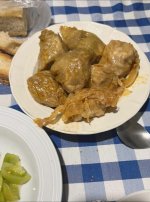
I live in London but just got back from Kozani where the full onslaught of yiaprakia making and eating is in full force. This included an all singing and dancing Yiaprakia Festival in the main square. The key difference between yiaprakia and sarmadakia (stuffed cabbage leaves) is that with yiapriakia the cabbage is pickled, like toursi, about the start of October for the Christmas festivities. A whole cabbage is cored and then placed in a large plastic container and water, salt and lemon is added. This pickles the cabbage and gives it a tangy flavour. Also, the yiaprakia are not rolled in the way that sarmadakia are rolled. It is more like the rice and meat is place in the middle of a piece of cabbage leaf and wrapped not rolled. There are a million recipes of course, but many people add allspice berries, which is one of the first times I have seen it in Greek cooking. The two key ingredients in the stuffing are minced or finely chopped pork and/or beef and rice. This photo was taken on Christmas Eve in Kozani of the first yiaprakia of the season. By the way, they are utterly delicious.
 

Attachments

  • 321818651_1274519743406566_8882102823631740288_n.jpg
    321818651_1274519743406566_8882102823631740288_n.jpg
    68.9 KB · Views: 1
Last edited:
Yiapraki are a specially on the island for Kastellorizo. They are grapevine leaves stuffed with meat, uncooked rice, onion, etc with a touch of cloves and cinnamon (used a lot in Kastellorizian cuisine). They are lined up in a baking dish. Oil, lemon and water to cover. Place plate on top. Bake slowly 180°C for around 25 minutes.
 

How Much Garlic in a Batch of Tzatziki?

How much garlic do you usually put in a batch of tzatziki? I think I may be using a little too much. I usually make mine with about 2 cups of Greek yogurt and 4 cloves of garlic, along with cucumber, olive oil, and the other usual ingredients.

It tastes great when I first make it, but we usually take about three days to finish the batch. By the second or third day, the garlic flavor and smell become really strong. Some people in my household love that and don’t mind it at all, but others think it becomes a bit overpowering. I’m starting to agree that four cloves might be too much, especially since the garlic seems to get stronger as it sits.

What do you all do? How many cloves would you use for about 2 cups of Greek yogurt?

My Family’s Keftedes Recipe

Keftedes are one of those foods that always remind me of family gatherings. Everyone seems to make them a little differently, but this is the basic version my family has always used.

For about a pound of ground beef, we add one small grated onion, a handful of chopped fresh parsley, a little fresh mint, one egg, breadcrumbs, salt, pepper, oregano, and a small splash of red wine vinegar. Sometimes we add a little grated garlic as well.

The important part is mixing everything well and then letting the mixture sit in the refrigerator for a little while before shaping the keftedes. We make them fairly small, roll them lightly in flour, and fry them in olive oil until browned on the outside and cooked through.

We usually serve them with lemon, potatoes, salad, or tzatziki.

How does your family make keftedes? I’m especially curious about which herbs and seasonings everyone uses. Thought I'd share!

How Do You Keep Lamb from Drying Out in the Oven?

I’ve been cooking more traditional Greek food at home lately, and one thing I’m still trying to get right is oven-roasted lamb. I love the flavor, especially with garlic, lemon, oregano, and potatoes, but sometimes the meat comes out a little drier than I’d like.

For those of you who make lamb regularly, how do you keep it tender and juicy in the oven? Do you cover it for part of the cooking time, add water or broth to the pan, or cook it slowly at a lower temperature?

I’m also wondering if the cut makes a big difference. I usually see leg of lamb used, but would shoulder be more forgiving for a long roast?

I’d like to get that really tender Greek-style lamb that practically falls apart. Any tips on temperature, cooking time, marinades, or resting the meat would be appreciated.

Favorite Greek Cheeses Beyond Feta

Feta gets most of the attention when people talk about Greek cheese, but there are so many other varieties worth trying. I’m curious which Greek cheeses everyone enjoys most beyond feta.

Graviera is one of my favorites because it works so well on a cheese plate, grated over dishes, or just eaten with bread. Kasseri is another one I really like, especially melted. I’ve also been interested in trying more regional cheeses like metsovone, manouri, kefalotyri, and formaela.

Some Greek cheeses seem to be much easier to find outside Greece than others, so I’d also love to know which ones people regularly buy and where they usually find them.

What Greek cheeses do you keep coming back to? Are there certain ones you associate with a particular region, dish, or family tradition? And if someone has mostly eaten feta, which Greek cheese would you recommend they try next?

Do you put potatoes in your briam?

I've noticed that there are quite a few variations of briam, especially when it comes to which vegetables people include. One ingredient I'm particularly curious about is potatoes. Do you always put potatoes in your briam, or do you prefer making it without them?

I usually think of briam as a combination of zucchini, eggplant, potatoes, tomatoes, onions, and plenty of olive oil. I love how the potatoes absorb all those wonderful flavors as everything slowly roasts together in the oven.

However, I've seen recipes that leave the potatoes out entirely and focus more on the summer vegetables. I imagine that makes the dish a little lighter.

I'm also curious whether there are regional differences in how briam is prepared throughout Greece. Does your family have a particular way of making it? And what vegetables do you consider absolutely essential?
Sign up for a free account and share your thoughts, photos, questions about Greek food, travel and culture!

WorldwideGreeks.com is a free online forum community where people can discuss Greek food, travel, traditions, history and mythology.
Join Worldwide Greeks here!

JOIN COMMUNITY FOR FREE

LOGIN TO YOUR ACCOUNT
Back
Top