
Menu
Install the app
How to install the app on iOS
Follow along with the video below to see how to install our site as a web app on your home screen.
Note: This feature may not be available in some browsers.
You are using an out of date browser. It may not display this or other websites correctly.
You should upgrade or use an alternative browser.
You should upgrade or use an alternative browser.
Greek Food, Cooking and Recipe Community
Are there any Greek fall time desserts?
- Thread starter dimi_pat
- Start date
1 - 6 of 6 Posts

Here are a few Greek desserts that might be great for the Fall season:
- Baklava (every season is good baklava season LOL)
- Karidopita (Greek walnut cake)
- Pasta Flora
- Pita with squash or pumkin
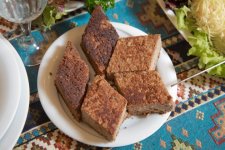
- Baklava (every season is good baklava season LOL)
- Karidopita (Greek walnut cake)
- Pasta Flora
- Pita with squash or pumkin
ellinasgolfer0320
Well-known member
I'm not sure there are any that are specifically made for the fall the way we have them in the USA?


greekality
New member
Moustalevria and moustokouloura are the absolute Greek fall desserts - it's a dance of the seasonsI know that fall is an obsession the US with pumpkin spice and everything but I want to celebrate the Greek way! Are there any Greek fall recipes, many some things like apple pie?
 They both use the grape must that is plenty after the harvest. It's us Greeks celebrating seasonality and wealth of our nature!

greek_ggirl
Active member
I love them!!! I feel like many of our desserts don't use fresh fruitMoustalevria and moustokouloura are the absolute Greek fall desserts - it's a dance of the seasons
1 - 6 of 6 Posts
JOIN THE DISCUSSION AND READ OTHER GREEK INFO:
Greek cooking without a recipe?
- AlexiaTravels
- Greek Food Forum
- Replies: 0
I've been thinking about how much traditional Greek cooking relies on instinct rather than following exact recipes. Some of the Greek dishes I learned to make were taught to me by feel, with someone showing me what to do rather than measuring everything out.
I actually enjoy cooking this way, but I've noticed that it can make certain dishes difficult to recreate consistently! Sometimes everything comes together perfectly, and other times I wonder what I did differently.
I'm curious how others approach this. Did you learn Greek cooking by watching your yiayia, mother, or other relatives? Do you measure ingredients, or do you just know when something looks, smells, or tastes right?
Do you make your pastitsio with a thick or thin layer of krema?
- axariotisxy
- Greek Food Forum
- Replies: 0
I've always preferred my pastitsio with a nice, thick layer of béchamel on top. To me, that's one of the best parts of the dish! I love when the krema is rich, creamy, and thick enough to hold its shape when you cut into the pastitsio.
The problem is that I've been having trouble getting my krema just right. Sometimes it comes out too thin, and other times the texture isn't quite as smooth as I'd like. I've tried adjusting the amount of flour and milk, but I still haven't found the perfect balance.
I'm curious how everyone else makes theirs. Do you prefer a thick layer of béchamel or just enough to cover the pasta? Does your family add eggs or cheese to the mixture?
I'd especially love to hear any tips for making a thick, smooth krema that sets beautifully when baked!
Do You Put Cinnamon in Your Keftedes?
- nadellii
- Greek Food Forum
- Replies: 0
I’m curious how everyone here makes keftedes, especially when it comes to cinnamon. I know some Greek families add a little cinnamon to the meat mixture, while others would never think of putting it in.
In my experience, even a small amount can change the flavor quite a bit. It gives the keftedes a warmer, slightly sweeter spice in the background, but I can also see how it might not be for everyone. I’ve had versions that lean more heavily on oregano, mint, parsley, garlic, and onion instead.
Do you put cinnamon in your keftedes? If you do, how much do you usually use, and was that something your family always did? I’d also be curious to know if it varies depending on what part of Greece your family comes from.
Would love to hear how everyone seasons theirs and what you consider essential for really good keftedes.
Do you make Greek lentil soup with vinegar
- acamp7
- Greek Food Forum
- Replies: 0
I’ve always made fakes with a splash of vinegar, either stirred into the pot near the end or added individually at the table. To me, that little bit of acidity is part of what makes the soup taste right, especially with the earthy lentils, olive oil, onion, garlic, and bay leaf.
But I have a Greek friend who makes hers very differently. She doesn’t use vinegar at all and instead adds quite a lot of tomato product, so her version is much redder and more tomato-forward than mine.
Now I’m curious about what is considered more traditional in Greek cooking. Is vinegar usually a standard part of fakes, or is it more of a regional or family preference? Are tomato-heavy versions just as traditional?
How do you make yours, and what did your family serve growing up?
What herbs do you use when making Greek stuffed zucchini?
- cubrinj
- Greek Food Forum
- Replies: 0
I've been thinking about making Greek stuffed zucchini (kolokithakia gemista), and I'm curious about which herbs everyone uses in the filling. I've seen quite a few variations, and it seems like the combination of herbs can really influence the overall flavor of the dish.
Some recipes use plenty of fresh dill and parsley, while others include mint or even a little oregano. I've also noticed that some people add green onions for extra flavor. I'm wondering whether certain herbs are considered more traditional, especially when making stuffed zucchini with rice and ground meat.
Do you use a combination of herbs, or do you prefer to keep the seasoning fairly simple? Does your family have a particular recipe that has been passed down through generations?
I'm especially interested in how the herbs complement the avgolemono sauce. What combination do you think gives Greek stuffed zucchini the best flavor?
Sign up for a free account and share your thoughts, photos, questions about Greek food, travel and culture!
WorldwideGreeks.com is a free online forum community where people can discuss Greek food, travel, traditions, history and mythology.
Join Worldwide Greeks here!
Join Worldwide Greeks here!
JOIN COMMUNITY FOR FREE
LOGIN TO YOUR ACCOUNT

