1 - 3 of 3 Posts

nadellii

Active member
Did you ever think that feminism and Ancient Greece have anything to do with eeachother. This is a pretty interesting perspective that I stumbled upon. As someone who grew up learning a lot about Greek mythology, its a pretty cool take :)

 
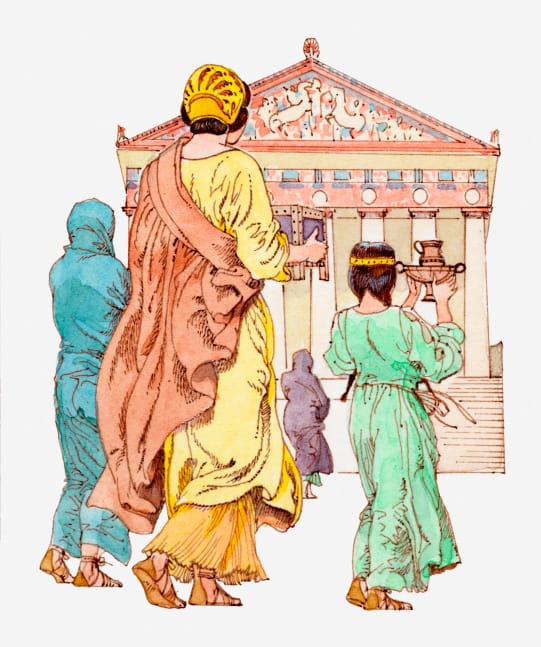
It's very interesting. I find the Spartans fascinating because of how women were looked at in the society. Interesting to look at this topic from the perspective of Greek mythology. But, I think the way the Spartans looked at women is very intriguing, indeed. Here is an article about the Life of Women in Ancient Greece:


Exploring the Story of Persephone and Spring

I’ve recently started learning more about Greek mythology, and I keep coming across the story of Persephone and how it’s connected to the arrival of spring. The idea that her return from the underworld brings life back to the earth is really fascinating to me, especially how it ties into the seasons in such a symbolic way.

I’m curious how others interpret this myth beyond the basic explanation. Do you see it more as a story about nature and seasonal change, or is there a deeper emotional or psychological meaning behind it? I’ve also read a bit about Demeter’s role and how her grief affects the earth, which adds another layer to it.

Would love to hear how others understand or connect with this story!

Apollo and Artemis Personality Contrasts

I’ve always been fascinated by Apollo and Artemis, especially the contrast between them as twins. On the surface they share so much, archery, associations with youth, strong connections to nature, but symbolically they seem almost like opposites in some ways. Apollo often represents order, reason, light, music, and prophecy, while Artemis feels more wild, instinctive, independent, and tied to the untamed natural world.

I’m curious how others interpret their relationship and balance. Do you see them as complementary forces, like civilization and wilderness, or more as two expressions of similar divine energy? And are there specific myths that you think best highlight their differences or similarities?

I’d love to hear perspectives, especially from people who study mythology more deeply or look at the symbolic meanings behind the gods.

Understanding Hades and the Greek Underworld

I’ve been spending some time reading Greek mythology purely out of curiosity, and I keep coming back to Hades and the Underworld. It’s often portrayed as something dark or frightening, but the more I read, the more complex it seems. Hades himself doesn’t always come across as evil so much as stern, bound by rules, and responsible for maintaining order among the dead.

I’m curious how others interpret the Greek Underworld as a whole. How did ancient Greeks actually understand it? Was it mainly a place of punishment, or more of a neutral destination for most souls? I’ve come across references to different regions like the Asphodel Meadows, Elysium, and Tartarus, and I’m trying to understand how these fit together in the broader belief system.

If you’ve studied this topic, read specific myths, or have favorite sources or interpretations, I’d love to hear how you make sense of Hades and the Underworld.

Unsung Heroes of Greek Mythology?

Greek mythology is full of larger-than-life figures like Heracles, Odysseus, and Achilles, but I’ve always been fascinated by the lesser-known heroes who don’t get as much attention. There are so many incredible stories that fly under the radar: Meleager and the Calydonian Boar, Bellerophon taming Pegasus, or even Diomedes, who faced the gods themselves in battle.

I recently came across the story of Atalanta again, the only woman among the Argonauts, raised by a bear, unbeatable in a footrace, and I can’t believe she isn’t talked about more! These “side characters” often feel more human and relatable than the famous ones.

Which lesser-known hero (or heroine) stands out to you? Do you have a favorite overlooked myth or backstory that deserves more love? I’d love to hear which of these hidden legends captured your imagination and why.

Which Greek myth feels most relevant to modern life?

I am curious, which Greek myths feel the most relevant to you in modern life? I’ve been thinking about this lately and I’m curious how others see it.

For me, the myth that feels most relevant right now is Narcissus. The focus on reflection, self-image, and the need for validation feels very familiar in a world shaped by social media. So much of modern life revolves around how we look, how we’re perceived, and how much attention or approval we receive.

The story feels less about vanity and more about becoming absorbed in an image and losing real connection in the process. That idea seems especially timely.

What about you? Which Greek myth feels most relevant to modern life, and what makes it stand out to you today?
Share and discuss Greek mythology!

WorldwideGreeks.com is a free online forum community where people can discuss Greek food, travel, traditions, history and mythology.
Join Worldwide Greeks here!

JOIN COMMUNITY FOR FREE

LOGIN TO YOUR ACCOUNT
Back
Top