1 - 5 of 5 Posts

nadellii

Active member
In the Greek airport, I’ve seen many different types of packaged baklava that I assume people bring home as souvenirs and gifts. Is there any brand or store that people have tried that is good and not too sweet? I would love to get some and see if I can also order them online if they ship internationally.
 
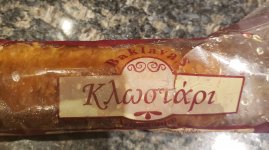
Yes, klostari (κλωστάρι) baklava from Ioannina is probably my favorite baklava. As for finding one thats not too sweet, that'll be hard because it is "syropiasta" meaning it's a dessert made with a lot of syrup.
 

Attachments

  • 20220430_150030.jpg
    20220430_150030.jpg
    1.2 MB · Views: 0
Last edited:
  • Like
Reactions: d_kakavouli
Yes, klostari (κλωστάρι) baklava from Ioannia is probably my favorite baklava. As for finding one thats not too sweet, that'll be hard because it is "syropiasta" meaning it's a dessert made with a lot of syrup.
I haven't heard of this brand, thank you. I will be on the lookout next time I go to Greece.
 
  • Like
Reactions: francescool
This company too has excellent baklava or "syropiasta" sweets
I've had their baklava before! I highly recommend it!
 
  • Like
Reactions: The Greek Vibe

Do you make Greek lentil soup with vinegar

I’ve always made fakes with a splash of vinegar, either stirred into the pot near the end or added individually at the table. To me, that little bit of acidity is part of what makes the soup taste right, especially with the earthy lentils, olive oil, onion, garlic, and bay leaf.

But I have a Greek friend who makes hers very differently. She doesn’t use vinegar at all and instead adds quite a lot of tomato product, so her version is much redder and more tomato-forward than mine.

Now I’m curious about what is considered more traditional in Greek cooking. Is vinegar usually a standard part of fakes, or is it more of a regional or family preference? Are tomato-heavy versions just as traditional?

How do you make yours, and what did your family serve growing up?

Favorite Greek Cheeses Beyond Feta

Feta gets most of the attention when people talk about Greek cheese, but there are so many other varieties worth trying. I’m curious which Greek cheeses everyone enjoys most beyond feta.

Graviera is one of my favorites because it works so well on a cheese plate, grated over dishes, or just eaten with bread. Kasseri is another one I really like, especially melted. I’ve also been interested in trying more regional cheeses like metsovone, manouri, kefalotyri, and formaela.

Some Greek cheeses seem to be much easier to find outside Greece than others, so I’d also love to know which ones people regularly buy and where they usually find them.

What Greek cheeses do you keep coming back to? Are there certain ones you associate with a particular region, dish, or family tradition? And if someone has mostly eaten feta, which Greek cheese would you recommend they try next?

Is lamb or beef more traditional for giouvetsi?

I've been looking into traditional Greek giouvetsi recipes lately, and I'm curious about which meat is considered the most traditional. I've seen recipes that use lamb, others that call for beef, and even some that use chicken.

I love the idea of slowly cooking the meat in a rich tomato sauce with orzo until everything becomes tender and flavorful. However, I'm wondering whether lamb or beef would be the more authentic choice.

Is one traditionally preferred in certain regions of Greece? I've read that lamb is often associated with older Greek recipes, but beef seems to be very common in modern versions of giouvetsi.

I'm also curious whether the choice of meat changes the way the dish is prepared. Does lamb require different seasonings or cooking times than beef?

For those familiar with traditional Greek cooking, which version do you prefer, and which would you recommend trying first?

How Much Garlic in a Batch of Tzatziki?

How much garlic do you usually put in a batch of tzatziki? I think I may be using a little too much. I usually make mine with about 2 cups of Greek yogurt and 4 cloves of garlic, along with cucumber, olive oil, and the other usual ingredients.

It tastes great when I first make it, but we usually take about three days to finish the batch. By the second or third day, the garlic flavor and smell become really strong. Some people in my household love that and don’t mind it at all, but others think it becomes a bit overpowering. I’m starting to agree that four cloves might be too much, especially since the garlic seems to get stronger as it sits.

What do you all do? How many cloves would you use for about 2 cups of Greek yogurt?

Do you make your pastitsio with a thick or thin layer of krema?

I've always preferred my pastitsio with a nice, thick layer of béchamel on top. To me, that's one of the best parts of the dish! I love when the krema is rich, creamy, and thick enough to hold its shape when you cut into the pastitsio.

The problem is that I've been having trouble getting my krema just right. Sometimes it comes out too thin, and other times the texture isn't quite as smooth as I'd like. I've tried adjusting the amount of flour and milk, but I still haven't found the perfect balance.

I'm curious how everyone else makes theirs. Do you prefer a thick layer of béchamel or just enough to cover the pasta? Does your family add eggs or cheese to the mixture?

I'd especially love to hear any tips for making a thick, smooth krema that sets beautifully when baked!
Sign up for a free account and share your thoughts, photos, questions about Greek food, travel and culture!

WorldwideGreeks.com is a free online forum community where people can discuss Greek food, travel, traditions, history and mythology.
Join Worldwide Greeks here!

JOIN COMMUNITY FOR FREE

LOGIN TO YOUR ACCOUNT
Back
Top