
1 - 2 of 2 Posts

kcixcy

Active member
The Saronic Gulf is home to a handful of islands, each distinct in character. Aegina, the closest to Athens, charms visitors with its pistachio groves and neoclassical capital; Agistri, the smallest, lures with its crystal-clear waters and untouched serenity; Hydra captivates with its unique no-cars policy and stately mansions; Spetses beckons with its maritime history and elegant atmosphere; while Poros, the greenest, offers a haven of pine forests and quaint villages. When deciding which islands to visit, consider the pace of your trip, your interests, and the ease of travel between them.

For an optimal experience, crafting a well-thought-out island-hopping itinerary is crucial. A suggested route could encompass Aegina for history, Agistri for relaxation, Hydra for picturesque beauty, Spetses for adventure, and Poros for a tranquil farewell. The duration of your stay on each island should be balanced, allowing enough time to explore but also remain flexible for spontaneous discoveries.

These are so accessible to Athens, it's worth considering them. You can visit them as day trips or you can spend the trip island hopping, staying a night or two in each place.
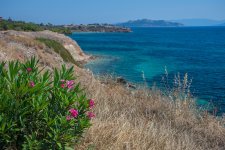
aegina-greece.jpg
 
Last edited:
This is one of my favorite places to visit. It's a physically beautiful island and has a lovely scene with tavernas all up the coast as you arrive by ferry. It's also filled with little churches and other religious sites. My favorite was visiting the relics of Saint Nektarios.
 

My Family’s Keftedes Recipe

Keftedes are one of those foods that always remind me of family gatherings. Everyone seems to make them a little differently, but this is the basic version my family has always used.

For about a pound of ground beef, we add one small grated onion, a handful of chopped fresh parsley, a little fresh mint, one egg, breadcrumbs, salt, pepper, oregano, and a small splash of red wine vinegar. Sometimes we add a little grated garlic as well.

The important part is mixing everything well and then letting the mixture sit in the refrigerator for a little while before shaping the keftedes. We make them fairly small, roll them lightly in flour, and fry them in olive oil until browned on the outside and cooked through.

We usually serve them with lemon, potatoes, salad, or tzatziki.

How does your family make keftedes? I’m especially curious about which herbs and seasonings everyone uses. Thought I'd share!

Do you make Greek lentil soup with vinegar

I’ve always made fakes with a splash of vinegar, either stirred into the pot near the end or added individually at the table. To me, that little bit of acidity is part of what makes the soup taste right, especially with the earthy lentils, olive oil, onion, garlic, and bay leaf.

But I have a Greek friend who makes hers very differently. She doesn’t use vinegar at all and instead adds quite a lot of tomato product, so her version is much redder and more tomato-forward than mine.

Now I’m curious about what is considered more traditional in Greek cooking. Is vinegar usually a standard part of fakes, or is it more of a regional or family preference? Are tomato-heavy versions just as traditional?

How do you make yours, and what did your family serve growing up?

Do you make your pastitsio with a thick or thin layer of krema?

I've always preferred my pastitsio with a nice, thick layer of béchamel on top. To me, that's one of the best parts of the dish! I love when the krema is rich, creamy, and thick enough to hold its shape when you cut into the pastitsio.

The problem is that I've been having trouble getting my krema just right. Sometimes it comes out too thin, and other times the texture isn't quite as smooth as I'd like. I've tried adjusting the amount of flour and milk, but I still haven't found the perfect balance.

I'm curious how everyone else makes theirs. Do you prefer a thick layer of béchamel or just enough to cover the pasta? Does your family add eggs or cheese to the mixture?

I'd especially love to hear any tips for making a thick, smooth krema that sets beautifully when baked!

Do You Make Avgolemono Thick or Brothy?

I usually prefer avgolemono somewhere in the middle. I don’t like it so thick that it feels almost like a cream soup, but I also don’t want it completely thin and brothy. For me, the best version has enough egg and lemon to give the broth some body while still keeping it light.

A lot probably depends on what kind of avgolemono you’re making, too. In chicken soup, I like it a little more brothy because I want the rice or orzo and chicken to still stand out. With something like lahanodolmades, I don’t mind the avgolemono sauce being thicker because it is coating the food rather than serving as the soup itself.

The lemon level matters just as much as the thickness. I like enough lemon to make it bright and noticeable, but not so much that it overwhelms everything else. I think balance is really the key.

Greek cooking without a recipe?

I've been thinking about how much traditional Greek cooking relies on instinct rather than following exact recipes. Some of the Greek dishes I learned to make were taught to me by feel, with someone showing me what to do rather than measuring everything out.

I actually enjoy cooking this way, but I've noticed that it can make certain dishes difficult to recreate consistently! Sometimes everything comes together perfectly, and other times I wonder what I did differently.

I'm curious how others approach this. Did you learn Greek cooking by watching your yiayia, mother, or other relatives? Do you measure ingredients, or do you just know when something looks, smells, or tastes right?
Sign up for a free account and share your thoughts, photos, questions about Greek food, travel and culture!

WorldwideGreeks.com is a free online forum community where people can discuss Greek food, travel, traditions, history and mythology.
Join Worldwide Greeks here!

JOIN COMMUNITY FOR FREE

LOGIN TO YOUR ACCOUNT
Back
Top

