1 - 4 of 4 Posts

francescool

Active member
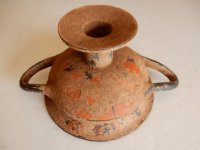
Did you know that the Ancient Athenians had their own distinct style from the rest of Ancient Greece? Many of the vases are destroyed and you cant see the designs, like in the picture below. But I love the black and terracotta color geometric style

greekvase.jpg
 
  • Like
Reactions: mastichas09
Each region of Greece had it's own artistic style! I've always like the Athenian and Cretan (Minoan style)
 
  • Like
Reactions: mastichas09

Why does the Battle of Thermopylae still capture so much attention?

The Battle of Thermopylae is one of those moments in Greek history that still seems to capture people's attention thousands of years later. The story of Leonidas and the small Greek force standing against the much larger Persian army has become a symbol of courage, sacrifice, and resistance against overwhelming odds.

Of course, the real history is more complicated than the legend, and Thermopylae was only one part of the larger Greco-Persian Wars. Still, there is something powerful about the idea of people choosing to hold their ground even when they know the outcome may not be in their favor.

I also think modern books, movies, and popular culture have helped keep the story alive, sometimes blending history with mythology. Why do you think the Battle of Thermopylae still fascinates people so much? Is it the history itself, the symbolism, or the legend that grew around it?

Most forgotten period of Greek history?

I was in Crete once eating at a restaurant and there was a pile of artifacts heaped - broken pottery shards, etc. The restaurant told us that they were going to throw them out. I said, but they are artifacts, why?! They said that no one cares about that time period the artifacts came from - something about an Arabic occupation.

I thought it was interesting and it stayed with me nearly two decades later. This is clearly a forgotten period of Greek history. Does this happen a lot in Greece? Got me thinking about Greek history and what else may be forgotten... Would love your thoughts.

Daily Life in Ancient Athens?

When I visited Athens recently, I spent a lot of time walking around the ancient sites like the Acropolis of Athens and the Ancient Agora of Athens. Seeing the ruins up close was incredible, but it also made my imagination wander.

As I walked through the Agora and looked up at the Acropolis, I kept wondering what daily life was actually like in Ancient Athens. What did an ordinary day look like for people who lived there? Were the streets busy with merchants and philosophers debating ideas? What kinds of foods were people cooking, and how did families spend their evenings?

It’s easy to think about the big historical moments or famous figures, but I’m really curious about everyday life. What were homes like, how did people spend their time, and what might a normal day have looked like for the average Athenian? I’d love to hear any insights or resources people recommend!

Greek life under Roman rule?

I’ve been reading more about Greek history lately, especially periods that don’t get as much everyday attention, and I keep coming back to Greek life under Roman Empire rule.

I know the broad timeline, Greece absorbed into the Roman world, cities continuing to function, Greek culture influencing Rome as much as the other way around — but I’m really curious about the lived experience. What did daily life actually feel like for ordinary Greeks during this period? How much continuity was there with earlier Hellenistic life, and where did Roman administration, law, or customs really change things?

I love history most when I can picture it: streets, homes, education, food, language, religion. Were people aware they were living in a “Roman” era, or did it feel like Greek life with a new layer on top?

If anyone has thoughts, favorite books, articles, documentaries, or even museum resources, I’d love recommendations.

What was life like under Roman Greece?

I’ve been going down a bit of a Greek history rabbit hole lately, and I realized I don’t know much about what everyday life was like when Greece was under Roman rule.

We always hear so much about classical Greece and then later Byzantine history, but that Roman period feels a little less talked about, at least in detail.

I’m curious how much actually changed for people living there at the time. Did daily life feel very different from earlier Greek periods, or did a lot of traditions and culture continue as usual? And how did Greeks view Roman authority, was it accepted, resisted, or somewhere in between?

If anyone has insights, favorite sources, or even small details about daily life, I’d love to hear them.
Share and discuss Greek history!

WorldwideGreeks.com is a free online forum community where people can discuss Greek food, travel, traditions, history and mythology.
Join Worldwide Greeks here!

JOIN COMMUNITY FOR FREE

LOGIN TO YOUR ACCOUNT
Back
Top

