
1 - 3 of 3 Posts

greek_ggirl

Active member
Narcissist was a young boy of unrivaled beauty, in Greece or anywhere else. One day, Narcissus went hunting in the woods with friends, but he became separated from them. When she attempted to speak to him, a confusing conversation ensued because Hera’s punishment to Echo caused her to have difficulty speaking. Because of this curse, Narcissus pushed her away, believing himself to be too good to go around having affairs with wood nymphs. His rejection broke Echo’s heart.
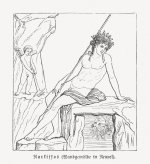
narcissus-720x784.jpg
 
  • Like
Reactions: dpappas87
I love how this story plays on the name narcissist! So cool
 
I love how this story plays on the name narcissist! So cool
Yes! It is where the term narcissism is derived from, and it has also become the name of the flower that grew where he wasted away... Another name for daffodils is narcissus...
 

Athena and the Story of Athens

I’m planning a trip to Athens later this year, and I realized I’d love to refresh my memory on the story behind the city, especially how it’s connected to Athena.

I remember that there was some kind of contest between Athena and Poseidon for control of the city, but I’m a little fuzzy on the details. I think it had something to do with gifts they offered, but I’d love a clearer version of the story.

For those who know Greek mythology well, how does the myth actually go, and what’s the significance behind it? Does it still show up in the city today in any meaningful way?

Would love to hear a simple breakdown or any insights before I go!

Role of Women in Greek Myths?

Greek mythology is full of powerful stories, but lately I’ve been thinking about the role of women within those stories and I’d love to hear everyone’s interpretations.

Women in Greek myth are everywhere: goddesses, queens, witches, victims, heroes, catalysts. Yet their roles can be wildly contradictory. We have figures like Athena, symbolizing wisdom and strategic power, alongside Aphrodite, who shapes fate through desire. Then there’s Hera, often portrayed as jealous, but also deeply tied to marriage and sovereignty. Mortal women, like Penelope, Helen, Medea, or Ariadne, each carry a different kind of strength, suffering, or agency.

Some myths elevate women as creators or protectors; others reduce them to cautionary tales. And in some stories, women seem to drive the entire narrative even when the focus is supposedly on male heroes. So what do you think? What is the role of women in Greek myths?

Creation Stories of Greek Mythology

I’ve been spending a lot of time researching the creation stories of Greek mythology, and I find them endlessly fascinating. What draws me in is how there isn’t a single, fixed origin story—everything shifts depending on the source. Between Hesiod’s Theogony, the Orphic traditions, and later philosophical interpretations, the beginning of the cosmos feels fluid rather than settled.

I’d love to hear how others approach these myths. Which version of creation resonates most with you, the emergence from Chaos, the role of Gaia and Uranus, or the more mystical Orphic egg? Are there lesser-known fragments, regional traditions, or scholarly sources you’ve found especially compelling?

I’m always excited to discover new angles, translations, or interpretations, especially ones that explore why the Greeks may have been comfortable holding multiple origin stories at once. Any recommendations, insights, or favorite passages would be greatly appreciated.

Favorite Greek hero and why?

I’ve been spending more time lately reading Greek mythology, and I keep coming back to how different the heroes are from one another. Some rely on strength, others on intelligence, and some seem almost defined by their flaws as much as their accomplishments. It makes the stories feel more human than I expected.

Personally, I find characters like Odysseus interesting because of the strategy and endurance involved, but I can also see the appeal of someone like Heracles with the raw physical trials. Achilles is another one who’s hard to ignore because of the intensity and tragedy built into his story.

I’m curious which Greek hero stands out most to others and what draws you to them. Is it their personality, their achievements, or the story itself?

Learning About Cronus of Greek Mythology

I’ve been learning more about Cronus lately and realized that I only knew the most basic parts of his story. I knew he was one of the Titans and the father of Zeus, but there is much more to his role in Greek mythology.

Cronus overthrew his own father, Uranus, and later became ruler during what was sometimes described as a Golden Age. He was also warned that one of his children would eventually overthrow him, which led to the famous story of him swallowing each of them after they were born. Zeus, of course, escaped that fate and eventually defeated him.

I’m curious how others view Cronus. Do you think of him mainly as a villain, or as a more complicated figure shaped by fear and prophecy? Are there any lesser-known stories about Cronus that you think are especially interesting or important to understanding him?
Share and discuss Greek mythology!

WorldwideGreeks.com is a free online forum community where people can discuss Greek food, travel, traditions, history and mythology.
Join Worldwide Greeks here!

JOIN COMMUNITY FOR FREE

LOGIN TO YOUR ACCOUNT
Back
Top

