
1 - 3 of 3 Posts

kcixcy

Active member
I am working on stocking a better pantry for cooking Greek foods, but I thought I'd do something fun.

I would love it if you could share with me your top five staple ingredients for Greek cuisine and maybe a little but about why.

I am going to share mine to get things started:

1. Feta Cheese - Of course! Greek food wouldn't be the same.
2. Phyllo - I have learned that I won't make my own, so I have to keep it on hand.
3. Greek olive oil - I should have put this first! I can't live without olive oil lol
4. Greek oregano - I bring a bunch back from Greece or order it online when I run out. Nothing beats it!
5. Greek olives - I like to keep 2-3 different types on hand - I get these from a local Greek store.

What are your choices?
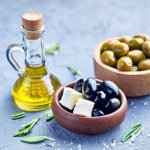
greek-pantry-items.jpg
 
  • Like
Reactions: Voula
This is cool! Here's my list of staples:
  • Garlic
  • Tomato products (paste, sauce, etc)
  • Olives
  • Olive oil
  • Feta cheese
 
I am working on stocking a better pantry for cooking Greek foods, but I thought I'd do something fun.

I would love it if you could share with me your top five staple ingredients for Greek cuisine and maybe a little but about why.

I am going to share mine to get things started:

1. Feta Cheese - Of course! Greek food wouldn't be the same.
2. Phyllo - I have learned that I won't make my own, so I have to keep it on hand.
3. Greek olive oil - I should have put this first! I can't live without olive oil lol
4. Greek oregano - I bring a bunch back from Greece or order it online when I run out. Nothing beats it!
5. Greek olives - I like to keep 2-3 different types on hand - I get these from a local Greek store.

What are your choices?

View attachment 1254
For me, it's
- Greek honey
- Greek horta
- Greek figs
- Greek mandarin oranges
- Frappe made with real Greek Nes Cafe coffee!
 

What herbs do you use when making Greek stuffed zucchini?

I've been thinking about making Greek stuffed zucchini (kolokithakia gemista), and I'm curious about which herbs everyone uses in the filling. I've seen quite a few variations, and it seems like the combination of herbs can really influence the overall flavor of the dish.

Some recipes use plenty of fresh dill and parsley, while others include mint or even a little oregano. I've also noticed that some people add green onions for extra flavor. I'm wondering whether certain herbs are considered more traditional, especially when making stuffed zucchini with rice and ground meat.

Do you use a combination of herbs, or do you prefer to keep the seasoning fairly simple? Does your family have a particular recipe that has been passed down through generations?

I'm especially interested in how the herbs complement the avgolemono sauce. What combination do you think gives Greek stuffed zucchini the best flavor?

How does your family season dolmades?

I’ve been thinking about how much dolmades can vary from one family to another, especially when it comes to seasoning. Even when the basic ingredients are similar, the flavor can be completely different depending on which herbs and spices are used.

How does your family season dolmades? Do you use mostly dill and parsley, or do you add mint as well? I’ve also seen recipes that include green onions, oregano, or even a little cinnamon, especially when meat is part of the filling.

I’m curious whether you season the rice mixture pretty heavily before rolling the grape leaves or keep it simple and let the lemon and olive oil provide most of the flavor. Does your family add lemon juice directly to the filling, or only during cooking and serving?

I’d especially love to hear about any regional or family traditions. What gives your dolmades their distinctive flavor?

How Much Garlic in a Batch of Tzatziki?

How much garlic do you usually put in a batch of tzatziki? I think I may be using a little too much. I usually make mine with about 2 cups of Greek yogurt and 4 cloves of garlic, along with cucumber, olive oil, and the other usual ingredients.

It tastes great when I first make it, but we usually take about three days to finish the batch. By the second or third day, the garlic flavor and smell become really strong. Some people in my household love that and don’t mind it at all, but others think it becomes a bit overpowering. I’m starting to agree that four cloves might be too much, especially since the garlic seems to get stronger as it sits.

What do you all do? How many cloves would you use for about 2 cups of Greek yogurt?

Do You Put Cinnamon in Your Keftedes?

I’m curious how everyone here makes keftedes, especially when it comes to cinnamon. I know some Greek families add a little cinnamon to the meat mixture, while others would never think of putting it in.

In my experience, even a small amount can change the flavor quite a bit. It gives the keftedes a warmer, slightly sweeter spice in the background, but I can also see how it might not be for everyone. I’ve had versions that lean more heavily on oregano, mint, parsley, garlic, and onion instead.

Do you put cinnamon in your keftedes? If you do, how much do you usually use, and was that something your family always did? I’d also be curious to know if it varies depending on what part of Greece your family comes from.

Would love to hear how everyone seasons theirs and what you consider essential for really good keftedes.

Is lamb or beef more traditional for giouvetsi?

I've been looking into traditional Greek giouvetsi recipes lately, and I'm curious about which meat is considered the most traditional. I've seen recipes that use lamb, others that call for beef, and even some that use chicken.

I love the idea of slowly cooking the meat in a rich tomato sauce with orzo until everything becomes tender and flavorful. However, I'm wondering whether lamb or beef would be the more authentic choice.

Is one traditionally preferred in certain regions of Greece? I've read that lamb is often associated with older Greek recipes, but beef seems to be very common in modern versions of giouvetsi.

I'm also curious whether the choice of meat changes the way the dish is prepared. Does lamb require different seasonings or cooking times than beef?

For those familiar with traditional Greek cooking, which version do you prefer, and which would you recommend trying first?
Sign up for a free account and share your thoughts, photos, questions about Greek food, travel and culture!

WorldwideGreeks.com is a free online forum community where people can discuss Greek food, travel, traditions, history and mythology.
Join Worldwide Greeks here!

JOIN COMMUNITY FOR FREE

LOGIN TO YOUR ACCOUNT
Back
Top

