
1 - 5 of 5 Posts

paharo45

Active member
I love Kalamata olives but I am trying to branch out to different ones. Which Greek olives do you like best? I did some research about the different types:

Kalamata Olives: Perhaps the most renowned Greek olives, Kalamatas, are recognized by their dark purple color and almond shape. They are often preserved in wine vinegar or olive oil, which further accentuates their rich and fruity flavor.

Halkidiki Olives: These are large, pale green olives from the Halkidiki region of Northern Greece. Known for their crisp flesh and slightly peppery taste, Halkidiki olives are commonly stuffed with various fillings, from feta cheese to almonds, making them a good choice for appetizers.

Amfissa Olives: Cultivated primarily in Central Greece, near the ancient oracle of Delphi, Amfissa olives can range in color from green to black, depending on their ripeness. They have a mild, slightly sweet flavor and a meaty texture.

Throumba Olives: Unique to the island of Thassos, these olives are naturally sun-dried on the tree. They have a wrinkled appearance and a savory taste with a hint of vinegar, due to their natural fermentation.

I have never had any of these olives other than Kalamata and I am sure there are others, too.
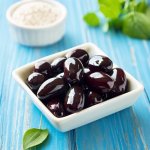
greek-olives.jpg
 
  • Like
Reactions: travelmew and Voula
I love Kalamata olives but I am trying to branch out to different ones. Which Greek olives do you like best? I did some research about the different types:

Kalamata Olives: Perhaps the most renowned Greek olives, Kalamatas, are recognized by their dark purple color and almond shape. They are often preserved in wine vinegar or olive oil, which further accentuates their rich and fruity flavor.

Halkidiki Olives: These are large, pale green olives from the Halkidiki region of Northern Greece. Known for their crisp flesh and slightly peppery taste, Halkidiki olives are commonly stuffed with various fillings, from feta cheese to almonds, making them a good choice for appetizers.

Amfissa Olives: Cultivated primarily in Central Greece, near the ancient oracle of Delphi, Amfissa olives can range in color from green to black, depending on their ripeness. They have a mild, slightly sweet flavor and a meaty texture.

Throumba Olives: Unique to the island of Thassos, these olives are naturally sun-dried on the tree. They have a wrinkled appearance and a savory taste with a hint of vinegar, due to their natural fermentation.

I have never had any of these olives other than Kalamata and I am sure there are others, too.

View attachment 1248
My personal faves are Throumbes, the wrinkly, squishy kind! Thank God my mom makes them!
 
  • Like
Reactions: k_tsoukalas
For me it’s Kalamon (kalamata)but you can’t go wrong with Throubies!
 
I keep forgetting about Throumbes olives! I love them - the texture is so cool and they taste delicious. I truly haven't met an olive I didn't like, but my favorite is kalamata - and also the Greek green olives - I don't remember what they're called but I buy them whenever I see them. Does anyone know what they're called?
 
  • Like
Reactions: Voula
I keep forgetting about Throumbes olives! I love them - the texture is so cool and they taste delicious. I truly haven't met an olive I didn't like, but my favorite is kalamata - and also the Greek green olives - I don't remember what they're called but I buy them whenever I see them. Does anyone know what they're called?
I'm not sure, but here in Greece we just call them green olives, I think.
 

Do You Put Cinnamon in Your Keftedes?

I’m curious how everyone here makes keftedes, especially when it comes to cinnamon. I know some Greek families add a little cinnamon to the meat mixture, while others would never think of putting it in.

In my experience, even a small amount can change the flavor quite a bit. It gives the keftedes a warmer, slightly sweeter spice in the background, but I can also see how it might not be for everyone. I’ve had versions that lean more heavily on oregano, mint, parsley, garlic, and onion instead.

Do you put cinnamon in your keftedes? If you do, how much do you usually use, and was that something your family always did? I’d also be curious to know if it varies depending on what part of Greece your family comes from.

Would love to hear how everyone seasons theirs and what you consider essential for really good keftedes.

What herbs do you use when making Greek stuffed zucchini?

I've been thinking about making Greek stuffed zucchini (kolokithakia gemista), and I'm curious about which herbs everyone uses in the filling. I've seen quite a few variations, and it seems like the combination of herbs can really influence the overall flavor of the dish.

Some recipes use plenty of fresh dill and parsley, while others include mint or even a little oregano. I've also noticed that some people add green onions for extra flavor. I'm wondering whether certain herbs are considered more traditional, especially when making stuffed zucchini with rice and ground meat.

Do you use a combination of herbs, or do you prefer to keep the seasoning fairly simple? Does your family have a particular recipe that has been passed down through generations?

I'm especially interested in how the herbs complement the avgolemono sauce. What combination do you think gives Greek stuffed zucchini the best flavor?

Greek cooking without a recipe?

I've been thinking about how much traditional Greek cooking relies on instinct rather than following exact recipes. Some of the Greek dishes I learned to make were taught to me by feel, with someone showing me what to do rather than measuring everything out.

I actually enjoy cooking this way, but I've noticed that it can make certain dishes difficult to recreate consistently! Sometimes everything comes together perfectly, and other times I wonder what I did differently.

I'm curious how others approach this. Did you learn Greek cooking by watching your yiayia, mother, or other relatives? Do you measure ingredients, or do you just know when something looks, smells, or tastes right?

How Much Garlic in a Batch of Tzatziki?

How much garlic do you usually put in a batch of tzatziki? I think I may be using a little too much. I usually make mine with about 2 cups of Greek yogurt and 4 cloves of garlic, along with cucumber, olive oil, and the other usual ingredients.

It tastes great when I first make it, but we usually take about three days to finish the batch. By the second or third day, the garlic flavor and smell become really strong. Some people in my household love that and don’t mind it at all, but others think it becomes a bit overpowering. I’m starting to agree that four cloves might be too much, especially since the garlic seems to get stronger as it sits.

What do you all do? How many cloves would you use for about 2 cups of Greek yogurt?

Do you put potatoes in your briam?

I've noticed that there are quite a few variations of briam, especially when it comes to which vegetables people include. One ingredient I'm particularly curious about is potatoes. Do you always put potatoes in your briam, or do you prefer making it without them?

I usually think of briam as a combination of zucchini, eggplant, potatoes, tomatoes, onions, and plenty of olive oil. I love how the potatoes absorb all those wonderful flavors as everything slowly roasts together in the oven.

However, I've seen recipes that leave the potatoes out entirely and focus more on the summer vegetables. I imagine that makes the dish a little lighter.

I'm also curious whether there are regional differences in how briam is prepared throughout Greece. Does your family have a particular way of making it? And what vegetables do you consider absolutely essential?
Sign up for a free account and share your thoughts, photos, questions about Greek food, travel and culture!

WorldwideGreeks.com is a free online forum community where people can discuss Greek food, travel, traditions, history and mythology.
Join Worldwide Greeks here!

JOIN COMMUNITY FOR FREE

LOGIN TO YOUR ACCOUNT
Back
Top

