Menu
Install the app
How to install the app on iOS
Follow along with the video below to see how to install our site as a web app on your home screen.
Note: This feature may not be available in some browsers.
You are using an out of date browser. It may not display this or other websites correctly.
You should upgrade or use an alternative browser.
You should upgrade or use an alternative browser.
Greek History Community
What is the relationship between Ancient Greece and Ancient Egypt?
- Thread starter kcixcy
- Start date
1 - 6 of 6 Posts
This is from a blog post that I found "Egyptians and Greeks are known to have been in contact already in the 2nd millennium BC, though we don’t know much about it. The picture becomes clearer from about 600BC, when the sea-faring Greeks were frequent visitors to Egypt. Some of it was for trade (there was a Greek trading-base at Naucratis in Egypt from about this time), some of it was about military services, and some of it was probably just sightseeing. By the 5th– 4th centuries BC Greek intellectuals had a pretty good idea of Egyptian culture." https://blog.oup.com/2016/04/greek-egyptian-interactions-literature/I don't know much, but I do know that there is evidence on Crete from the Minoan excavations that the Minoans had trade contact with Ancient Egypt. Some goods of Egyptian origin have been found at dig sites.
This is interesting, thank you for sharing this!This is from a blog post that I found "Egyptians and Greeks are known to have been in contact already in the 2nd millennium BC, though we don’t know much about it. The picture becomes clearer from about 600BC, when the sea-faring Greeks were frequent visitors to Egypt. Some of it was for trade (there was a Greek trading-base at Naucratis in Egypt from about this time), some of it was about military services, and some of it was probably just sightseeing. By the 5th– 4th centuries BC Greek intellectuals had a pretty good idea of Egyptian culture." https://blog.oup.com/2016/04/greek-egyptian-interactions-literature/

k_tsoukalas
Administrator
There might be some information in this article?
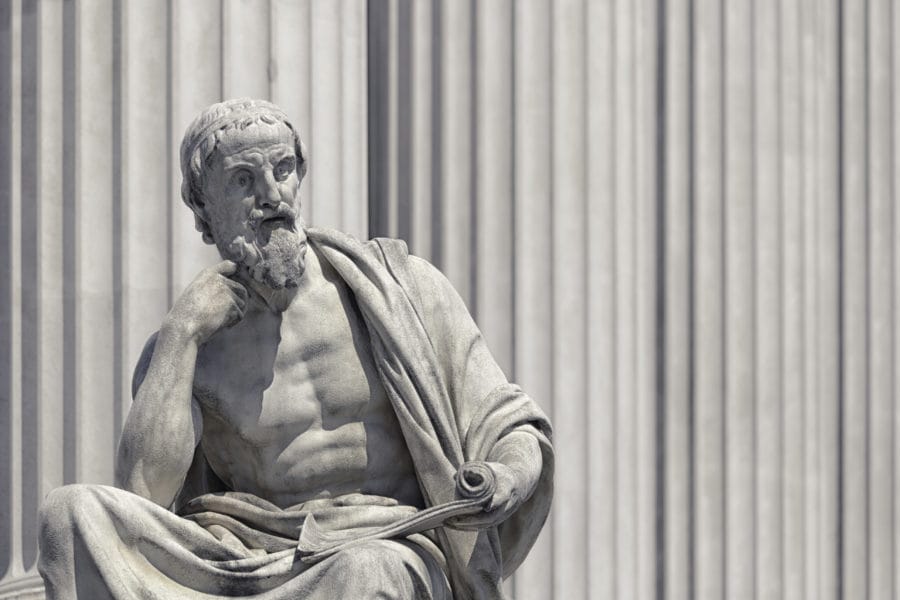
 www.greekboston.com
From Cyrene to Egypt: Trade Shaped How the Greeks Lived
Besides building the Greek economy and connecting with civilizations throughout the Mediterranean, trade helped to shape Greek art, writing, and technology.
www.greekboston.com
Good! At the same time, look closely at the Egyptian art-works in chamber-tombs. Many statuettes that protect royal sarcophagi are clearly of Caucasian females or spirits. Many wall-painted females are Caucasian and are attired in Minoan style. Painted male dignitaries are skin-bronzed but not negroid. The painted negroid people are either soldiers or house-maids. All this abolishes the myth that an African is a negroid person. The very face of the Sphynx is Caucasian. We need to rewrite the history of Egypt. Herodotus recorded what some people used to believe, not an empirical ethnology/I don't know much, but I do know that there is evidence on Crete from the Minoan excavations that the Minoans had trade contact with Ancient Egypt. Some goods of Egyptian origin have been found at dig sites.
1 - 6 of 6 Posts
JOIN THE DISCUSSION AND READ OTHER GREEK INFO:
Learning About Ancient Corinth
- knicks_fan87
- Greek History Forum
- Replies: 1
I’m hoping to visit the ruins of Ancient Corinth on a future trip to Greece, and I’d like to learn more about the history before I go. I always find that I appreciate archaeological sites more when I understand what I’m looking at and know some of the stories behind the ruins.
For those who have visited Ancient Corinth, what would you recommend learning about beforehand? Are there particular periods of the city’s history, important events, or historical figures that help put the site into context? I know Corinth had an important location and a long history, but I’d like to understand more about how the city developed and changed over time.
I’d also love recommendations for books, documentaries, podcasts, or other resources that give a good introduction to Ancient Corinth. What helped you understand the site and its history before or after your visit?
ancient Greek circumflex: tilde vs. inverted breve
- rko15
- Greek History Forum
- Replies: 2
Apparently (https://en.wikipedia.org/wiki/Greek_diacritics) tilde and inverted breve are equivalent circumflex diacritics, but I have never come across the tilde in online ancient Greek texts. I would like to be able to type the inverted breve. The excellent program https://typegreek.com/ apparently does not allow this. Is there another program or procedure form doing this? Thanks in advance.
Themistocles: Hero, Politician, or Master Strategist?
- auroracoor1
- Greek History Forum
- Replies: 1
This weekend I met someone named Themistocles, which immediately caught my attention. We ended up having a conversation about the famous Athenian statesman and general, and it got me thinking more about his place in Greek history.
Themistocles is often credited with recognizing the importance of naval power and helping secure the Greek victory at the Battle of Salamis. Without his foresight and strategy, the Persian Wars may have had a very different outcome. At the same time, he was also a politician who made powerful enemies and was eventually ostracized from Athens.
It made me wonder how people today view him. Was he primarily a hero who helped save Greece, a brilliant politician navigating a difficult era, or one of history's greatest military strategists? I'd love to hear your thoughts on his legacy and whether you think he gets the recognition he deserves.
Greek life under Roman rule?
- nm1999
- Greek History Forum
- Replies: 1
I’ve been reading more about Greek history lately, especially periods that don’t get as much everyday attention, and I keep coming back to Greek life under Roman Empire rule.
I know the broad timeline, Greece absorbed into the Roman world, cities continuing to function, Greek culture influencing Rome as much as the other way around — but I’m really curious about the lived experience. What did daily life actually feel like for ordinary Greeks during this period? How much continuity was there with earlier Hellenistic life, and where did Roman administration, law, or customs really change things?
I love history most when I can picture it: streets, homes, education, food, language, religion. Were people aware they were living in a “Roman” era, or did it feel like Greek life with a new layer on top?
If anyone has thoughts, favorite books, articles, documentaries, or even museum resources, I’d love recommendations.
Which period of Greek history interests you the most?
- acamp7
- Greek History Forum
- Replies: 1
Which period of Greek history interests you the most? There are so many fascinating eras that it can be difficult to choose just one.
Ancient Greece usually gets the most attention, especially Classical Athens, Sparta, the Persian Wars, and Alexander the Great. But I also find the Byzantine period fascinating because of its enormous influence on Greek religion, culture, art, and identity. Then there are the centuries of Ottoman rule, the Greek War of Independence, the Asia Minor Catastrophe, and Greece’s experiences during the World Wars and Civil War.
I’m curious which period everyone here finds themselves reading about most often. Is there a particular era, historical figure, battle, city, or event that drew you into Greek history?
I’d also love to hear about periods you think deserve more attention. Which part of Greek history would you recommend someone explore if they wanted to go beyond the usual ancient Greece topics?
Share and discuss Greek history!
WorldwideGreeks.com is a free online forum community where people can discuss Greek food, travel, traditions, history and mythology.
Join Worldwide Greeks here!
Join Worldwide Greeks here!
JOIN COMMUNITY FOR FREE
LOGIN TO YOUR ACCOUNT