
Menu
Install the app
How to install the app on iOS
Follow along with the video below to see how to install our site as a web app on your home screen.
Note: This feature may not be available in some browsers.
You are using an out of date browser. It may not display this or other websites correctly.
You should upgrade or use an alternative browser.
You should upgrade or use an alternative browser.
Greek Food, Cooking and Recipe Community
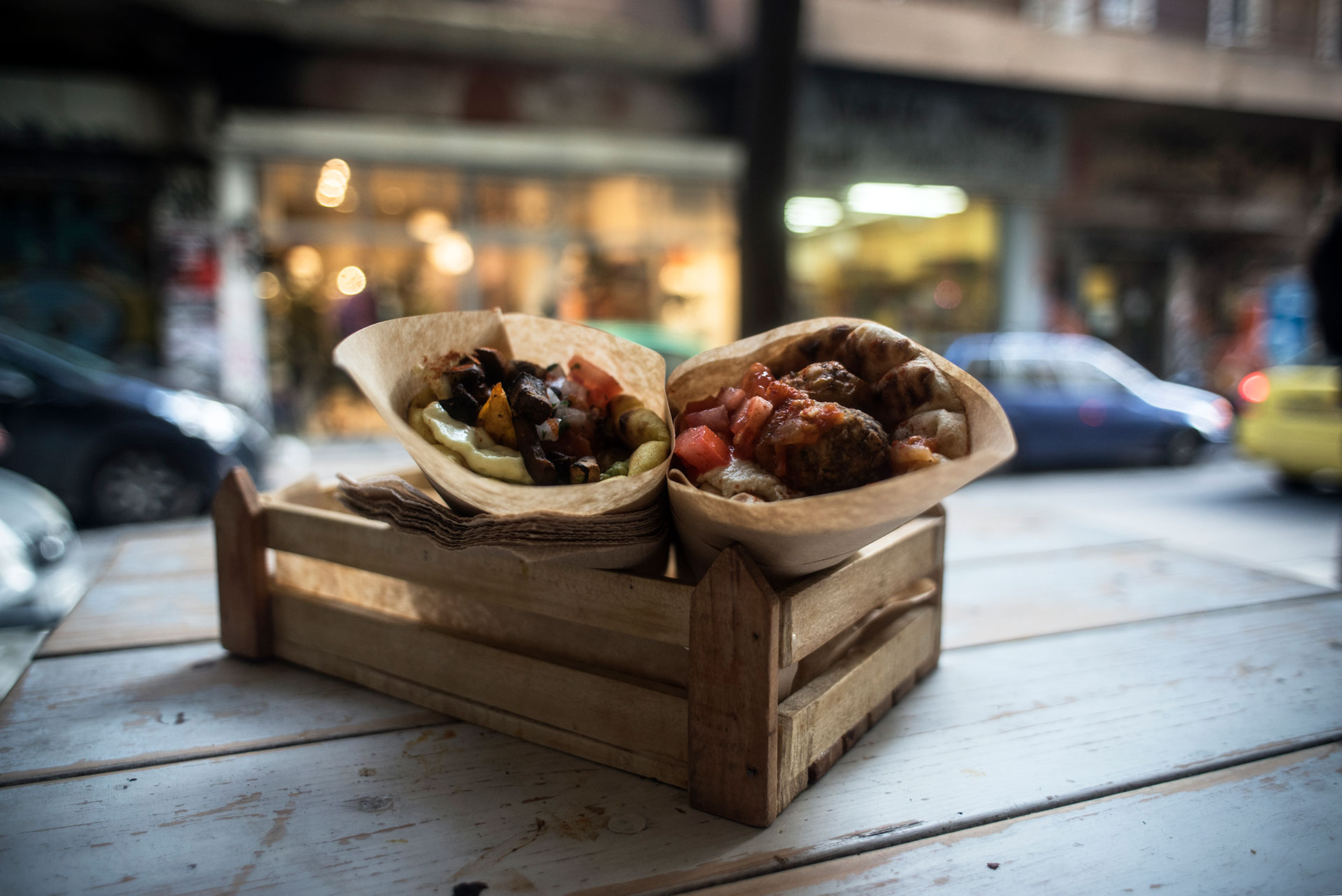
Falafel gyros are not traditional but theyre great for vegetarians!
- Thread starter blopez34
- Start date
1 - 6 of 6 Posts


Blue & White
Member
How is a falafel or vegetarian a Greek food or recipe?I love making these for my friends who are vegetarian!But I prefer pork Gyor myself, a little more meaty and traditional LOL
View attachment 824
Does anyone know a Greek that is a vegetarian? Does that person even exist?

Vangelis
Active member
Here are a few from https://en.wikipedia.org/wiki/History_of_vegetarianismHow is a falafel or vegetarian a Greek food or recipe?
Does anyone know a Greek that is a vegetarian? Does that person even exist?
Pythagoras and some of his followers:
The followers of Pythagoras (called Pythagoreans) did not always practice strict vegetarianism, but at least their inner circle did.
and
In the Platonic Academy the scholarchs (school heads) Xenocrates and (probably) Polemon pleaded for vegetarianism. In the Peripatetic school Theophrastus, Aristotle's immediate successor, supported it. Some of the prominent Platonists and Neo-Platonists in the age of the Roman Empire lived on a vegetarian diet. These included Apollonius of Tyana, Plotinus, and Porphyry. Porphyry wrote a treatise On abstinence from beings with a soul, the most elaborate ancient pro-vegetarian text known to us.
Among the Manicheans, a major religious movement founded in the third century AD, there was an elite group called Electi (the chosen) who were Lacto-Vegetarians for ethical reasons and abided by a commandment which strictly banned killing. Common Manicheans called Auditores (Hearers) obeyed looser rules of nonviolence.
Vangelis
Active member
Have you ever tried mushroom souvlaki? I have made them and they are amazing! I use the portobello mushrooms for a richer taste. In Athens my favourite souvlaki place is Cookoomela.
 cookoomela.gr
Αρχική - CΟΟΚοoMÈLA GRILL
Το 1o Vegan Σουβλατζίδικο! Μεσογειακή Φυτική Διατροφή – Όλα Χειροποίητα με Αγνά Υλικά. Σας περιμένουμε από κοντά Θεμιστοκλέους 43-45, Εξάρχεια
cookoomela.gr
That sounds so good! I will definitely visit when I'm in Athens, so nice to see that more Greek places are offering vegan options or going fully vegan!Have you ever tried mushroom souvlaki? I have made them and they are amazing! I use the portobello mushrooms for a richer taste. In Athens my favourite souvlaki place is Cookoomela.
Αρχική - CΟΟΚοoMÈLA GRILL
Το 1o Vegan Σουβλατζίδικο! Μεσογειακή Φυτική Διατροφή – Όλα Χειροποίητα με Αγνά Υλικά. Σας περιμένουμε από κοντά Θεμιστοκλέους 43-45, Εξάρχεια

k_tsoukalas
Administrator
Falafel is not traditionally Greek, but I do see them being sold in Greece here and there. Most Greeks, as far as I can tell, don't put labels on how they eat and just eat what is fresh, delicious, and in season, and Falafels can be part of that! Thanks for sharing this.
1 - 6 of 6 Posts
JOIN THE DISCUSSION AND READ OTHER GREEK INFO:
What is the secret to making really good Greek lemon potatoes?
- dpappas87
- Greek Food Forum
- Replies: 0
I've been making Greek lemon potatoes for years, and it's one of those dishes I make completely by feel. I don't measure anything, and I never really thought about how I make them because it's all second nature to me.
Recently, I tried teaching someone how to make them. Everything seemed straightforward while we were cooking together, but when they went home and tried making them on their own, all kinds of things went wrong! The potatoes weren't cooking evenly, the texture wasn't quite right, and the lemon flavor didn't come through the way it should.
It made me realize how much I rely on instinct when cooking traditional Greek food. I rarely write down recipes, so explaining every little detail is harder than I expected!
For those who make Greek lemon potatoes regularly, what tips would you give someone who's just learning?
Do You Make Avgolemono Thick or Brothy?
- mj_toronto8
- Greek Food Forum
- Replies: 0
I usually prefer avgolemono somewhere in the middle. I don’t like it so thick that it feels almost like a cream soup, but I also don’t want it completely thin and brothy. For me, the best version has enough egg and lemon to give the broth some body while still keeping it light.
A lot probably depends on what kind of avgolemono you’re making, too. In chicken soup, I like it a little more brothy because I want the rice or orzo and chicken to still stand out. With something like lahanodolmades, I don’t mind the avgolemono sauce being thicker because it is coating the food rather than serving as the soup itself.
The lemon level matters just as much as the thickness. I like enough lemon to make it bright and noticeable, but not so much that it overwhelms everything else. I think balance is really the key.
Greek cooking without a recipe?
- AlexiaTravels
- Greek Food Forum
- Replies: 0
I've been thinking about how much traditional Greek cooking relies on instinct rather than following exact recipes. Some of the Greek dishes I learned to make were taught to me by feel, with someone showing me what to do rather than measuring everything out.
I actually enjoy cooking this way, but I've noticed that it can make certain dishes difficult to recreate consistently! Sometimes everything comes together perfectly, and other times I wonder what I did differently.
I'm curious how others approach this. Did you learn Greek cooking by watching your yiayia, mother, or other relatives? Do you measure ingredients, or do you just know when something looks, smells, or tastes right?
What herbs do you use when making Greek stuffed zucchini?
- cubrinj
- Greek Food Forum
- Replies: 0
I've been thinking about making Greek stuffed zucchini (kolokithakia gemista), and I'm curious about which herbs everyone uses in the filling. I've seen quite a few variations, and it seems like the combination of herbs can really influence the overall flavor of the dish.
Some recipes use plenty of fresh dill and parsley, while others include mint or even a little oregano. I've also noticed that some people add green onions for extra flavor. I'm wondering whether certain herbs are considered more traditional, especially when making stuffed zucchini with rice and ground meat.
Do you use a combination of herbs, or do you prefer to keep the seasoning fairly simple? Does your family have a particular recipe that has been passed down through generations?
I'm especially interested in how the herbs complement the avgolemono sauce. What combination do you think gives Greek stuffed zucchini the best flavor?
Do you put potatoes in your briam?
- auroracoor1
- Greek Food Forum
- Replies: 0
I've noticed that there are quite a few variations of briam, especially when it comes to which vegetables people include. One ingredient I'm particularly curious about is potatoes. Do you always put potatoes in your briam, or do you prefer making it without them?
I usually think of briam as a combination of zucchini, eggplant, potatoes, tomatoes, onions, and plenty of olive oil. I love how the potatoes absorb all those wonderful flavors as everything slowly roasts together in the oven.
However, I've seen recipes that leave the potatoes out entirely and focus more on the summer vegetables. I imagine that makes the dish a little lighter.
I'm also curious whether there are regional differences in how briam is prepared throughout Greece. Does your family have a particular way of making it? And what vegetables do you consider absolutely essential?
Sign up for a free account and share your thoughts, photos, questions about Greek food, travel and culture!
WorldwideGreeks.com is a free online forum community where people can discuss Greek food, travel, traditions, history and mythology.
Join Worldwide Greeks here!
Join Worldwide Greeks here!
JOIN COMMUNITY FOR FREE
LOGIN TO YOUR ACCOUNT

