1 - 3 of 3 Posts

francescool

Active member
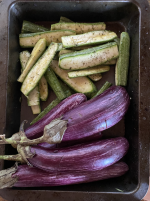
Fresh veggies only need a bit of salt, pepper and fresh oregano! That's all I marinated these bad boys in before tossing them in the oven

Screen Shot 2021-07-31 at 10.37.41 PM.png
 
This looks delicious! There's nothing like eating fresh garden veggies anywhere in the world. It's even more magical in Greece!
 
For me, There's something truly special about savoring produce straight from the garden, especially when it's seasoned with a touch of salt, pepper, and fragrant oregano. It's incredible how those simple ingredients can elevate the flavors to new heights. I can almost imagine the aroma wafting from your oven as those veggies roast to perfection.
Speaking of gardens, I've been diving into my own garden renovations lately. It's been quite the journey, but I've discovered some fantastic furniture options along the way. If you're looking to spruce up your outdoor space, just go to the site and you'll find some inspiring choices.
 
Last edited:

Do you put potatoes in your briam?

I've noticed that there are quite a few variations of briam, especially when it comes to which vegetables people include. One ingredient I'm particularly curious about is potatoes. Do you always put potatoes in your briam, or do you prefer making it without them?

I usually think of briam as a combination of zucchini, eggplant, potatoes, tomatoes, onions, and plenty of olive oil. I love how the potatoes absorb all those wonderful flavors as everything slowly roasts together in the oven.

However, I've seen recipes that leave the potatoes out entirely and focus more on the summer vegetables. I imagine that makes the dish a little lighter.

I'm also curious whether there are regional differences in how briam is prepared throughout Greece. Does your family have a particular way of making it? And what vegetables do you consider absolutely essential?

Do you make Greek lentil soup with vinegar

I’ve always made fakes with a splash of vinegar, either stirred into the pot near the end or added individually at the table. To me, that little bit of acidity is part of what makes the soup taste right, especially with the earthy lentils, olive oil, onion, garlic, and bay leaf.

But I have a Greek friend who makes hers very differently. She doesn’t use vinegar at all and instead adds quite a lot of tomato product, so her version is much redder and more tomato-forward than mine.

Now I’m curious about what is considered more traditional in Greek cooking. Is vinegar usually a standard part of fakes, or is it more of a regional or family preference? Are tomato-heavy versions just as traditional?

How do you make yours, and what did your family serve growing up?

My Family’s Keftedes Recipe

Keftedes are one of those foods that always remind me of family gatherings. Everyone seems to make them a little differently, but this is the basic version my family has always used.

For about a pound of ground beef, we add one small grated onion, a handful of chopped fresh parsley, a little fresh mint, one egg, breadcrumbs, salt, pepper, oregano, and a small splash of red wine vinegar. Sometimes we add a little grated garlic as well.

The important part is mixing everything well and then letting the mixture sit in the refrigerator for a little while before shaping the keftedes. We make them fairly small, roll them lightly in flour, and fry them in olive oil until browned on the outside and cooked through.

We usually serve them with lemon, potatoes, salad, or tzatziki.

How does your family make keftedes? I’m especially curious about which herbs and seasonings everyone uses. Thought I'd share!

Greek cooking without a recipe?

I've been thinking about how much traditional Greek cooking relies on instinct rather than following exact recipes. Some of the Greek dishes I learned to make were taught to me by feel, with someone showing me what to do rather than measuring everything out.

I actually enjoy cooking this way, but I've noticed that it can make certain dishes difficult to recreate consistently! Sometimes everything comes together perfectly, and other times I wonder what I did differently.

I'm curious how others approach this. Did you learn Greek cooking by watching your yiayia, mother, or other relatives? Do you measure ingredients, or do you just know when something looks, smells, or tastes right?

What herbs do you use when making Greek stuffed zucchini?

I've been thinking about making Greek stuffed zucchini (kolokithakia gemista), and I'm curious about which herbs everyone uses in the filling. I've seen quite a few variations, and it seems like the combination of herbs can really influence the overall flavor of the dish.

Some recipes use plenty of fresh dill and parsley, while others include mint or even a little oregano. I've also noticed that some people add green onions for extra flavor. I'm wondering whether certain herbs are considered more traditional, especially when making stuffed zucchini with rice and ground meat.

Do you use a combination of herbs, or do you prefer to keep the seasoning fairly simple? Does your family have a particular recipe that has been passed down through generations?

I'm especially interested in how the herbs complement the avgolemono sauce. What combination do you think gives Greek stuffed zucchini the best flavor?
Sign up for a free account and share your thoughts, photos, questions about Greek food, travel and culture!

WorldwideGreeks.com is a free online forum community where people can discuss Greek food, travel, traditions, history and mythology.
Join Worldwide Greeks here!

JOIN COMMUNITY FOR FREE

LOGIN TO YOUR ACCOUNT
Back
Top

