
1 - 3 of 3 Posts

kosta_karapinotis

Active member
This is for the ambitious bakers! Add 1 package active dry yeast, 1tsp sugar, 1/4 cup of the whole wheat flour, and 1 cup warm water to a small bowl and mix together well using a whisk. Leave the mixture uncovered and set it aside in a warm place until it has a spongy appearance. You can let the mixture sit for up to 1 1/2 hours, depending on how sour you want the dough to taste. Add 2 cups all-purpose flour, 1 tsp salt to a large bowl and whisk well with a clean, dry whisk. Pour the yeast mixture on top of the dry ingredients and stir well with a wooden spoon. When the dough starts to come together, add all-purpose flour to your work surface and your hands and pour the dough onto it. Knead the dough for 5 minutes, continuing to add small amounts of all-purpose flour until the dough is smooth and no longer sticky.

Wipe the large bowl clean and coat it with oil. Place the dough in the center of the pan and massage the top of the dough with oil. Cover the pan with plastic wrap or a large, clean towel and set aside in a warm place until the dough doubles in size. This should take up to 2 1/2 hours, but it all depends on how warm the environment is. Punch down the dough after it rises and lightly flour the work surface once again. Knead for about 2 minutes, or until the dough is elastic. Spray a baking sheet with nonstick cooking spray. Form the dough into a round loaf shape and place on the baking sheet. Massage the top of the loaf with more olive oil. Set the baking sheet aside until the loaf doubles in size.

The bread should look like this in the end. Serve with olive oil and some cheese, and enjoy!
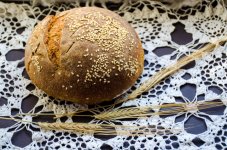
Horiatiki-Psomi-720x477.jpg
 
  • Like
Reactions: Jawge
What oven temperature and how long do you bake?
 
What oven temperature and how long do you bake?
Whoops! Cant believe I didn't include that! I bake for about 45 min at 375 farenheight. I know that everyones oven is a little different though so I suggest checking on it often and baking until golden brown
 

Do You Put Cinnamon in Your Keftedes?

I’m curious how everyone here makes keftedes, especially when it comes to cinnamon. I know some Greek families add a little cinnamon to the meat mixture, while others would never think of putting it in.

In my experience, even a small amount can change the flavor quite a bit. It gives the keftedes a warmer, slightly sweeter spice in the background, but I can also see how it might not be for everyone. I’ve had versions that lean more heavily on oregano, mint, parsley, garlic, and onion instead.

Do you put cinnamon in your keftedes? If you do, how much do you usually use, and was that something your family always did? I’d also be curious to know if it varies depending on what part of Greece your family comes from.

Would love to hear how everyone seasons theirs and what you consider essential for really good keftedes.

What Greek Foods Do You Start Craving in the Fall?

I've been thinking more about seasonal eating lately, especially from a Greek perspective. Summer Greek food feels so naturally tied to the season with tomatoes, zucchini, eggplant, fresh herbs, grilled foods, and plenty of fruit. But once the weather starts cooling down, I find myself wondering what traditional Greek foods really feel like fall.

Are there certain dishes you start making as soon as September or October arrives? I'm thinking of foods like fasolada, giouvetsi, trahana soup, baked dishes, savory pies, and recipes using apples, grapes, walnuts, chestnuts, pumpkin, or other fall ingredients.

I'd especially love to hear about foods that were seasonal in your family rather than dishes you ate year-round. Were there certain meals your yiayia or parents always started making when the weather changed?

What Greek foods make you think, "Okay, fall is officially here"?

My Family’s Keftedes Recipe

Keftedes are one of those foods that always remind me of family gatherings. Everyone seems to make them a little differently, but this is the basic version my family has always used.

For about a pound of ground beef, we add one small grated onion, a handful of chopped fresh parsley, a little fresh mint, one egg, breadcrumbs, salt, pepper, oregano, and a small splash of red wine vinegar. Sometimes we add a little grated garlic as well.

The important part is mixing everything well and then letting the mixture sit in the refrigerator for a little while before shaping the keftedes. We make them fairly small, roll them lightly in flour, and fry them in olive oil until browned on the outside and cooked through.

We usually serve them with lemon, potatoes, salad, or tzatziki.

How does your family make keftedes? I’m especially curious about which herbs and seasonings everyone uses. Thought I'd share!

What Is the Best Way to Serve Taramosalata?

I absolutely love taramosalata and have it pretty regularly at home, but I’m having some people over soon and was wondering about the best way to serve it when entertaining.

Normally I just eat it with some bread or pita, so I don’t really put much thought into presentation. For guests, though, I’d like to make it part of a nice Greek-style spread with a few other things on the table. I was thinking warm pita triangles, crusty bread, maybe some cucumber and other vegetables for dipping, but I’m curious what everyone else usually serves with it.

Do you drizzle a little olive oil over the top or add any kind of garnish? And are there particular meze that you think pair especially well with taramosalata?

I’d love some ideas for making it look a little more special while still keeping everything traditional and simple.

Do You Make Avgolemono Thick or Brothy?

I usually prefer avgolemono somewhere in the middle. I don’t like it so thick that it feels almost like a cream soup, but I also don’t want it completely thin and brothy. For me, the best version has enough egg and lemon to give the broth some body while still keeping it light.

A lot probably depends on what kind of avgolemono you’re making, too. In chicken soup, I like it a little more brothy because I want the rice or orzo and chicken to still stand out. With something like lahanodolmades, I don’t mind the avgolemono sauce being thicker because it is coating the food rather than serving as the soup itself.

The lemon level matters just as much as the thickness. I like enough lemon to make it bright and noticeable, but not so much that it overwhelms everything else. I think balance is really the key.
Sign up for a free account and share your thoughts, photos, questions about Greek food, travel and culture!

WorldwideGreeks.com is a free online forum community where people can discuss Greek food, travel, traditions, history and mythology.
Join Worldwide Greeks here!

JOIN COMMUNITY FOR FREE

LOGIN TO YOUR ACCOUNT
Back
Top

