1 - 3 of 3 Posts

nadellii

Active member
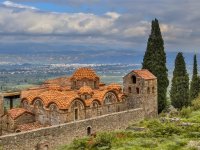
I feel like byzantine architecture and history is the essence of Greece. It's buildings like these that I absolutely love and instantly make me think of Greek culture :)

byzantine-greece-720x540.jpeg
 
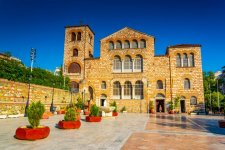
It is so true! As a Greek American that has been to Greece many times, I find that it is so easy to take the amazing architecture in Greece for granted...

agios-demetrios-church-thessaloniki-720x480.jpeg
 
I totally agree, as well, and we have adopted this style for some of our Greek churches in the United States. It's neat to see the influences!
 

Learning About Ancient Corinth

I’m hoping to visit the ruins of Ancient Corinth on a future trip to Greece, and I’d like to learn more about the history before I go. I always find that I appreciate archaeological sites more when I understand what I’m looking at and know some of the stories behind the ruins.

For those who have visited Ancient Corinth, what would you recommend learning about beforehand? Are there particular periods of the city’s history, important events, or historical figures that help put the site into context? I know Corinth had an important location and a long history, but I’d like to understand more about how the city developed and changed over time.

I’d also love recommendations for books, documentaries, podcasts, or other resources that give a good introduction to Ancient Corinth. What helped you understand the site and its history before or after your visit?

Daily Life in Ancient Athens?

When I visited Athens recently, I spent a lot of time walking around the ancient sites like the Acropolis of Athens and the Ancient Agora of Athens. Seeing the ruins up close was incredible, but it also made my imagination wander.

As I walked through the Agora and looked up at the Acropolis, I kept wondering what daily life was actually like in Ancient Athens. What did an ordinary day look like for people who lived there? Were the streets busy with merchants and philosophers debating ideas? What kinds of foods were people cooking, and how did families spend their evenings?

It’s easy to think about the big historical moments or famous figures, but I’m really curious about everyday life. What were homes like, how did people spend their time, and what might a normal day have looked like for the average Athenian? I’d love to hear any insights or resources people recommend!

Fall of the City States (Polis)

I’ve been reading more about ancient Greek history lately, and something struck me — we always hear about the rise of the polis and how important city-states like Athens and Sparta were, but I don’t see as much discussion about how that system actually declined.

What led to the fall of the polis as the dominant structure in Greek life? Was it mainly due to constant warfare like the Peloponnesian War, or did larger powers like Macedon gradually make the independent city-state model obsolete?

I’m especially curious about whether this was a sudden shift or more of a slow transition over time. Did people living through it even realize the polis era was ending?

I’d love to gather more insight on this. Greek history is a big interest of mine, and this feels like an important piece I haven’t fully understood yet.

How Democratic Was Athenian Democracy?

I’ve been studying the democracy of Athens lately, and I find it fascinating that such an influential system didn’t actually last very long in its original form. It’s often described as the birthplace of democracy, and yet when you look closely, it seems both groundbreaking and limited at the same time.

On the one hand, the idea of citizens participating directly in decision-making was radical. On the other hand, citizenship excluded women, enslaved people, and foreigners, which dramatically narrowed who had a voice. It makes me wonder how “democratic” it really was by its own standards, let alone ours.

I’m also curious how stable it truly felt at the time, given the political upheavals and eventual decline.

For those who’ve studied this period more deeply, how do you interpret Athenian democracy? Do you see it as a bold experiment that laid the groundwork for modern systems, or as something far more fragile and constrained?

Period of Greek History You Find the Most Fascinating?

One of the things I love most about visiting Greece is how layered the history feels. You can be standing in one place and realize people have been living there for thousands of years across completely different eras.

So far, I’ve been especially drawn to Minoan history, places like Knossos really stayed with me, and also sites connected to the New Testament. Visiting locations tied to early Christianity adds a whole different dimension to travel for me.

Lately I’ve been thinking about planning future trips around specific historical periods, but Greece has so many that it’s hard to know where to focus next. Ancient classical sites, Byzantine monasteries, Ottoman-era towns, Venetian fortresses, it’s almost overwhelming in a good way.

I’d love to hear what periods of Greek history you personally find most fascinating, and why. Are there particular places that really brought that era to life for you? I’m looking for inspiration for future exploring.
Share and discuss Greek history!

WorldwideGreeks.com is a free online forum community where people can discuss Greek food, travel, traditions, history and mythology.
Join Worldwide Greeks here!

JOIN COMMUNITY FOR FREE

LOGIN TO YOUR ACCOUNT
Back
Top