1 - 20 of 24 Posts

dimi_pat

Active member
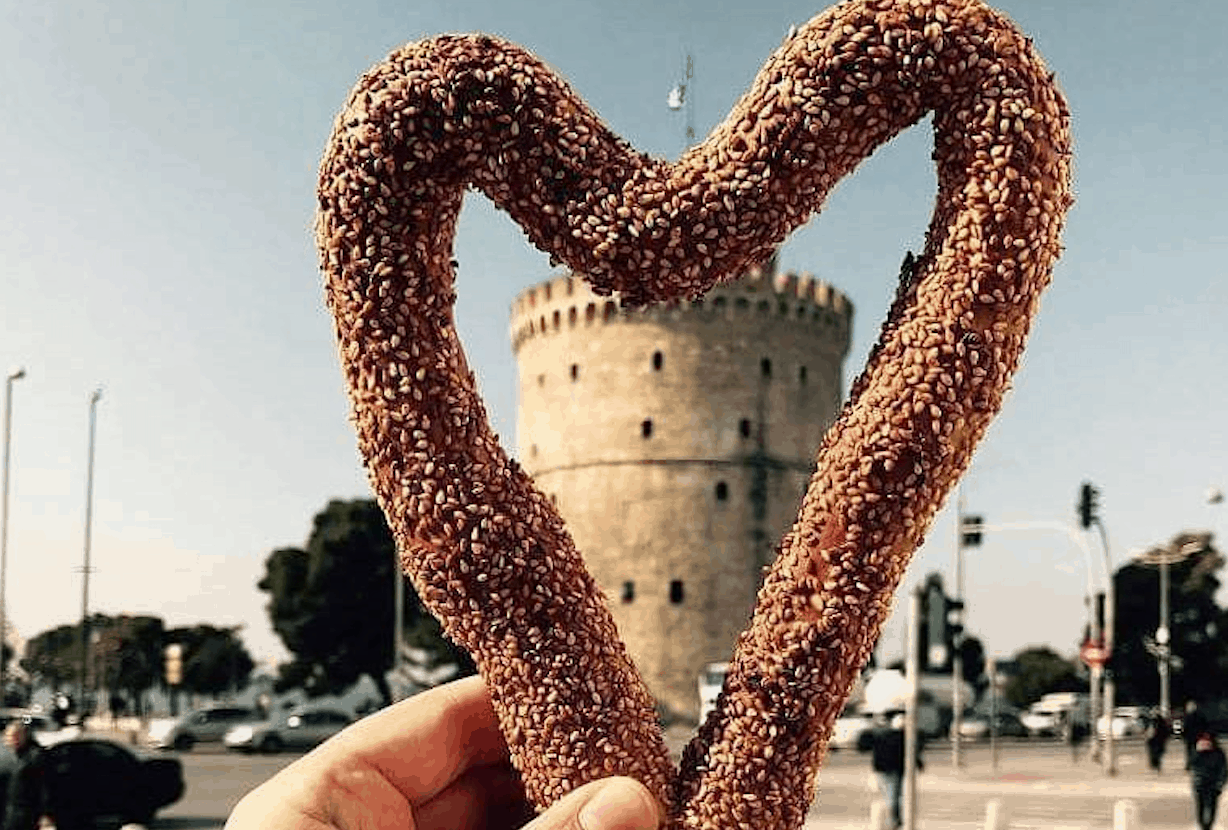
Koulouaria are a bread-like cake that is traditionally served during Easter dinner. This is an especially popular dish in the Greek islands, although you can also find them on the mainland. I really miss getting together with the whole family and making these, it's one of my favourite traditions.

Koulouria.jpg
 
  • Like
Reactions: greek_ggirl
Koulouaria are a bread-like cake that is traditionally served during Easter dinner. This is an especially popular dish in the Greek islands, although you can also find them on the mainland. I really miss getting together with the whole family and making these, it's one of my favourite traditions.

View attachment 496
I love Koulourakia!! Especially with a bit of orange zest :) they're my favorite
 
I love Koulourakia!! Especially with a bit of orange zest :) they're my favorite
I love Koulourakia and Kouloura both. Orange zest in koulourakia makes it so delicious! The Kouloura breads are always a staple in my house at Easter.
 
  • Like
Reactions: greek_ggirl
I love Koulourakia and Kouloura both. Orange zest in koulourakia makes it so delicious! The Kouloura breads are always a staple in my house at Easter.
At my house too! I wish I made them more often tbh
 
It's mandatory that you sing plathw koulourakia when you make these.
 
  • Like
Reactions: nm1999
It's mandatory that you sing plathw koulourakia when you make these.
Could you share the words? I have never sung it! I make these every Easter, they are a tradition in my household...
 
Could you share the words? I have never sung it! I make these every Easter, they are a tradition in my household...
Sure.

Me ta dyo xerakia (with both hands)
plathw koulourakia (I make koulourakia)
koulourakia, koulourakia

O fournos tha ta psisei (the oven will bake them)
to spiti tha myrisei (the house will smell)
koulourakia, koulourakia

Ti glyka ki afrata (How sweet and fluffy)
ola myrodomata (all fragrant)
koulourakia, koulourakia

Gi' auto kai to sxoleio tous (so that's why at their school)
pairnoun ta paidakia (the kids bring them)
koulourakia, koulourakia

 
Last edited:
  • Like
Reactions: amygdalE
At my house too! I wish I made them more often tbh
In my native town, in Magna Graecia [south Italy], there used to be the tradition of making Cullura (Koulura) for easter. It was sweetbread or bun with an egg baked in it. A greater variety of sweets was made for Palm Sunday, like pretzels etc., when they were attached to a palm-branch and taken to church. Little toys and crosses were also made by interweaving palm fronds. //Speaking of feasts and traditions, I remembered that the 8th of September used to be, in my town, the feast of MyLady of Graces, to whom a rustic shrine was dedicated, while outdoors a fair was held: merchants from town and other towns brought their wares and even animals (cattle) for sale. On this date, the Church officially celebrates the Birth of the Virgin Mary. The shrine is in a district of the township that must have been the civic center of the newly founded town of Thourioi and may have been a replica of the shrine dedicated to Athena Krathia (reported by Herodotus). When the people switched to Christianity, the rededication inevitably occurred. Athena was born out of Zeus' head, Mary was born normally, but by a miracle from Ann and Joachim. // I miss the ice cream I used to buy at the Fair.
 
Sure.

Me ta dyo xerakia (with both hands)
plathw koulourakia (I make koulourakia)
koulourakia, koulourakia

O fournos tha ta psisei (the oven will bake them)
to spiti tha myrisei (the house will smell)
koulourakia, koulourakia

Ti glyka ki afrata (How sweet and fluffy)
ola myrodomata (all fragrant)
koulourakia, koulourakia

Gi' auto kai to sxoleio tous (so that's why at their school)
pairnoun ta paidakia (the kids bring them)
koulourakia, koulourakia

This is so cool - I am going to try to sing this song next tie I make this!! My mother used to sing a song like this but I never knew the words...
 
  • Like
Reactions: nm1999
This is so cool - I am going to try to sing this song next tie I make this!! My mother used to sing a song like this but I never knew the words...
Yes! Let's keep these traditions alive :)
 
  • Like
Reactions: nadellii
  • Like
Reactions: nadellii
Sure.

Me ta dyo xerakia (with both hands)
plathw koulourakia (I make koulourakia)
koulourakia, koulourakia

O fournos tha ta psisei (the oven will bake them)
to spiti tha myrisei (the house will smell)
koulourakia, koulourakia

Ti glyka ki afrata (How sweet and fluffy)
ola myrodomata (all fragrant)
koulourakia, koulourakia

Gi' auto kai to sxoleio tous (so that's why at their school)
pairnoun ta paidakia (the kids bring them)
koulourakia, koulourakia
As I have been investigating words, since my retirement, now I wondered about the origin of the name "Koulourakia"or, in my native language, "koulloura/kouddroura". Wikipedia does not help; so, I turned to a lexikon, the Liddlell-Scott "A Greek-English Lexikon" and then the Bailly "Greek-French Dictionary", which report the literature source of the Classical Greek words. Bailly cites "Koulloura", which is described as a small oval loaf of bread,or roll, sweetened, especially for infants. Thus, the tradition in question goes back to pre-Christian times, and obviously, the insertion of an egg (in larger rolls) must be specifically from Easter or egg/myth times. "Koulourakia" may be also a classical word, meaning "koulloura stuff" through the adjective *Koullourakios (which needs confirmation). Good stuff!
 
  • Like
Reactions: greek_ggirl
As I have been investigating words, since my retirement, now I wondered about the origin of the name "Koulourakia"or, in my native language, "koulloura/kouddroura". Wikipedia does not help; so, I turned to a lexikon, the Liddlell-Scott "A Greek-English Lexikon" and then the Bailly "Greek-French Dictionary", which report the literature source of the Classical Greek words. Bailly cites "Koulloura", which is described as a small oval loaf of bread,or roll, sweetened, especially for infants. Thus, the tradition in question goes back to pre-Christian times, and obviously, the insertion of an egg (in larger rolls) must be specifically from Easter or egg/myth times. "Koulourakia" may be also a classical word, meaning "koulloura stuff" through the adjective *Koullourakios (which needs confirmation). Good stuff!
koulouraki comes from the word koulouri. Try searching that. "aki" just means little in Greek. The bread with the egg in it is called tsoureki
 
Last edited:
  • Like
Reactions: greek_ggirl
koulouraki comes from the word koulouri. Try searching that. "aki" just means little in Greek. The bread with the egg in it is called tsoureki
Thank you for your suggestion. However, I think we are a bit confused about Greek -- ancient/classical and modern Greek. For instance, I don't find "coulouri" in vocabulaties/lexikons of classical Greek. Did some etymologist propose it hypothetically as the source of the modern Koulouraki? Furthermore, I don't find AKI as either one of the adjectives for "little", or as a diminutive-making ending, whereas -ION is the typical classical diminutive ending. I was wishing that the lexikons had "tsureki", since it would show the difference from Kolix [= a roll or loaf of coarse bread], which Durrell-Scott equates with Kollouros. Incidentally, some of the classical words have variants, wherefore they are spelled with either one or two L, and the initial syllable is either KOU- or KO-, but Kolouros (= fallen off, troncated) is obviously a homophone of, not identical with, the aforementioned Kollouros.
 
Thank you for your suggestion. However, I think we are a bit confused about Greek -- ancient/classical and modern Greek. For instance, I don't find "coulouri" in vocabulaties/lexikons of classical Greek. Did some etymologist propose it hypothetically as the source of the modern Koulouraki? Furthermore, I don't find AKI as either one of the adjectives for "little", or as a diminutive-making ending, whereas -ION is the typical classical diminutive ending. I was wishing that the lexikons had "tsureki", since it would show the difference from Kolix [= a roll or loaf of coarse bread], which Durrell-Scott equates with Kollouros. Incidentally, some of the classical words have variants, wherefore they are spelled with either one or two L, and the initial syllable is either KOU- or KO-, but Kolouros (= fallen off, troncated) is obviously a homophone of, not identical with, the aforementioned Kollouros.
Really? So then how come Greeks add "Aki" to make everything "little"?
 
Thank you for your suggestion. However, I think we are a bit confused about Greek -- ancient/classical and modern Greek. For instance, I don't find "coulouri" in vocabulaties/lexikons of classical Greek. Did some etymologist propose it hypothetically as the source of the modern Koulouraki? Furthermore, I don't find AKI as either one of the adjectives for "little", or as a diminutive-making ending, whereas -ION is the typical classical diminutive ending. I was wishing that the lexikons had "tsureki", since it would show the difference from Kolix [= a roll or loaf of coarse bread], which Durrell-Scott equates with Kollouros. Incidentally, some of the classical words have variants, wherefore they are spelled with either one or two L, and the initial syllable is either KOU- or KO-, but Kolouros (= fallen off, troncated) is obviously a homophone of, not identical with, the aforementioned Kollouros.
Everything you're saying is over my head. For ancient Greek I'll need my wife... she studied it from middle school through high school (in Greece) and was forced to learn 1000s of words and learn the grammar. I, on the other hand, just know how to speak Greek and that's it haha. "Aki" is a suffix and it has several meanings. Adding "aki" to the word can mean "little" (e.g. skilo -> skilaki = puppy) but it can also be a term of endearment (giannis -> giannaki = little john/johnny). You could probably google "what does 'aki' mean on Greek" and find an explanation.
 
Last edited:
  • Like
Reactions: amygdalE
Everything you're saying is over my head. For ancient Greek I'll need my wife... she studied it from middle school through high school (in Greece) and was forced to learn 1000s of words and learn the grammar. I, on the other hand, just know how to speak Greek and that's it haha. "Aki" is a suffix and it has several meanings. Adding "aki" to the word can be mean little (e.g. skilo -> skilaki = puppy) but it can also be a term of endearment (giannis -> giannaki = little john/johnny). You could probably google "what does 'aki' mean on Greek" and find an explanation.
As you speak (modern) Greek, your information about the suffix -aki, and similar information I have just found, expands my acquaintance with the modern language, but as an etymologist I am still uncertain about its provenance; I still suppose it arose from the classical adjective *koulourAKIOS or KoullourAKIOS. I also found that some other diminutive or endearing terms are present also in derived dialects, such as Latin and my native language. The Greek linguistic ekoumene is immense!
 
Everything you're saying is over my head. For ancient Greek I'll need my wife... she studied it from middle school through high school (in Greece) and was forced to learn 1000s of words and learn the grammar. I, on the other hand, just know how to speak Greek and that's it haha. "Aki" is a suffix and it has several meanings. Adding "aki" to the word can mean "little" (e.g. skilo -> skilaki = puppy) but it can also be a term of endearment (giannis -> giannaki = little john/johnny). You could probably google "what does 'aki' mean on Greek" and find an explanation.
Kind of going over my head as well LOL
 
Wikipedia has some info - what do you guys think, does their etymology make sense for kouloura and koulourakia?


I find it interesting that in the Koulourakia piece, they mentioned the Minoans.
 
  • Like
Reactions: kosta_karapinotis
This article is saying that Koulouri comes from an Ancient Greek word "kollikon"


That's all I've got for now. This is an interesting discussion!
 

Why do Greeks celebrate name days?

I grew up with name days being a big deal, and I’ve always wondered why they feel more important than birthdays for so many of us. I know they’re tied to the Greek Orthodox Church feast days and the saints we’re named after, but it feels like there’s something deeper going on culturally.

In my family, name days were always open-house style, people calling, stopping by, bringing sweets, and it felt very communal. Birthdays, on the other hand, were more low-key.

Do you feel like name days still carry that same weight today? Or has it changed depending on the generation or where you live?

Information About Apokries?

I’ve been curious about how people experience Apokries and what it looks like in different parts of Greece. For some, it seems centered on big public celebrations and costumes, while for others it’s more about smaller gatherings, food, and local customs.

I’m especially interested in the traditions people grew up with. Was Apokries something your family actively celebrated, or did it feel more like a community event? Did you attend costume parties, parades, or specific local festivities? And how did days like Tsiknopempti fit into it for you?

I’d also love to hear whether your experience changed over time, for example, celebrating differently as a child versus as an adult, or noticing differences between village and city celebrations.

For those who no longer live in Greece, do you still mark Apokries in some way, or has it faded with distance?

I’m looking forward to hearing how this tradition shows up for others.

Greek Traditions from Childhood?

I’d love to hear everyone’s memories of Greek traditions from childhood, especially the small everyday things that may not even seem unusual until you look back on them later.

For me, some of the strongest memories are tied to food, church, family gatherings, name days, holiday preparations, and the feeling of constantly having people around. Even certain sounds and smells immediately bring everything back.

I’m also curious how traditions differed depending on region or family background. Did your family keep strong village customs? Were there things your grandparents insisted on doing a certain way? Any traditions connected to Easter, Christmas, weddings, coffee, hospitality, music, or food?

For me, we ate a family-oriented Sunday meal where everyone go together after church. That was a big part of things for me.

Are most Greeks left or right?

Are most Greeks liberal leftist progressives? Most that I encounter are. Not only that but self hating. WHY?

Greek Tsiknopempti Traditions?

I realized Tsiknopempti is coming up soon, and it made me curious how everyone celebrates it, especially outside of Greece. Growing up, I always associated it with grilled meat, lots of smoke in the air, and a general feeling of celebration before Lent started, but we never had a really structured tradition at home. Now I’m wondering if I should start one.

Do you usually grill at home, go out to a Greek restaurant, or gather with friends and family? Are there certain foods you always make, or is it more about the atmosphere and being together? I’ve seen photos from Greece where entire neighborhoods are grilling outside, which looks amazing.

I’d love to hear what Tsiknopempti looks like for you, whether it’s something big and festive or just a simple meal that still feels meaningful.
Share and discuss Greek traditions related to Greek weddings, christenings, dance & holidays!

WorldwideGreeks.com is a free online forum community where people can discuss Greek food, travel, traditions, history and mythology.
Join Worldwide Greeks here!

JOIN COMMUNITY FOR FREE

LOGIN TO YOUR ACCOUNT
Back
Top