1 - 7 of 7 Posts

greek_ggirl

Active member
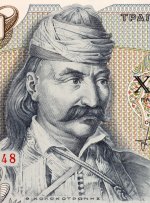
I remember learning about Kolokotronis in Greek school. He was one of the most pivotal figures in the Greek independence movement. He was a general, politician, and a leading advisor to the Greek independence movement. If anyone has any documentaries about him, please share I would love to watch them

Theodoros-Kolokotronis-720x971.jpg
 
  • Like
Reactions: Vangelis
Here's a documentary on youtube from skai tv. Not sure how good it is.

 
Here's a documentary on youtube from skai tv. Not sure how good it is.

I will try to find a version of this with English subtitles but not sure how much luck I will have LOL
 
Maybe this? It's not about him, but it mentions him:

 
Kolokotronis actually has living relatives in the United States and he is somewhere around the 3rd or 4th great uncle of our company's owner!

Due to privacy laws in the USA and along with the Board for Certification of Genealogists, we cannot share the names of the living but they are definitely out there and alive and well. Have you ever done your family tree?


- GreekFamilySearch.com
 
  • Like
Reactions: toniiv
Kolokotronis actually has living relatives in the United States and he is somewhere around the 3rd or 4th great uncle of our company's owner!

Due to privacy laws in the USA and along with the Board for Certification of Genealogists, we cannot share the names of the living but they are definitely out there and alive and well. Have you ever done your family tree?


- GreekFamilySearch.com
Woah that's crazy...I didn't know that. I have never done a family tree but I really hope to one day!
 
Woah that's crazy...I didn't know that. I have never done a family tree but I really hope to one day!
Oh, definitely. Feel free to contact us on here when you're ready. We'll be more than happy to help!
 

Analyzing Greece in World War I

I recently got into a discussion with some family members about Greece’s role in World War I, and it made me realize I don’t fully understand what happened.

From what I gather, Greece was pretty divided at the time, especially between King Constantine I and Eleftherios Venizelos, but I’m a little unclear on how that actually played out in terms of alliances and decisions.

Was Greece officially neutral at first? And how did it eventually end up joining the war on the Allied side?

I’ve also heard the term “National Schism” come up in this context—how significant was that in shaping Greece’s involvement?

If anyone has a clear way of explaining this period, or can point out the key events to focus on, I’d really appreciate it. It feels like an important piece of history I should understand better.

Why does the Battle of Thermopylae still capture so much attention?

The Battle of Thermopylae is one of those moments in Greek history that still seems to capture people's attention thousands of years later. The story of Leonidas and the small Greek force standing against the much larger Persian army has become a symbol of courage, sacrifice, and resistance against overwhelming odds.

Of course, the real history is more complicated than the legend, and Thermopylae was only one part of the larger Greco-Persian Wars. Still, there is something powerful about the idea of people choosing to hold their ground even when they know the outcome may not be in their favor.

I also think modern books, movies, and popular culture have helped keep the story alive, sometimes blending history with mythology. Why do you think the Battle of Thermopylae still fascinates people so much? Is it the history itself, the symbolism, or the legend that grew around it?

Transition from myth to recorded history in Greece?

I’ve been thinking about the transition from myth to recorded history in Greece, and where that shift really begins.

So much of what we associate with early Greek history comes to us through myth, stories of gods, heroes, and epic events that clearly weren’t meant as factual records, yet still carry cultural and historical weight. At some point, though, we start seeing attempts to document events, places, and people in a more deliberate way.

I’m curious how others understand this transition. Do you see myth and history as clearly separate phases, or more as overlapping ways of explaining the world? Figures like Homer, Hesiod, and later historians seem to sit somewhere in between storytelling and record-keeping.

What do you think prompted the move toward written history? Was it political organization, trade, literacy, or something else entirely? And how much of myth do you think still shaped the way early historians understood and recorded their past?

Greek life under Roman rule?

I’ve been reading more about Greek history lately, especially periods that don’t get as much everyday attention, and I keep coming back to Greek life under Roman Empire rule.

I know the broad timeline, Greece absorbed into the Roman world, cities continuing to function, Greek culture influencing Rome as much as the other way around — but I’m really curious about the lived experience. What did daily life actually feel like for ordinary Greeks during this period? How much continuity was there with earlier Hellenistic life, and where did Roman administration, law, or customs really change things?

I love history most when I can picture it: streets, homes, education, food, language, religion. Were people aware they were living in a “Roman” era, or did it feel like Greek life with a new layer on top?

If anyone has thoughts, favorite books, articles, documentaries, or even museum resources, I’d love recommendations.

Which period of Greek history interests you the most?

Which period of Greek history interests you the most? There are so many fascinating eras that it can be difficult to choose just one.

Ancient Greece usually gets the most attention, especially Classical Athens, Sparta, the Persian Wars, and Alexander the Great. But I also find the Byzantine period fascinating because of its enormous influence on Greek religion, culture, art, and identity. Then there are the centuries of Ottoman rule, the Greek War of Independence, the Asia Minor Catastrophe, and Greece’s experiences during the World Wars and Civil War.

I’m curious which period everyone here finds themselves reading about most often. Is there a particular era, historical figure, battle, city, or event that drew you into Greek history?

I’d also love to hear about periods you think deserve more attention. Which part of Greek history would you recommend someone explore if they wanted to go beyond the usual ancient Greece topics?
Share and discuss Greek history!

WorldwideGreeks.com is a free online forum community where people can discuss Greek food, travel, traditions, history and mythology.
Join Worldwide Greeks here!

JOIN COMMUNITY FOR FREE

LOGIN TO YOUR ACCOUNT
Back
Top