
Menu
Install the app
How to install the app on iOS
Follow along with the video below to see how to install our site as a web app on your home screen.
Note: This feature may not be available in some browsers.
You are using an out of date browser. It may not display this or other websites correctly.
You should upgrade or use an alternative browser.
You should upgrade or use an alternative browser.
Greek Food, Cooking and Recipe Community
What are some party must haves for mezze?
- Thread starter dpappas87
- Start date
1 - 8 of 8 Posts

Where to begin LOL!
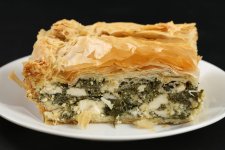
Here are some that I would include if having a party and want some Greek mezze: Dolmades (Stuffed Grape Leaves), Tiropira, Spanakopita (really any pita ). Although many would include dolmades as a main dish, I think it could work as an appetizer or mezze.
Here are some that I would include if having a party and want some Greek mezze: Dolmades (Stuffed Grape Leaves), Tiropira, Spanakopita (really any pita
). Although many would include dolmades as a main dish, I think it could work as an appetizer or mezze.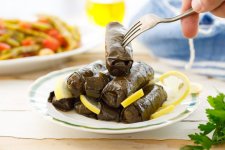

dpappas87
Active member
Thanks, I wouldn't even think to include dolmades as an appetizer either! Do you make them yourself? Or do you buy them canned?Where to begin LOL!
Here are some that I would include if having a party and want some Greek mezze: Dolmades (Stuffed Grape Leaves), Tiropira, Spanakopita (really any pita
View attachment 80
dubai_suzie
Active member
I’m sure you know of the classics like babaghanoush, tzatziki, olive spread, pita bread and that type of stuff. I love adding hummus and spinach/artichoke dip. It’s not traditionally Greek, but I love it!

k_tsoukalas
Administrator
My favorite is to serve spanakopita because it is always a show stopper. I also like to make a hummus dip where I take hummus and top it with feta cheese, chopped tomatoes, Greek olives, a sprinkling of oregano. It's an easy way to elevate store bought hummus, and it tastes great when served with pita chips.

Those are great ones!!!! Thanks!Taramosalata and beet tzatziki are lesser known but delivious mezze! I love the vibrant color of the beet tzatziki its so pink! Add some walnuts and it delish
kosta_karapinotis
Active member
I’m more of a meat guy so when I make mezze I like to add smaller peices of meat like cut up loukaniko (sausage) or skewers of grilled chicken. It’s nice to eat with pita bread and any of the dips, anything can really become mezze when its plated on little dishes. Good luck!
1 - 8 of 8 Posts
JOIN THE DISCUSSION AND READ OTHER GREEK INFO:
Greek cooking without a recipe?
- AlexiaTravels
- Greek Food Forum
- Replies: 0
I've been thinking about how much traditional Greek cooking relies on instinct rather than following exact recipes. Some of the Greek dishes I learned to make were taught to me by feel, with someone showing me what to do rather than measuring everything out.
I actually enjoy cooking this way, but I've noticed that it can make certain dishes difficult to recreate consistently! Sometimes everything comes together perfectly, and other times I wonder what I did differently.
I'm curious how others approach this. Did you learn Greek cooking by watching your yiayia, mother, or other relatives? Do you measure ingredients, or do you just know when something looks, smells, or tastes right?
Do You Make Avgolemono Thick or Brothy?
- mj_toronto8
- Greek Food Forum
- Replies: 0
I usually prefer avgolemono somewhere in the middle. I don’t like it so thick that it feels almost like a cream soup, but I also don’t want it completely thin and brothy. For me, the best version has enough egg and lemon to give the broth some body while still keeping it light.
A lot probably depends on what kind of avgolemono you’re making, too. In chicken soup, I like it a little more brothy because I want the rice or orzo and chicken to still stand out. With something like lahanodolmades, I don’t mind the avgolemono sauce being thicker because it is coating the food rather than serving as the soup itself.
The lemon level matters just as much as the thickness. I like enough lemon to make it bright and noticeable, but not so much that it overwhelms everything else. I think balance is really the key.
My Family’s Keftedes Recipe
- mj_toronto8
- Greek Food Forum
- Replies: 0
Keftedes are one of those foods that always remind me of family gatherings. Everyone seems to make them a little differently, but this is the basic version my family has always used.
For about a pound of ground beef, we add one small grated onion, a handful of chopped fresh parsley, a little fresh mint, one egg, breadcrumbs, salt, pepper, oregano, and a small splash of red wine vinegar. Sometimes we add a little grated garlic as well.
The important part is mixing everything well and then letting the mixture sit in the refrigerator for a little while before shaping the keftedes. We make them fairly small, roll them lightly in flour, and fry them in olive oil until browned on the outside and cooked through.
We usually serve them with lemon, potatoes, salad, or tzatziki.
How does your family make keftedes? I’m especially curious about which herbs and seasonings everyone uses. Thought I'd share!
How Much Garlic in a Batch of Tzatziki?
- nadellii
- Greek Food Forum
- Replies: 0
How much garlic do you usually put in a batch of tzatziki? I think I may be using a little too much. I usually make mine with about 2 cups of Greek yogurt and 4 cloves of garlic, along with cucumber, olive oil, and the other usual ingredients.
It tastes great when I first make it, but we usually take about three days to finish the batch. By the second or third day, the garlic flavor and smell become really strong. Some people in my household love that and don’t mind it at all, but others think it becomes a bit overpowering. I’m starting to agree that four cloves might be too much, especially since the garlic seems to get stronger as it sits.
What do you all do? How many cloves would you use for about 2 cups of Greek yogurt?
Do You Put Cinnamon in Your Keftedes?
- nadellii
- Greek Food Forum
- Replies: 0
I’m curious how everyone here makes keftedes, especially when it comes to cinnamon. I know some Greek families add a little cinnamon to the meat mixture, while others would never think of putting it in.
In my experience, even a small amount can change the flavor quite a bit. It gives the keftedes a warmer, slightly sweeter spice in the background, but I can also see how it might not be for everyone. I’ve had versions that lean more heavily on oregano, mint, parsley, garlic, and onion instead.
Do you put cinnamon in your keftedes? If you do, how much do you usually use, and was that something your family always did? I’d also be curious to know if it varies depending on what part of Greece your family comes from.
Would love to hear how everyone seasons theirs and what you consider essential for really good keftedes.
Sign up for a free account and share your thoughts, photos, questions about Greek food, travel and culture!
WorldwideGreeks.com is a free online forum community where people can discuss Greek food, travel, traditions, history and mythology.
Join Worldwide Greeks here!
Join Worldwide Greeks here!
JOIN COMMUNITY FOR FREE
LOGIN TO YOUR ACCOUNT

