1 - 8 of 8 Posts

ssherie_

Active member
Hey everyone, i’ve been noticing that a lot of the gyro places near my house are changing up their menu. They are now more options for sauce, and they’re adding new types of meats. This has me curious… what’s the most traditional way to eat gyro/souvlaki? I’ve never been to Greece so I don’t know if places in Canada are just catching up, or if they’re creating new trends.
 
I am a huge fan of deconstructed gyros (gyro plate stlye):
Gyro-Plate-720x480.jpg
 
I would say most places that are Greek-owned are authentic. Now a days places in Greece are definitely swtiching up their game and becoming more trendy, I’ve even seen tofu and vegan gyros. ?
 
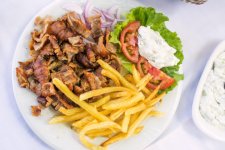
I would say the classics are pork gyro and chicken souvlaki, both with tzatziki and french fries :) those are also my favourite. This is what they look like:

Traditional-Gyro-720x480.jpg
 
  • Like
Reactions: cubrinj
I would say most places that are Greek-owned are authentic. Now a days places in Greece are definitely swtiching up their game and becoming more trendy, I’ve even seen tofu and vegan gyros. ?
Vegan gyros??? I’ve never even heard of that…kind of sounds weird to me. But I agree, the most classic is pork gyro, which i love!! It tastes best with everything on it, tomatoes, onions, tzatziki, and french fries.
 
Yes, these are definitely the classics. Although I do like the new “sauce” that they’re using. That’s what they call it at the gyro place I go to in Athens near the airport. I think it’s a mixture of ketchup, mayo and mustard kind of like the sauce that they have at Shake Shack. It’s really good with chicken souvlaki, but I always like to get one of each whenever I visit.
 
I would say most places that are Greek-owned are authentic. Now a days places in Greece are definitely swtiching up their game and becoming more trendy, I’ve even seen tofu and vegan gyros. ?
I could eat a vegan or tofu gyros every day of my holiday ??
 
  • Like
Reactions: kosta_karapinotis
  • Like
Reactions: Laura48

What’s the Best Way to Squeeze Cucumbers for Tzatziki?

I've been thinking about the different ways people prepare cucumbers for tzatziki, and I'm curious about which method works best. Everyone seems to have their own technique for getting rid of the excess moisture!

Some people grate the cucumber, sprinkle it with salt, and let it sit before squeezing. Others skip the salt entirely and squeeze the cucumber immediately. I've also seen people use paper towels, clean kitchen towels, and even cheesecloth to get as much liquid out as possible.

I'm wondering whether salting the cucumber first actually makes a noticeable difference in the final texture. Does it help create a thicker, creamier tzatziki, or is squeezing enough?

What method do you use? Do you have a favorite technique that consistently gives you the perfect tzatziki? I'd love to hear everyone's tips and family tricks!

Do You Follow Family Recipes Exactly or Make Your Own Adjustments?

When I first started learning how to make traditional Greek dishes from my family, I tried to follow the recipes exactly as I was taught. I wanted everything to taste the way I remembered growing up, especially the dishes my mother and grandmother made.

Over time, though, I started making little adjustments of my own. Sometimes I'll add more lemon, change the amount of garlic, experiment with different herbs, or adjust the cooking method slightly. I still consider these family recipes, even if my versions aren't exactly the same as the originals.

I think that's part of what makes cooking so interesting. Recipes get passed down through generations, but each person adds a little something along the way.

I'm curious how others approach this. Do you stick closely to your family's traditional Greek recipes, or have you developed your own variations over the years?

What meat do you use for giouvetsi?

I love making giouvetsi, and it's one of those traditional Greek dishes that I always come back to. I usually make it with either beef or lamb, depending on what I have available and what I'm in the mood for. Both are delicious, but they give the dish a slightly different flavor.

Lately, I've been wondering what other meats people use when making giouvetsi. I've heard of people using chicken, pork, and even goat, but I haven't really experimented much beyond my usual beef and lamb versions.

I'm curious whether certain meats are more traditional in different parts of Greece or if it's mostly a matter of family preference. I also wonder whether the cooking method changes depending on the meat.

What meat do you usually use for giouvetsi? Do you have a favorite, or does your family have a traditional way of making it?

Do You Make Soutzoukakia With Cinnamon, Cumin, or Both?

I've been thinking about making soutzoukakia soon, and I'm curious how everyone seasons theirs. I've noticed that some recipes rely heavily on cumin, while others include cinnamon, and some use a combination of both.

I've always thought the spices are what make soutzoukakia so distinctive compared to regular Greek meatballs. Cumin gives them that warm, earthy flavor, while cinnamon adds something a little different. I'm wondering whether using both creates a better balance or if one spice should really be the star.

I'm also curious whether these differences come from family traditions or regional cooking styles. I know everyone seems to have their own way of making this dish, especially when it comes to seasoning the meat and tomato sauce.

How does your family prepare soutzoukakia? Do you use cinnamon, cumin, or both, and how much do you typically add?

Do You Prefer Gemista With Rice Only or With Ground Meat?

I usually make gemista with a mixture of rice and ground meat, which is how my family has always prepared it. I love how flavorful and hearty it turns out, and it's one of my favorite traditional Greek dishes to make.

However, I have a vegan family member, and I want to make a version that uses just rice and vegetables so everyone can enjoy it. I've had gemista prepared this way before, but I've never actually made it myself. I'm wondering what adjustments I should make to get the same rich flavor without the meat.

Do you prefer gemista with rice only, or do you typically add ground meat? For those who make the vegetarian version, what herbs, seasonings, or other ingredients do you use to give the filling plenty of flavor?
Sign up for a free account and share your thoughts, photos, questions about Greek food, travel and culture!

WorldwideGreeks.com is a free online forum community where people can discuss Greek food, travel, traditions, history and mythology.
Join Worldwide Greeks here!

JOIN COMMUNITY FOR FREE

LOGIN TO YOUR ACCOUNT
Back
Top