1 - 8 of 8 Posts

ssherie_

Active member
Hey everyone, i’ve been noticing that a lot of the gyro places near my house are changing up their menu. They are now more options for sauce, and they’re adding new types of meats. This has me curious… what’s the most traditional way to eat gyro/souvlaki? I’ve never been to Greece so I don’t know if places in Canada are just catching up, or if they’re creating new trends.
 
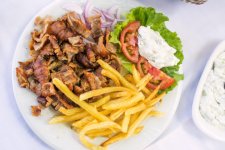
I am a huge fan of deconstructed gyros (gyro plate stlye):
Gyro-Plate-720x480.jpg
 
I would say most places that are Greek-owned are authentic. Now a days places in Greece are definitely swtiching up their game and becoming more trendy, I’ve even seen tofu and vegan gyros. ?
 
I would say the classics are pork gyro and chicken souvlaki, both with tzatziki and french fries :) those are also my favourite. This is what they look like:

Traditional-Gyro-720x480.jpg
 
  • Like
Reactions: cubrinj
I would say most places that are Greek-owned are authentic. Now a days places in Greece are definitely swtiching up their game and becoming more trendy, I’ve even seen tofu and vegan gyros. ?
Vegan gyros??? I’ve never even heard of that…kind of sounds weird to me. But I agree, the most classic is pork gyro, which i love!! It tastes best with everything on it, tomatoes, onions, tzatziki, and french fries.
 
Yes, these are definitely the classics. Although I do like the new “sauce” that they’re using. That’s what they call it at the gyro place I go to in Athens near the airport. I think it’s a mixture of ketchup, mayo and mustard kind of like the sauce that they have at Shake Shack. It’s really good with chicken souvlaki, but I always like to get one of each whenever I visit.
 
I would say most places that are Greek-owned are authentic. Now a days places in Greece are definitely swtiching up their game and becoming more trendy, I’ve even seen tofu and vegan gyros. ?
I could eat a vegan or tofu gyros every day of my holiday ??
 
  • Like
Reactions: kosta_karapinotis
  • Like
Reactions: Laura48

Traditional Greek Recipes Using Chestnuts

I've been thinking about trying some traditional Greek recipes that use chestnuts. I know they're popular in certain regions of Greece, especially during the fall and winter months, but I haven't done much cooking with them myself. I have some old family recipes but chestnuts aren't readily available where I live. Besides what I have for my recipes, I am interested in what other people do.

I'm especially interested in older recipes that might have been passed down through families. It seems like chestnuts were once a more common ingredient in everyday cooking, particularly in mountainous areas where chestnut trees grow.

Does anyone have favorite traditional Greek recipes that use chestnuts? I'd love to hear how you prepare them and which dishes are worth trying first. This entered my mind because chestnuts are all over the place in Greece at a certain time of year and you can even buy them roasted on the streets!

Do You Prefer Gemista With Rice Only or With Ground Meat?

I usually make gemista with a mixture of rice and ground meat, which is how my family has always prepared it. I love how flavorful and hearty it turns out, and it's one of my favorite traditional Greek dishes to make.

However, I have a vegan family member, and I want to make a version that uses just rice and vegetables so everyone can enjoy it. I've had gemista prepared this way before, but I've never actually made it myself. I'm wondering what adjustments I should make to get the same rich flavor without the meat.

Do you prefer gemista with rice only, or do you typically add ground meat? For those who make the vegetarian version, what herbs, seasonings, or other ingredients do you use to give the filling plenty of flavor?

What Greens Do You Use in Traditional Hortopita?

I've always loved traditional Greek hortopita, especially the way different greens come together to create such a wonderful combination of flavors. One thing I've noticed is that everyone seems to have their own preferred mixture, often depending on what grows locally or what their family traditionally used.

I've seen recipes that include spinach, Swiss chard, dandelion greens, leeks, and various wild greens. Some people also add fresh herbs like dill, parsley, and mint to give the filling even more flavor. I'm curious about which combinations are considered the most traditional, particularly in different regions of Greece.

Do you use mostly spinach, or do you prefer a mixture of wild greens? Does your family add feta cheese, or do you keep the filling entirely focused on the greens? I'd love to hear about your favorite combinations and any family secrets!

What meat do you use for giouvetsi?

I love making giouvetsi, and it's one of those traditional Greek dishes that I always come back to. I usually make it with either beef or lamb, depending on what I have available and what I'm in the mood for. Both are delicious, but they give the dish a slightly different flavor.

Lately, I've been wondering what other meats people use when making giouvetsi. I've heard of people using chicken, pork, and even goat, but I haven't really experimented much beyond my usual beef and lamb versions.

I'm curious whether certain meats are more traditional in different parts of Greece or if it's mostly a matter of family preference. I also wonder whether the cooking method changes depending on the meat.

What meat do you usually use for giouvetsi? Do you have a favorite, or does your family have a traditional way of making it?

What Is the Secret to Making Crispy, Flaky Phyllo?

I've been wanting to try making homemade phyllo dough, but I have to admit that the process seems a little intimidating! I've used store-bought phyllo plenty of times, but I've never really attempted making it from scratch. I would love to learn how to get those beautiful, thin, crispy layers that make traditional Greek pies so delicious.

For those of you who make your own phyllo, what are your secrets? Is the dough difficult to roll out thin enough, or does it become easier with practice? I've also heard that the amount of olive oil you use between the layers can make a big difference in the final texture.

I'm especially interested in making spanakopita and tiropita. Are there any beginner mistakes I should watch out for? I'd love to hear your techniques and family tips before I give it a try!
Sign up for a free account and share your thoughts, photos, questions about Greek food, travel and culture!

WorldwideGreeks.com is a free online forum community where people can discuss Greek food, travel, traditions, history and mythology.
Join Worldwide Greeks here!

JOIN COMMUNITY FOR FREE

LOGIN TO YOUR ACCOUNT
Back
Top