Menu
Install the app
How to install the app on iOS
Follow along with the video below to see how to install our site as a web app on your home screen.
Note: This feature may not be available in some browsers.
You are using an out of date browser. It may not display this or other websites correctly.
You should upgrade or use an alternative browser.
You should upgrade or use an alternative browser.
Greek Traditions Community
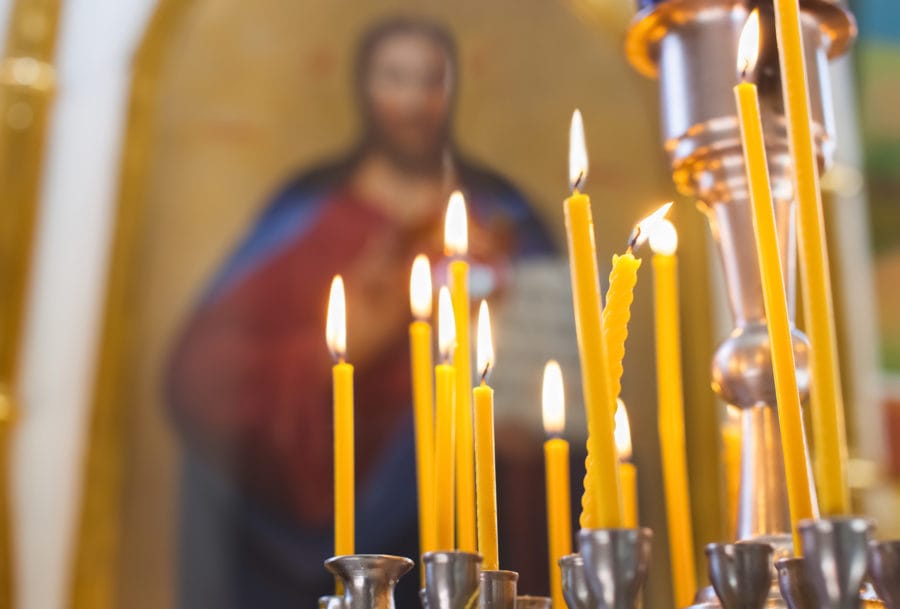
What lighting a candle means at a Greek church
- Thread starter nadellii
- Start date
1 - 10 of 10 Posts


This is a great question!!
Here is more information as to why candles used in the Greek Orthodox church:
 www.greekboston.com
Here is more information as to why candles used in the Greek Orthodox church:
Why Do People Light Candles When Entering an Orthodox Church?
Learn all about why people light candles upon entering the Greek Orthodox Church.
www.greekboston.com

Blue & White
Member
"I am the light of the world; he who follows me shall not walk in darkness; but will have the light of life." John 8:12
Lighting the candle is the light that guides you as you enter church.
The coins that you refer to "to pay for the candle" is incorrect. Placing "money in the box" is an offering to the church, if you give nothing, something or a lot, this is entirely up to you.
The most important thing is that you have to Gods home for prey.
Beautiful, this is very true, thanks for sharing"I am the light of the world; he who follows me shall not walk in darkness; but will have the light of life." John 8:12
Lighting the candle is the light that guides you as you enter church.
The coins that you refer to "to pay for the candle" is incorrect. Placing "money in the box" is an offering to the church, if you give nothing, something or a lot, this is entirely up to you.
The most important thing is that you have to Gods home for prey.

Hash
Well-known member
I used to light a candle nearly every day on my way through the streets in Mykonos to the Delos Port, stopping by different churches on the way,a quiet moment,a silent wish,a few deep thoughts, letting go of a few, understanding meaning of life, living for the day, hoping and looking forward to whatever lays ahead during the busy summer season...a few coins of offering..Beautiful, this is very true, thanks for sharing
 ??!

k_tsoukalas
Administrator
Lighting a candle is a nice moment when we enter the church. I often do it without thinking. Thanks for reminding me how beautiful of an activity is.
I agree! When I enter a Greek church, I am always lighting a candle, but I don't put much thought into it.Lighting a candle is a nice moment when we enter the church. I often do it without thinking. Thanks for reminding me how beautiful of an activity is.
Hash
Well-known member
It is about unconsciously and unconditionally sending light and love to the Universe and the giver of life to us all!....I agree! When I enter a Greek church, I am always lighting a candle, but I don't put much thought into it.
 ?Kalley Mera from Thailand.... Happy Holidays.
kosta_karapinotis
Active member
Happy Holidays!It is about unconsciously and unconditionally sending light and love to the Universe and the giver of life to us all!....

jaimepirvinoi
Member
Something similar happened to my aunt—her test results got buried in her inbox, and by the time she followed up, things had progressed. It’s scary how small things like a missed email can have such big consequences. Since then, she’s been more mindful, even started using a traditional incense burner during her self-checks to create a calm space. Little rituals help her stay grounded.
Last edited:
1 - 10 of 10 Posts
JOIN THE DISCUSSION AND READ OTHER GREEK INFO:
Information About Apokries?
- kcixcy
- Greek Traditions Forum
- Replies: 1
I’ve been curious about how people experience Apokries and what it looks like in different parts of Greece. For some, it seems centered on big public celebrations and costumes, while for others it’s more about smaller gatherings, food, and local customs.
I’m especially interested in the traditions people grew up with. Was Apokries something your family actively celebrated, or did it feel more like a community event? Did you attend costume parties, parades, or specific local festivities? And how did days like Tsiknopempti fit into it for you?
I’d also love to hear whether your experience changed over time, for example, celebrating differently as a child versus as an adult, or noticing differences between village and city celebrations.
For those who no longer live in Greece, do you still mark Apokries in some way, or has it faded with distance?
I’m looking forward to hearing how this tradition shows up for others.
Does your family make fanouropita for Saint Phanourios Day?
- mastichas09
- Greek Traditions Forum
- Replies: 1
I recently saw a news article about Saint Fanourios Day, and it showed people bringing fanouropita cakes to a church to be blessed. I knew about fanouropita and the tradition of making it when you’re hoping to find something that has been lost, but I didn’t realize how much of a church tradition it could be on the saint’s feast day itself.
Does your family make fanouropita for Saint Fanourios Day? If so, do you bring the cake to church to be blessed, or do you usually make it at home and share it with family and friends?
I’m also curious whether this is something that is still widely done in Greece or if it depends on the region, parish, or family. Are there any other traditions your family follows for Saint Fanourios Day?
I’d love to hear how people observe the day and whether fanouropita is part of your family’s tradition.
Why do Greeks celebrate name days?
- auroracoor1
- Greek Traditions Forum
- Replies: 1
I grew up with name days being a big deal, and I’ve always wondered why they feel more important than birthdays for so many of us. I know they’re tied to the Greek Orthodox Church feast days and the saints we’re named after, but it feels like there’s something deeper going on culturally.
In my family, name days were always open-house style, people calling, stopping by, bringing sweets, and it felt very communal. Birthdays, on the other hand, were more low-key.
Do you feel like name days still carry that same weight today? Or has it changed depending on the generation or where you live?
Do younger generations still follow traditional Greek customs?
- mastichas09
- Greek Traditions Forum
- Replies: 1
Lately I’ve been wondering how much traditional Greek culture is still being carried forward by younger generations, both in Greece and in the diaspora.
I’m not talking only about the big holidays or major family events, but the smaller everyday things too — name days, church traditions, hospitality, family meals, fasting periods, village festivals, coffee rituals, respect for elders, even certain sayings and customs. Do younger Greeks still actively participate in these traditions, or do they mostly happen because parents and grandparents keep them going?
I imagine the answer probably depends a lot on location, family, and lifestyle. Someone growing up in a village might have a different experience than someone in Athens or abroad. I’d love to hear from people of different ages, which traditions have stayed strong, which ones are fading, and are there any that younger generations are bringing back in new ways?
Greek Traditions from Childhood?
- dpappas87
- Greek Traditions Forum
- Replies: 0
I’d love to hear everyone’s memories of Greek traditions from childhood, especially the small everyday things that may not even seem unusual until you look back on them later.
For me, some of the strongest memories are tied to food, church, family gatherings, name days, holiday preparations, and the feeling of constantly having people around. Even certain sounds and smells immediately bring everything back.
I’m also curious how traditions differed depending on region or family background. Did your family keep strong village customs? Were there things your grandparents insisted on doing a certain way? Any traditions connected to Easter, Christmas, weddings, coffee, hospitality, music, or food?
For me, we ate a family-oriented Sunday meal where everyone go together after church. That was a big part of things for me.
Share and discuss Greek traditions related to Greek weddings, christenings, dance & holidays!
WorldwideGreeks.com is a free online forum community where people can discuss Greek food, travel, traditions, history and mythology.
Join Worldwide Greeks here!
Join Worldwide Greeks here!
JOIN COMMUNITY FOR FREE
LOGIN TO YOUR ACCOUNT