
1 - 2 of 2 Posts

cubrinj

Active member
March 25th marks a significant celebration in Greece, but I realize my knowledge on its historical context is quite limited.

From what I understand, this day commemorates the start of the War of Greek Independence in 1821, where Greece sought to end several centuries of Ottoman rule. However, I'm eager to learn more about the intricacies of this period, the key figures involved, and how the struggle for independence unfolded over time.

Additionally, I'd be interested in understanding how this day is celebrated across Greece today and whether any particular traditions are tied to it. For example, are there specific ceremonies, parades, or family traditions that uniquely mark this day in Greek culture?
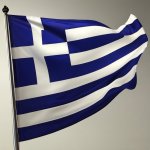


Greek-flag.jpg
 
The significance of Greek Independence Day cannot be fully appreciated without understanding its historical context. For nearly 400 years, the Greek people lived under the rule of the Ottoman Empire. The spark of revolution that ignited in 1821 was fueled by centuries of cultural suppression, economic hardship, and a yearning for autonomy. The revolution was influenced by the Enlightenment ideals of freedom and democracy, which echoed the ancient democratic principles of classical Athens.

In the Greek diaspora in the United States, it's a chance to honor our Greek roots. There's a parade in Boston every year, for example. This is something that we should never forget!
 

Learning About Ancient Corinth

I’m hoping to visit the ruins of Ancient Corinth on a future trip to Greece, and I’d like to learn more about the history before I go. I always find that I appreciate archaeological sites more when I understand what I’m looking at and know some of the stories behind the ruins.

For those who have visited Ancient Corinth, what would you recommend learning about beforehand? Are there particular periods of the city’s history, important events, or historical figures that help put the site into context? I know Corinth had an important location and a long history, but I’d like to understand more about how the city developed and changed over time.

I’d also love recommendations for books, documentaries, podcasts, or other resources that give a good introduction to Ancient Corinth. What helped you understand the site and its history before or after your visit?

Analyzing Greece in World War I

I recently got into a discussion with some family members about Greece’s role in World War I, and it made me realize I don’t fully understand what happened.

From what I gather, Greece was pretty divided at the time, especially between King Constantine I and Eleftherios Venizelos, but I’m a little unclear on how that actually played out in terms of alliances and decisions.

Was Greece officially neutral at first? And how did it eventually end up joining the war on the Allied side?

I’ve also heard the term “National Schism” come up in this context—how significant was that in shaping Greece’s involvement?

If anyone has a clear way of explaining this period, or can point out the key events to focus on, I’d really appreciate it. It feels like an important piece of history I should understand better.

Information about the Battle of Marathon

I'm planning a trip to Greece later this year, and one of the places I'm really hoping to visit is the site of the Battle of Marathon. I've read the basic history and know it was one of the most important battles of the Persian Wars, but I'd love to learn more before I actually stand where it happened.

For those of you who have visited Marathon or have studied this period of Greek history, what details or stories do you think are especially worth knowing? Are there any books, documentaries, or articles you'd recommend beforehand? Is there anything at the site that many visitors overlook or don't fully appreciate without some background?

I'd really like to understand not just the battle itself, but why it became such a defining moment in Greek history. Thanks in advance for any suggestions!

Which period of Greek history interests you the most?

Which period of Greek history interests you the most? There are so many fascinating eras that it can be difficult to choose just one.

Ancient Greece usually gets the most attention, especially Classical Athens, Sparta, the Persian Wars, and Alexander the Great. But I also find the Byzantine period fascinating because of its enormous influence on Greek religion, culture, art, and identity. Then there are the centuries of Ottoman rule, the Greek War of Independence, the Asia Minor Catastrophe, and Greece’s experiences during the World Wars and Civil War.

I’m curious which period everyone here finds themselves reading about most often. Is there a particular era, historical figure, battle, city, or event that drew you into Greek history?

I’d also love to hear about periods you think deserve more attention. Which part of Greek history would you recommend someone explore if they wanted to go beyond the usual ancient Greece topics?

Transition from myth to recorded history in Greece?

I’ve been thinking about the transition from myth to recorded history in Greece, and where that shift really begins.

So much of what we associate with early Greek history comes to us through myth, stories of gods, heroes, and epic events that clearly weren’t meant as factual records, yet still carry cultural and historical weight. At some point, though, we start seeing attempts to document events, places, and people in a more deliberate way.

I’m curious how others understand this transition. Do you see myth and history as clearly separate phases, or more as overlapping ways of explaining the world? Figures like Homer, Hesiod, and later historians seem to sit somewhere in between storytelling and record-keeping.

What do you think prompted the move toward written history? Was it political organization, trade, literacy, or something else entirely? And how much of myth do you think still shaped the way early historians understood and recorded their past?
Share and discuss Greek history!

WorldwideGreeks.com is a free online forum community where people can discuss Greek food, travel, traditions, history and mythology.
Join Worldwide Greeks here!

JOIN COMMUNITY FOR FREE

LOGIN TO YOUR ACCOUNT
Back
Top