
1 - 3 of 3 Posts

knicks_fan87

Active member
I have a question about prepping the eggplant for melitzanasalata.

The recipe I have says to grill the eggplant but doesn't give instructions. It just says "grill the eggplant." Can anyone offer my some more details?

This is a recipe I got from a relative. It is very old and not very descriptive.
 
I have a question about prepping the eggplant for melitzanasalata.

The recipe I have says to grill the eggplant but doesn't give instructions. It just says "grill the eggplant." Can anyone offer my some more details?

This is a recipe I got from a relative. It is very old and not very descriptive.
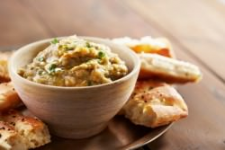
To grill eggplant, brush each side with olive oil and place under broiler, until it looks cooked. Goal is to get it soft so it can be mashed and it's great to dip with warmed crusty pita or other bread.

1687995871976.png
 
  • Like
Reactions: Laura48
I have a question about prepping the eggplant for melitzanasalata.

The recipe I have says to grill the eggplant but doesn't give instructions. It just says "grill the eggplant." Can anyone offer my some more details?

This is a recipe I got from a relative. It is very old and not very descriptive.

Brush with olive oil. Keep the eggplant whole. From there, you can grill it, char it on an open flame, or broil it. Up to you. You want it soft so you an scoop the flesh out.
 

What Greek Foods Do You Start Craving in the Fall?

I've been thinking more about seasonal eating lately, especially from a Greek perspective. Summer Greek food feels so naturally tied to the season with tomatoes, zucchini, eggplant, fresh herbs, grilled foods, and plenty of fruit. But once the weather starts cooling down, I find myself wondering what traditional Greek foods really feel like fall.

Are there certain dishes you start making as soon as September or October arrives? I'm thinking of foods like fasolada, giouvetsi, trahana soup, baked dishes, savory pies, and recipes using apples, grapes, walnuts, chestnuts, pumpkin, or other fall ingredients.

I'd especially love to hear about foods that were seasonal in your family rather than dishes you ate year-round. Were there certain meals your yiayia or parents always started making when the weather changed?

What Greek foods make you think, "Okay, fall is officially here"?

How Much Garlic in a Batch of Tzatziki?

How much garlic do you usually put in a batch of tzatziki? I think I may be using a little too much. I usually make mine with about 2 cups of Greek yogurt and 4 cloves of garlic, along with cucumber, olive oil, and the other usual ingredients.

It tastes great when I first make it, but we usually take about three days to finish the batch. By the second or third day, the garlic flavor and smell become really strong. Some people in my household love that and don’t mind it at all, but others think it becomes a bit overpowering. I’m starting to agree that four cloves might be too much, especially since the garlic seems to get stronger as it sits.

What do you all do? How many cloves would you use for about 2 cups of Greek yogurt?

Favorite Greek Cheeses Beyond Feta

Feta gets most of the attention when people talk about Greek cheese, but there are so many other varieties worth trying. I’m curious which Greek cheeses everyone enjoys most beyond feta.

Graviera is one of my favorites because it works so well on a cheese plate, grated over dishes, or just eaten with bread. Kasseri is another one I really like, especially melted. I’ve also been interested in trying more regional cheeses like metsovone, manouri, kefalotyri, and formaela.

Some Greek cheeses seem to be much easier to find outside Greece than others, so I’d also love to know which ones people regularly buy and where they usually find them.

What Greek cheeses do you keep coming back to? Are there certain ones you associate with a particular region, dish, or family tradition? And if someone has mostly eaten feta, which Greek cheese would you recommend they try next?

How Do You Keep Lamb from Drying Out in the Oven?

I’ve been cooking more traditional Greek food at home lately, and one thing I’m still trying to get right is oven-roasted lamb. I love the flavor, especially with garlic, lemon, oregano, and potatoes, but sometimes the meat comes out a little drier than I’d like.

For those of you who make lamb regularly, how do you keep it tender and juicy in the oven? Do you cover it for part of the cooking time, add water or broth to the pan, or cook it slowly at a lower temperature?

I’m also wondering if the cut makes a big difference. I usually see leg of lamb used, but would shoulder be more forgiving for a long roast?

I’d like to get that really tender Greek-style lamb that practically falls apart. Any tips on temperature, cooking time, marinades, or resting the meat would be appreciated.

Do You Put Cinnamon in Your Keftedes?

I’m curious how everyone here makes keftedes, especially when it comes to cinnamon. I know some Greek families add a little cinnamon to the meat mixture, while others would never think of putting it in.

In my experience, even a small amount can change the flavor quite a bit. It gives the keftedes a warmer, slightly sweeter spice in the background, but I can also see how it might not be for everyone. I’ve had versions that lean more heavily on oregano, mint, parsley, garlic, and onion instead.

Do you put cinnamon in your keftedes? If you do, how much do you usually use, and was that something your family always did? I’d also be curious to know if it varies depending on what part of Greece your family comes from.

Would love to hear how everyone seasons theirs and what you consider essential for really good keftedes.
Sign up for a free account and share your thoughts, photos, questions about Greek food, travel and culture!

WorldwideGreeks.com is a free online forum community where people can discuss Greek food, travel, traditions, history and mythology.
Join Worldwide Greeks here!

JOIN COMMUNITY FOR FREE

LOGIN TO YOUR ACCOUNT
Back
Top
