

Menu
Install the app
How to install the app on iOS
Follow along with the video below to see how to install our site as a web app on your home screen.
Note: This feature may not be available in some browsers.
You are using an out of date browser. It may not display this or other websites correctly.
You should upgrade or use an alternative browser.
Greek Food, Cooking and Recipe Community
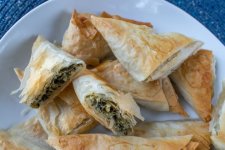
Which do you like better Tiropita or Spanakopita and why?
- Thread starter Worldwide Greeks Editor
- Start date
1 - 8 of 8 Posts
mastichas09
Active member
Spanakopita for sure!! I like to think that it's healthier because of the spinach LOL
Hahah! The spinach makes it so healthy!Spanakopita for sure!! I like to think that it's healthier because of the spinach LOL

Spanakopita all the way, especially since my husband is lactose intolerant. If I eat tiropita, I like it to be individually wrapped in phyllo as though I'm eating a snack, like I do with cheese and crackers(only tiropita tastes a lot better.). Spanakopita, on the other hand , I could eat as a meal as a huge piece. I tell myself it's a very nutritious choice having spinach, eggs, and cheese as main ingredients. We won't mention all the butter I put in it!I love both but tend to be more of a tiropita (Greek cheese pie) fan, but not too much feta! Sometimes I have had it with not enough phyllo and all cheese. What are everyone elses thoughts?
MixaliPlagionakis
New member
They are both ok but why does everyone always forget about the unsung hero of pita. The Kreatopita AKA the ManOpita as my family calls it. Meat, Greek spices an Phyllo, what else can anyone want!! If you haven't tried it your missing out!
Thats facts!! Everyone always forgets about kreatopita and kotopita, ugh soo goodThey are both ok but why does everyone always forget about the unsung hero of pita. The Kreatopita AKA the ManOpita as my family calls it. Meat, Greek spices an Phyllo, what else can anyone want!! If you haven't tried it your missing out!
1 - 8 of 8 Posts
JOIN THE DISCUSSION AND READ OTHER GREEK INFO:
What Is the Secret to Making Crispy, Flaky Phyllo?
- kosta_karapinotis
- Greek Food Forum
- Replies: 0
I've been wanting to try making homemade phyllo dough, but I have to admit that the process seems a little intimidating! I've used store-bought phyllo plenty of times, but I've never really attempted making it from scratch. I would love to learn how to get those beautiful, thin, crispy layers that make traditional Greek pies so delicious.
For those of you who make your own phyllo, what are your secrets? Is the dough difficult to roll out thin enough, or does it become easier with practice? I've also heard that the amount of olive oil you use between the layers can make a big difference in the final texture.
I'm especially interested in making spanakopita and tiropita. Are there any beginner mistakes I should watch out for? I'd love to hear your techniques and family tips before I give it a try!
Do You Prefer Gemista With Rice Only or With Ground Meat?
- knicks_fan87
- Greek Food Forum
- Replies: 0
I usually make gemista with a mixture of rice and ground meat, which is how my family has always prepared it. I love how flavorful and hearty it turns out, and it's one of my favorite traditional Greek dishes to make.
However, I have a vegan family member, and I want to make a version that uses just rice and vegetables so everyone can enjoy it. I've had gemista prepared this way before, but I've never actually made it myself. I'm wondering what adjustments I should make to get the same rich flavor without the meat.
Do you prefer gemista with rice only, or do you typically add ground meat? For those who make the vegetarian version, what herbs, seasonings, or other ingredients do you use to give the filling plenty of flavor?
Do You Follow Family Recipes Exactly or Make Your Own Adjustments?
- GreekGirlCooks
- Greek Food Forum
- Replies: 0
When I first started learning how to make traditional Greek dishes from my family, I tried to follow the recipes exactly as I was taught. I wanted everything to taste the way I remembered growing up, especially the dishes my mother and grandmother made.
Over time, though, I started making little adjustments of my own. Sometimes I'll add more lemon, change the amount of garlic, experiment with different herbs, or adjust the cooking method slightly. I still consider these family recipes, even if my versions aren't exactly the same as the originals.
I think that's part of what makes cooking so interesting. Recipes get passed down through generations, but each person adds a little something along the way.
I'm curious how others approach this. Do you stick closely to your family's traditional Greek recipes, or have you developed your own variations over the years?
What meat do you use for giouvetsi?
- ssherie_
- Greek Food Forum
- Replies: 1
I love making giouvetsi, and it's one of those traditional Greek dishes that I always come back to. I usually make it with either beef or lamb, depending on what I have available and what I'm in the mood for. Both are delicious, but they give the dish a slightly different flavor.
Lately, I've been wondering what other meats people use when making giouvetsi. I've heard of people using chicken, pork, and even goat, but I haven't really experimented much beyond my usual beef and lamb versions.
I'm curious whether certain meats are more traditional in different parts of Greece or if it's mostly a matter of family preference. I also wonder whether the cooking method changes depending on the meat.
What meat do you usually use for giouvetsi? Do you have a favorite, or does your family have a traditional way of making it?
Traditional Greek Recipes Using Chestnuts
- toniiv
- Greek Food Forum
- Replies: 0
I've been thinking about trying some traditional Greek recipes that use chestnuts. I know they're popular in certain regions of Greece, especially during the fall and winter months, but I haven't done much cooking with them myself. I have some old family recipes but chestnuts aren't readily available where I live. Besides what I have for my recipes, I am interested in what other people do.
I'm especially interested in older recipes that might have been passed down through families. It seems like chestnuts were once a more common ingredient in everyday cooking, particularly in mountainous areas where chestnut trees grow.
Does anyone have favorite traditional Greek recipes that use chestnuts? I'd love to hear how you prepare them and which dishes are worth trying first. This entered my mind because chestnuts are all over the place in Greece at a certain time of year and you can even buy them roasted on the streets!
Sign up for a free account and share your thoughts, photos, questions about Greek food, travel and culture!
WorldwideGreeks.com is a free online forum community where people can discuss Greek food, travel, traditions, history and mythology.
Join Worldwide Greeks here!
JOIN COMMUNITY FOR FREE
LOGIN TO YOUR ACCOUNT

